Bezos Rejects the AI Doom Narrative
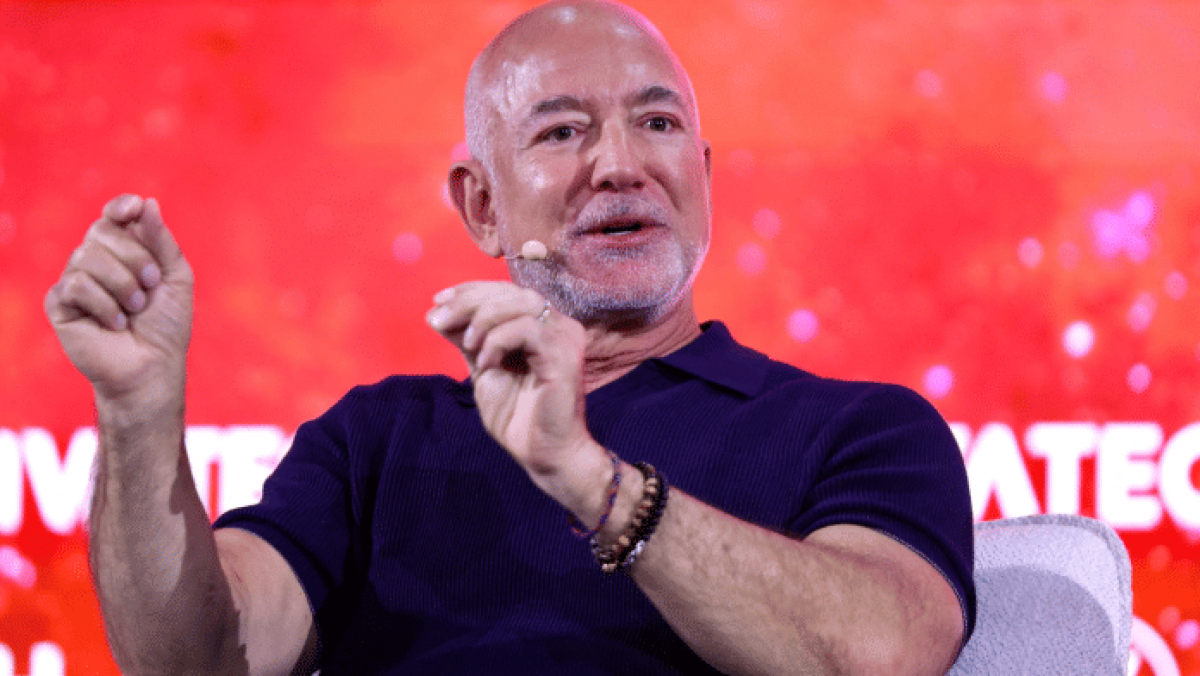
At the 2026 edition of VivaTech in Paris, Amazon founder Jeff Bezos pushed back firmly against the growing anxiety that artificial intelligence will trigger mass unemployment. Speaking on a panel moderated by former NASA astronaut Mike Massimino, alongside Blue Origin CEO Dave Limp, Bezos argued that AI is far more likely to create a labour shortage than a jobs crisis.
His reasoning centers on a simple idea: AI doesn't just automate existing tasks, it helps people discover new problems worth solving. That, in turn, generates entirely new categories of work rather than eliminating old ones.
"AI is going to create a labour shortage because it's going to make it possible for people to identify more problems."
The "Artificial General Engineer"
Bezos pointed to his newest venture, Prometheus, an AI startup building what he calls an "artificial general engineer," as a concrete example of this philosophy in action. According to Bezos, tools like this accelerate what he describes as the dream-build loop — the cycle between imagining an idea and actually bringing it to life.
- Faster iteration: AI shortens the time between concept and execution.
- More ideas become viable: Projects once dismissed as impossible become achievable.
- New industries emerge: Each new capability opens doors to problems nobody was previously equipped to tackle.
"If we can accelerate the dream-build loop, all of the ideas will then become possible. And then we end up being limited not by our capabilities but by our imaginations," Bezos said.
One Small Step: Bezos' Vision for the Moon and Beyond
Beyond AI, Bezos used the VivaTech stage to lay out his long-term ambitions for space exploration, describing the field as "supply constrained, not demand constrained." In his view, the Moon is the logical first stop — not as a destination to visit, but as a place to establish a lasting presence.
"We're going to the Moon to stay, not just to visit," he said, noting that materials extracted from the lunar surface require roughly 28 times less energy to launch than material lifted from Earth, positioning the Moon as a practical staging ground for deeper missions into the solar system.
Bezos went further, previewing eventual colonies on Mars, and framed the entire push into space as complementary to environmental goals back home. By moving heavy industry off-world, he suggested, Earth could eventually be restored closer to its "pre-industrial revolution state."
Why This Matters
Bezos' comments arrive amid an intensifying global debate about AI's impact on employment, automation, and economic inequality. While many economists and labor experts warn of significant near-term disruption, especially in white-collar and entry-level roles, Bezos represents a camp of technologists betting that AI-driven abundance will outpace any job losses, generating new markets, industries, and demand for human ingenuity faster than automation can displace it.
Whether that optimism holds up will likely be one of the defining economic questions of the next decade.