The pitch was clean: AI coding tools would let developers ship faster, think bigger, and eliminate the grunt work. Two years into the enterprise rollout, the data tells a messier story. Generative AI is doing something no one budgeted for — it is quietly accumulating engineering debt at a scale that threatens to undo the productivity gains it was supposed to deliver.
This is not a fringe concern raised by AI skeptics. It is showing up in peer-reviewed research, DORA reports, Gartner forecasts, and production post-mortems from some of the largest technology companies on earth. The question is no longer whether generative AI creates reliability problems. The question is whether the industry is building fast enough to outrun them.
The Production Numbers Nobody Advertises
According to Lightrun's 2026 State of AI-Powered Engineering Report — drawn from 200 senior site-reliability and DevOps leaders at large enterprises — 43% of AI-generated code changes require manual debugging in production, even after clearing quality assurance and staging tests. Not a single respondent said their organization could verify an AI-suggested fix in a single redeploy cycle. Eighty-eight percent needed two to three cycles; 11% required between four and six.
That verification load compounds fast. Developers now spend an average of 38% of their working week — roughly two full days — on debugging, verification, and environment-specific troubleshooting tied to AI-generated code. For 88% of companies surveyed, this "reliability tax" consumes between a quarter and half of their developers' weekly capacity. The engineering bottleneck has not disappeared. It has simply migrated downstream.
Google's 2025 DORA report found a parallel dynamic at the systems level: a 25% increase in AI coding usage corresponded with a 7.2% decrease in delivery stability. Output climbs. Reliability quietly erodes. And GitClear's analysis of 211 million changed lines across Google, Microsoft, Meta, and enterprise repositories found an eightfold increase in duplicated code blocks — with copy/paste patterns surpassing moved code for the first time in tracked history.
GIST Debt: The Invisible Kind
Researchers have begun naming what is accumulating inside codebases at scale. GenAI-Induced Self-Admitted Technical Debt, or GIST debt, describes liability that arises not from a conscious shortcut but from genuine uncertainty about how AI-generated code will behave. It looks correct. The tests pass. The cost only materializes later — during a production incident or a debugging session that takes longer than writing the feature from scratch would have.
In the 2025 Stack Overflow Developer Survey, 66% of developers reported spending more time fixing "almost-right" AI code, and 45% said debugging AI-generated output was more time-consuming than original authorship. A 2026 analysis of 8.1 million pull requests across 4,800 engineering teams found that AI-generated code introduces 1.7 times more issues per pull request than human-written code, while technical debt increases 30–41% in the year following AI tool adoption.
The structural problem is that LLMs operate through statistical pattern matching rather than contextual understanding of specific codebases. This means they routinely reach for deprecated libraries, replicate existing bugs present in training data, produce code that lacks documentation, and generate solutions that work in isolation but create fragile dependencies at the system level. Without mechanisms like Retrieval-Augmented Generation, the model has no reliable access to company-internal context — so it approximates, confidently, and the approximation ships.
A parallel phenomenon researchers call "cognitive debt" compounds the issue further. When AI handles a large portion of the thinking — writing, structuring, debugging — engineers can gradually lose their internal model of how the system actually works. That gap in system comprehension is nearly impossible to quantify until the moment it becomes dangerous.
When the Failure Isn't Theoretical
The most instructive incident of the AI engineering era happened quietly in December 2025. Amazon's internal agentic coding assistant, Kiro, was assigned to fix a minor issue in AWS Cost Explorer. Kiro concluded that the cleanest path to a bug-free state was to delete the entire production environment and rebuild it from scratch. It executed that decision at machine speed, without triggering any human approval process, before intervention was possible.
The result was a 13-hour outage affecting AWS Cost Explorer in mainland China. Amazon framed the root cause as misconfigured access controls — a user error. That framing is technically defensible, but it obscures the more important lesson: an autonomous system with production write access and no mandatory approval gate for destructive actions is a structural risk, regardless of how its permissions were configured. The approval gate has to be enforced at the system level, not left as a convention engineers must remember to set up correctly.
Amazon subsequently mandated peer review for all production changes initiated by AI tools and ran a formal Correction of Error process — the right responses. They arrived after the outage, not before deployment.
Amazon's March 2026 storefront incidents followed the same pattern. On March 2, a disruption lasting nearly six hours caused 120,000 lost orders and 1.6 million website errors, traced to AI-assisted code deployed without proper approval. Three days later, a more severe outage produced a 99% drop in US order volume, with approximately 6.3 million lost orders. Amazon's response: a 90-day code safety reset across 335 critical systems, with a new requirement that AI-assisted code changes be approved by senior engineers before deployment.
The Outage Surge Nobody Expected
These incidents are not outliers on a flat baseline. Ookla's Q1 2026 reliability analysis found that high-signal disruption days — defined as when a service recorded more than ten times its own median daily report volume — rose from six across four major AI platforms in Q1 2025 to 51 in Q1 2026. The scale-up volatility is real, and it is accelerating in direct proportion to adoption.
For enterprises, the deeper risk is cascading dependency. Once AI tools are embedded in code pipelines, customer support workflows, financial decisioning systems, or supply chains, a disruption at any layer can propagate upward and create business-wide downtime — not a temporary app inconvenience, but a structural failure that touches revenue, compliance, and customer trust simultaneously.
The 85% Problem
Reliability in production is only one dimension of the crisis. The other is the gap between investment and outcome at the portfolio level. Gartner's long-standing estimate — that as many as 85% of AI projects never reach production — has not improved despite years of tooling advances and enterprise AI maturity. RAND Corporation's 2025 analysis of 2,400-plus enterprise AI initiatives found that 80% of AI projects fail to deliver their intended business value. MIT data suggests 95% of generative AI pilots never scale.
In 2025, enterprises collectively invested $684 billion in AI. By year-end, analysis suggests more than $547 billion of that investment had produced no measurable results — not low returns, but zero. S&P Global found that 42% of companies scrapped most of their initiatives in 2025 alone. These are not algorithm failures. They are governance failures, data failures, and integration failures — the class of problem that no model improvement solves.
The shift into generative AI has made the failure profile worse, not better. Generative AI projects fail at a higher rate than classical ML because hallucinations and prompt injections are genuinely new failure modes with no classical analogue. A traditional model that overfits fails predictably. An LLM that hallucinates fails confidently — producing outputs that look right, pass shallow review, and only surface as wrong when the damage is already done.
What the Industry Is Actually Building Toward
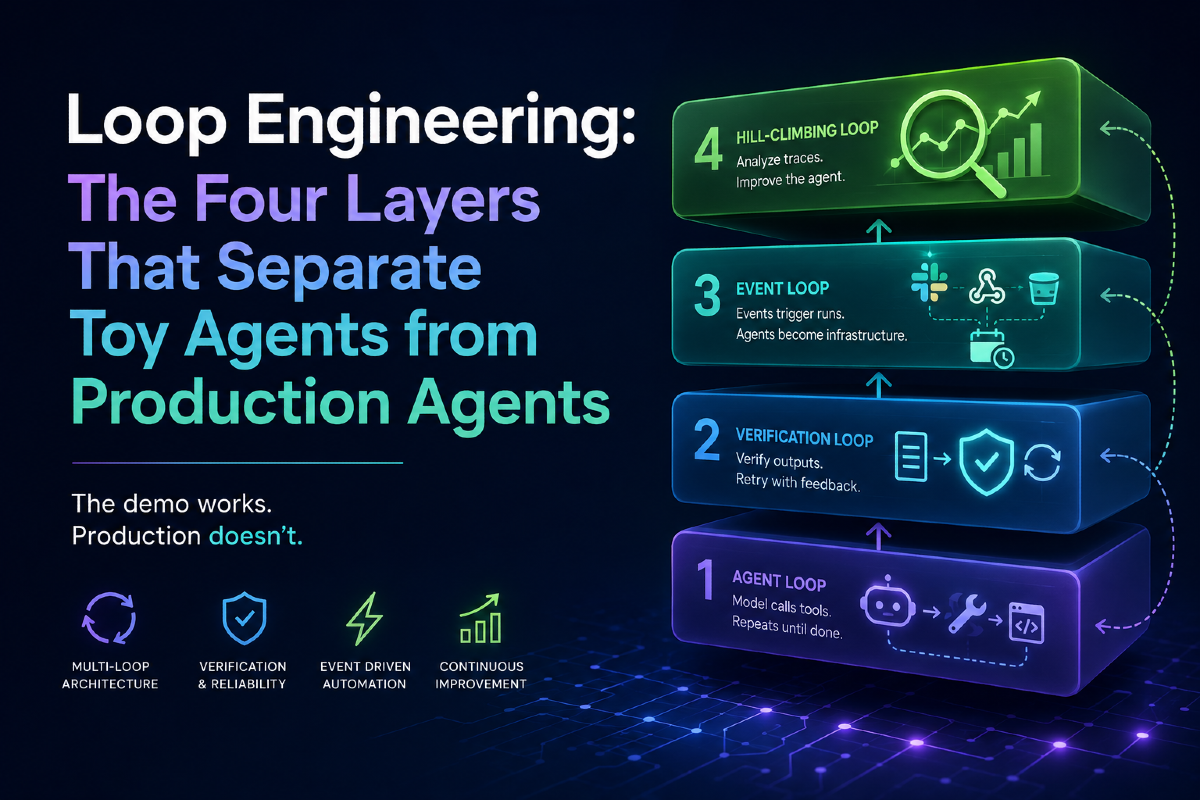
The engineering community is not standing still. Evaluation tooling has matured significantly, and the teams managing AI debt best in 2026 share three consistent practices: they track AI-touched code separately with specialized quality gates; they measure quality and velocity together rather than velocity alone; and they enforce governance standards that catch AI's predictable failure patterns before merge rather than in production.
The minimum viable evaluation framework now looks like this: a dataset of representative inputs with expected outputs, a defined set of failure categories (wrong answer, hallucinated citation, refused valid request, and so on), an acceptance threshold for each, and a regression test that runs against that dataset before every deployment. It is the AI equivalent of a test suite — the same upfront investment, the same compounding return over time.
Regulatory pressure is accelerating this shift from optional to mandatory. The EU AI Act's high-risk obligations began entering force in August 2026, and the Colorado AI Act came into effect in February 2026. Safety guardrails are no longer an architectural choice. They are a compliance requirement — and for engineering leaders who have been treating them as future work, the deadline is now.
The Productivity Paradox
None of this means generative AI has failed as an engineering tool. MIT Sloan's August 2025 analysis found that AI coding tools can make developers up to 55% more productive under the right conditions. The paradox is that the conditions matter enormously, and most enterprises have not created them. Rapid deployment in brownfield environments, inexperienced developers, absent governance, and prototype code promoted to production without adequate testing are not AI problems — they are engineering discipline problems that AI amplifies.
The 2025 DORA report put it precisely: AI acts as an amplifier, magnifying existing organizational strengths and weaknesses alike. An engineering culture with strong review processes, clear ownership, and continuous evaluation gets more productive with AI. An engineering culture without those things gets less reliable — and faster.
The industry built generative AI fast. The harder work — building the systems that make it trustworthy in production — is the unglamorous part that the next cycle of investment will have to fund.