The parameter count was wrong. Earlier reporting pegged Kimi K3 at 2.5 trillion parameters — now Moonshot AI has confirmed the real number: 2.8 trillion. That distinction matters, because it means Kimi K3 isn't just a large model — it's the largest open model ever released, by a significant margin. More importantly, the capabilities Moonshot is demonstrating around the launch suggest this is a genuinely different kind of frontier system.
What Moonshot AI shipped on July 17, 2026 isn't a scaled-up version of what came before. Kimi K3 has native vision, a 1-million-token context window, a custom Mixture-of-Experts architecture, and a set of agentic benchmarks that place it at or near the top of every open model chart — and competitive with the best proprietary systems on a growing number of tasks. Full model weights release on July 27.
The 3T-Class Threshold, and Why Scale Alone Isn't the Story
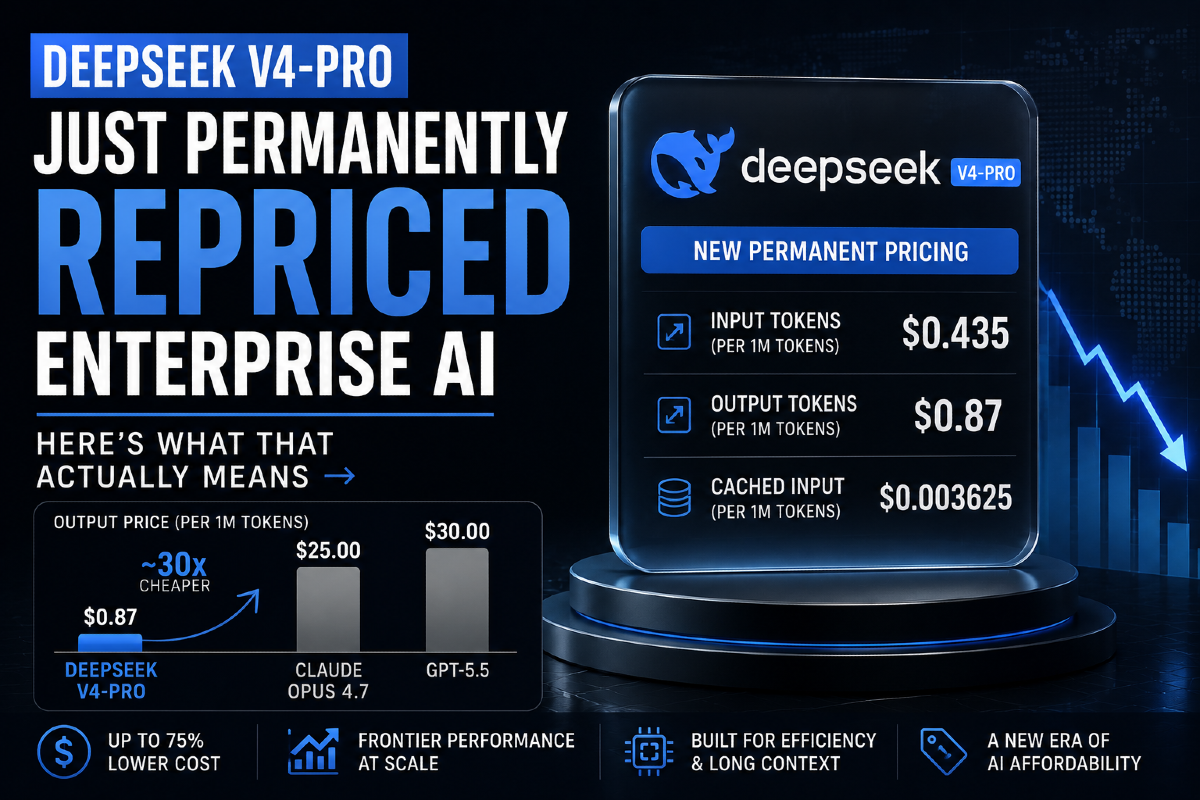
Kimi K3 is the first open model to cross 2.8 trillion parameters, entering what Moonshot calls the "3T-class." For context: the pre-launch reporting projected 2.5T, while DeepSeek V4 Pro — the previous open scale record holder — sat at 1.6T. Kimi K3 nearly doubles that.
But raw scale rarely tells the complete performance story in the MoE era. Tencent's Hy3, for example, packs 295B total parameters but activates only 21B per token — achieving competitive results at low inference cost. Kimi K3 takes a different approach: it activates 16 of 896 experts per token, meaning active parameter density is remarkably sparse relative to total scale. Moonshot claims this yields approximately 2.5× improvement in scaling efficiency over Kimi K2, meaning the model converts each unit of compute into usable intelligence at a meaningfully higher rate.
Architecture: KDA, AttnRes, and Stable LatentMoE
Kimi K3 introduces two custom architectural components that define how it processes information:
- Kimi Delta Attention (KDA) — A redesigned attention mechanism that improves how the model handles long sequences. KDA posed challenges for conventional prefix caching, which led Moonshot to contribute a new implementation directly to the vLLM open-source project, to be released alongside the model weights on July 27.
- Attention Residuals (AttnRes) — Rather than accumulating representations uniformly across depth, AttnRes selectively retrieves representations from earlier layers. This improves information flow through the full depth of the model.
On the MoE side, Kimi K3 uses Stable LatentMoE — activating 16 of 896 experts per forward pass. Keeping routing stable at this level of sparsity required several algorithmic innovations:
- Quantile Balancing — Expert allocation derived directly from router-score quantiles, replacing heuristic updates and eliminating a sensitive balancing hyperparameter.
- Per-Head Muon — An optimizer extension that trains attention heads independently for more adaptive gradient updates at scale.
- Sigmoid Tanh Unit (SiTU) — A new activation function improving activation control across the expert network.
- Gated MLA — Improves attention selectivity.
Training uses quantization-aware methods from the supervised fine-tuning stage onward, with MXFP4 weights and MXFP8 activations for broad hardware compatibility. Moonshot recommends deploying Kimi K3 on supernode configurations with 64 or more accelerators, where high-bandwidth communication domains are available.
What the Benchmarks Actually Show
Kimi K3's benchmark table is dense, and the honest read is nuanced. Against proprietary models Claude Fable 5 and GPT 5.6 Sol, Kimi K3 trails in overall standings. But on a number of specific tasks, it performs at or above both.
Where Kimi K3 Leads
| Benchmark | Kimi K3 | Claude Fable 5 | GPT 5.6 Sol |
|---|---|---|---|
| FrontierSWE | 81.2 | 86.6 | 71.3 |
| SWE Marathon | 42.0 | 35.0 | 39.0 |
| BrowseComp | 91.2 | 88.0 | 90.4 |
| DeepSearchQA (F1) | 95.0 | 94.2 | — |
| AutomationBench | 30.8 | 29.1 | 29.7 |
| OmniDocBench | 91.1 | 89.8 | 85.8 |
Notably, a caveat applies to Claude Fable 5's PostTrain Bench and coding results: Moonshot acknowledges that Fable 5 was evaluated with potential fallback behavior to Claude Opus 4.8, meaning some results may not reflect Fable 5 performance in isolation. This is not a minor footnote — it affects how competitive those numbers should be read.
Where the Gap Remains
On HLE-Full (the hardest reasoning benchmark in the field), Kimi K3 scores 43.5 without tools and 56.0 with tools — behind Fable 5 at 53.3 and 63.0, respectively. On GDPval-AA v2 (an Elo-based general agentic evaluation), Kimi K3 scores 1668 vs. Fable 5's 1760 and GPT 5.6 Sol's 1748. The gap is real and narrowing, but it exists.
The Coding Demos: Three That Stand Out
Moonshot published several long-horizon coding case studies at launch. The most compelling:
Kernel Optimization at Production Scale
Given the FLA Triton implementation of AttnRes running at production shape (96 layers, model dim 8192, 8192 tokens), Kimi K3 was tasked with optimizing training-side kernel performance without changing numerics. Over 15 hours of autonomous iteration, K3 cut forward+backward time from 283.6 ms to 114.4 ms — a 60% reduction. It designed a novel two-phase kernel algorithm and fused kernels while preserving numerical correctness. Moonshot notes K3 and Fable 5 achieved similar final performance, but K3 optimized faster per iteration.
An additional benchmark compared K3's GPGPU optimization against GPT 5.6 Sol and Opus 4.8 — K3 set new records on the DSA and KDA-GPGPU tasks.
Building a GPU Compiler from Scratch
Kimi K3 designed MiniTriton — a compact Triton-like compiler with its own tile-level IR layer over MLIR, optimization passes, and a PTX code-generation pipeline. The resulting compiler performs on par with or better than Triton and torch.compile on roofline benchmarks, and sustains end-to-end nanoGPT training with stable convergence. Building a coherent compiler from DSL frontend through IR passes to PTX codegen is not an isolated coding task — it requires the model to maintain architectural coherence across thousands of decisions.
Chip Design for a Nano Model
In a 48-hour autonomous run, K3 designed a chip to serve a nano model built on its own architecture. Using open-source EDA tools on the Nangate 45nm library, it produced a design that closes timing at 100 MHz within 4 mm², sustaining over 8,700 tokens/s decode throughput in simulation. The chip packs 1.46M standard cells, 0.277 MB of SRAM, and an INT4 MAC array with fused dequantization. The framing Moonshot uses — "a chip built by a model, for a model" — is accurate and points to something genuinely novel in AI self-reference capability.
Vision and Knowledge Work: Native Multimodal at Scale
Kimi K3 has native vision capabilities baked into the base model — not bolted on through a separate pipeline. The launch materials demonstrate this across several domains:
- Scientific visualization: Reproducing I–Love–Q universal relations in computational astrophysics, cross-validating 20+ papers, running 300+ equations of state, and producing an interactive HTML dashboard — work Moonshot says took K3 about two hours versus one to two weeks for an experienced researcher.
- Financial consulting: Producing an interactive 42-year ASIC industry research report through 120+ rounds of self-improvement, 2,800+ web searches, and synthesis across 87 quarterly reports and 99 original PDFs.
- Game development: Building a fully procedural browser-based 3D exploration game using Three.js WebGPU and GPU compute — generating environment, assets, and gameplay in a single session.
- Video editing: Assembling a teaser video from 56 source clips, handling clip selection, beat synchronization, and audio processing. Moonshot estimates this would take an experienced editor one to two working days.
The "vision in the loop" capability — where K3 iterates between generating code and examining live screenshots of the output — is what enables the game development and CAD work. It's not just multimodal input; it's multimodal feedback in an agentic loop.
Pricing, Availability, and What's Coming July 27
Kimi K3 is available today at kimi.com, in the Kimi Work desktop app (v3.1.0+), via Kimi Code in-terminal, and through the Kimi API. API pricing:
- Cache-hit input: $0.30/MTok
- Cache-miss input: $3.00/MTok
- Output: $15.00/MTok
Moonshot reports cache hit rates above 90% in coding workloads — which makes the effective input cost significantly lower than the cache-miss rate implies. The infrastructure runs on Mooncake's disaggregated inference architecture. At launch, Kimi K3 defaults to max thinking effort; low- and high-effort modes arrive in subsequent updates.
Full model weights drop on July 27, 2026, along with the Kimi K3 technical report covering architecture, training details, and full evaluations. The vLLM KDA prefix caching implementation will release in parallel — a meaningful contribution to the open inference ecosystem.
The broader context here matters. Chinese AI models already account for 45% of all traffic on OpenRouter, driven by cost and open availability. Kimi K3's arrival — at 2.8T parameters and $0.30/MTok for cache-hit input — is the most significant open-weight release in that wave yet. How the open-source community responds between now and July 27 will be worth watching closely.
Related Reading
- Kimi K3 Deep Dive: What 2.5T Parameters and a 1M-Token Window Actually Change — Pre-launch technical analysis of the model's expected capabilities
- Kimi K3 Launch Imminent: Moonshot AI's 2.5T-Parameter Model Set to Drop on July 15 — How the launch was accidentally confirmed a day early
- Chinese Models Now Own 45% of OpenRouter Traffic — and the West Hasn't Noticed — The broader open-model ecosystem context driving Kimi K3's release
- Tencent Hy3: Run a 295B Flagship MoE Model on a Single GPU — How MoE architecture unlocks scale without proportional inference cost