OpenAI Reaches 8 Million Active Users Across Codex and ChatGPT Work
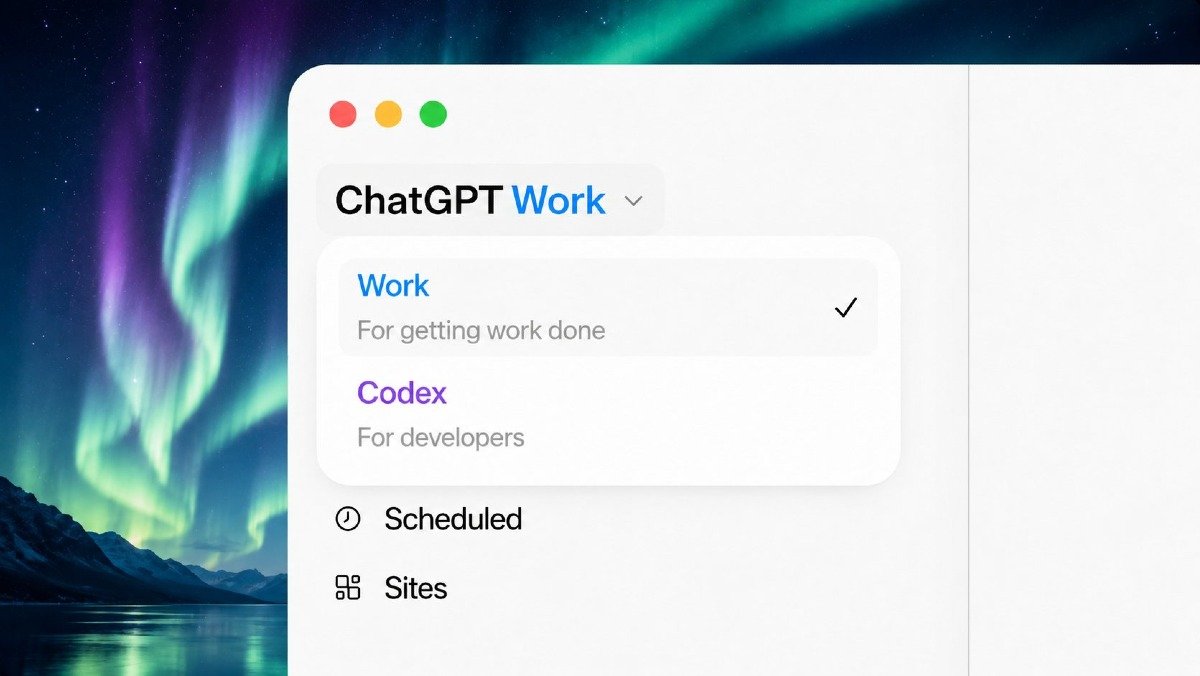
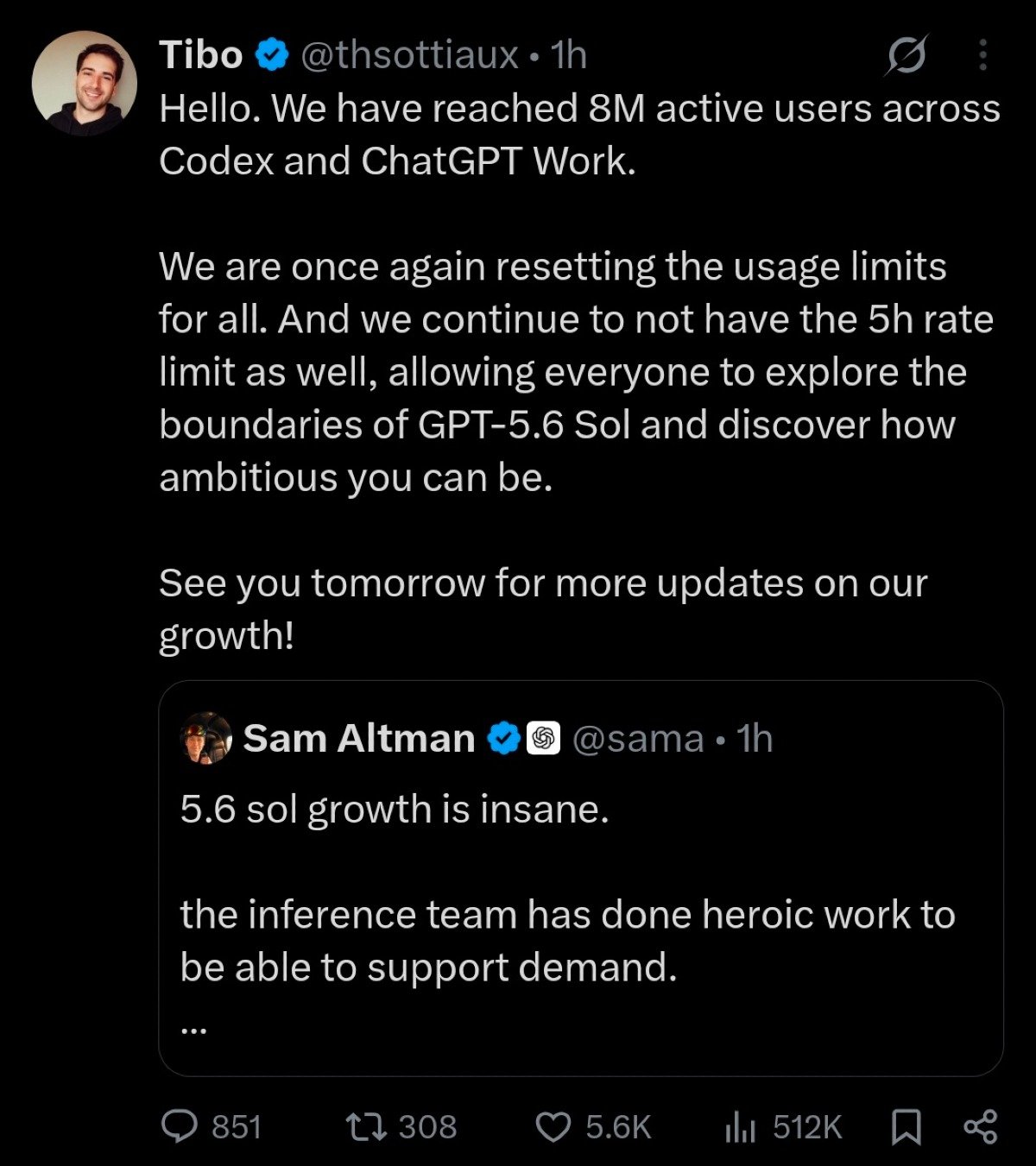
OpenAI has hit a major milestone: 8 million active users across Codex and ChatGPT Work. The announcement, made by Tibo (@thsottiaux), signals explosive growth in both developer tooling and enterprise AI adoption—all powered by the latest GPT-5.6 Sol model.
The milestone comes just weeks after OpenAI's Build Week hackathon launched with $100K in prizes. The timing is no accident: OpenAI is capitalizing on developer momentum and validating that adoption is accelerating across both Codex (for development) and ChatGPT Work (for enterprises).
GPT-5.6 Sol Growth Is "Insane," Says Sam Altman
OpenAI CEO Sam Altman was blunt in a public post: "5.6 sol growth is insane." The statement underscores that demand for the model has exceeded even OpenAI's internal projections. Altman credited the inference team for "heroic work" in scaling infrastructure to handle the surge—a tacit acknowledgment that rapid growth creates real operational stress.
However, Altman also injected a note of caution: "We are going to move mountains to continue to scale, but it is possible there are some hiccups soon." This candid warning signals that infrastructure challenges are real and that users should expect potential service disruptions as OpenAI pushes scaling limits.
Usage Limits Reset, 5-Hour Rate Limit Removed
To celebrate the 8M milestone, OpenAI is resetting usage limits for all users. More significantly, the company is removing the 5-hour rate limit that previously capped GPT-5.6 Sol access.
Tibo's official announcement frames this as an opportunity: "We continue to not have the 5h rate limit as well, allowing everyone to explore the boundaries of GPT-5.6 Sol and discover how ambitious you can be."
This is a bold move. By eliminating artificial ceilings on usage, OpenAI is signaling confidence in its inference infrastructure while simultaneously inviting developers and enterprises to stress-test the model at scale. The decision enables:
- Long-running agentic workflows without interruption
- Batch processing and large-scale analysis
- Real-time, low-latency applications
- Extended reasoning and knowledge-work tasks
The tradeoff is risk: if infrastructure falters under the load, the goodwill of this generous policy could evaporate quickly.
What This Means for Developers and Enterprises
The 8M milestone reflects a fundamental shift in AI adoption maturity. Codex and ChatGPT Work are no longer niche tools—they are now mainstream platforms with tens of millions of active users exploring use cases across development, content creation, and knowledge work.
The removal of rate limits is particularly significant for builders. It removes practical barriers to experimentation, allowing teams to discover what's actually possible with GPT-5.6 Sol rather than being constrained by artificial limits.
Altman's warning about potential "hiccups" is worth taking seriously. Infrastructure scaling at this velocity is notoriously difficult. OpenAI's transparency about the risk is a refreshing departure from typical corporate messaging—and a signal that the company is monitoring infrastructure closely.
What's Next?
Tibo hinted at more announcements: "See you tomorrow for more updates on our growth!" This suggests OpenAI plans to share additional milestones or product news in the coming days, possibly tied to Build Week progress or new feature announcements.
For developers, the message is clear: OpenAI is betting big on GPT-5.6 Sol and removing constraints to accelerate adoption. The inference team's "heroic work" will be stress-tested in the coming weeks—and how well OpenAI handles peak demand could shape developer sentiment for the rest of 2026.