Gemini Omni 1.2 Flash Cuts 720p Video to 7 Cents a Second, but 15 Seconds Is Still the Ceiling
Google new video model generates 15-second clips at $0.07 per second, 30% cheaper than Omni 1.1. The catch: no free API tier, no public benchmark and no India pricing.
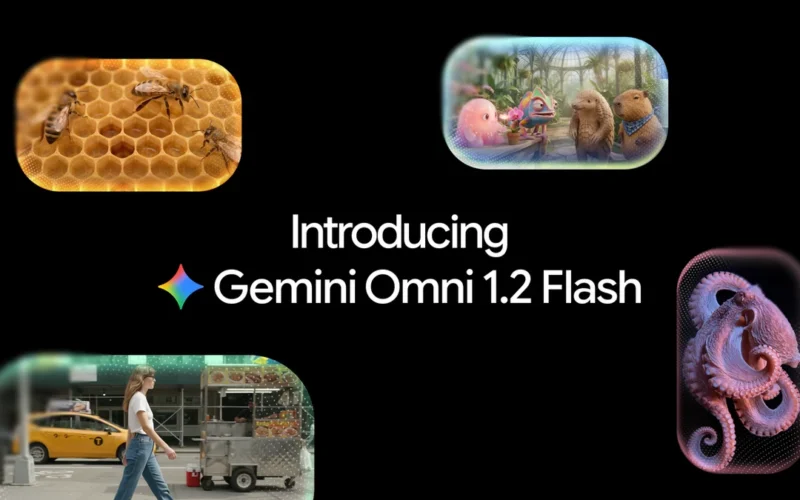
Google released Gemini Omni 1.2 Flash on 5 November 2026 and made it generally available on the paid Gemini API and Google Cloud. The model now generates and edits clips of up to 15 seconds, keeps characters and products steadier across shots, and supports multi-turn edits in conversation.
The headline number is price. Google cut the 720p rate by 30% to $0.07 per second, down from about $0.10 per second for Gemini Omni 1.1 Flash. A full 15-second 720p clip therefore costs about $1.04 in output tokens.
The catch is that this is a paid-tier product: no free API quota, no public benchmark table, and no India-specific pricing or data residency commitment. Google is selling speed and cost, not a measurable quality lead.
Meet Gemini Omni 1.2 Flash ⚡️
We’ve made the model more cost-effective, bumped the video generation and editing limit up to 15 seconds, and made updates to how scenes hold together over time. We've also given character speech an upgrade, reduced visual glitches like jump cuts,… pic.twitter.com/jjhjFmIs5p
— Google AI (@GoogleAI) November 5, 2026
Quick answer: Gemini Omni 1.2 Flash is Google’s newest video generation and editing model. It makes 3 to 15 second clips with native audio at 24 frames per second, supports 360p, 720p, 1080p and 4K output, and costs $0.07 per second of 720p video on the paid Gemini API. It is generally available now, but there is no free API tier and no independent quality benchmark to verify Google’s demo-led claims.
What Google actually changed
The most useful change is duration. Omni 1.1 stopped at 10 seconds. Omni 1.2 goes to 15 seconds and accepts any length from 3 to 15 seconds in one-second steps. That fits social ads, product explainers and virtual try-on clips, which often need a complete scene rather than a fragment.
The second change is editing. Google says you can refine the same clip turn by turn, swapping a background, changing lighting or switching aspect ratio without regenerating the whole video. The model accepts text, images and video as input, including clips of up to 15 seconds for editing and a 10-second lookback for extension.
Reference adherence is the third claim. Google says Omni 1.2 can hold faces, garments, packaging typography and brand colours across camera angles when given character, product or style images, short motion clips and audio cues. Those features make virtual try-on and catalogue video commercially interesting, but they are hard to verify without running the same brief across several models.
Google also improved speech and camera control, with multi-speaker dialogue, clearer lip sync and longer continuous moves with fewer jump cuts. Outputs carry an imperceptible SynthID watermark, and Google Cloud offers Provisioned Throughput for production workloads.
The price cut is real, but the meter is complicated
Google bills Omni by output video tokens, not by clip. The published conversion is 5,792 tokens for every second of 720p video. At $12 per million video output tokens, that works out to roughly $0.07 per second. Input text, images and video are billed separately at $1.50 per million tokens.
The same meter makes higher resolutions much more expensive. Google lists about $0.023 per second at 360p, $0.104 per second at 1080p with upsampling, and $0.209 per second at 4K. A 15-second 1080p clip is therefore about $1.56 in output tokens, and a 15-second 4K clip is about $3.14.
| Spec or price | Gemini Omni 1.2 Flash | Gemini Omni 1.1 Flash |
|---|---|---|
| Maximum clip length | 15 seconds, 3 to 15 in one-second steps | 10 seconds |
| Output resolutions | 360p, 720p, 1080p, 4K at 24 fps | 360p, 720p, 1080p, 4K at 24 fps |
| Native audio | Yes | Yes |
| 720p price per second | About $0.07 | About $0.10 |
| 15-second 720p clip | About $1.04 | About $1.50 |
| Free API tier | Not available | Not available |
| API status | Generally available | Routes to 1.2 on 3 December 2026 |
The per-second price looks trivial until volume enters the picture. One thousand 15-second 720p clips cost about $1,040 in output tokens. The same thousand at 1080p cost about $1,560, and at 4K about $3,135. Teams that generate several drafts per approved clip will spend more than the headline rate suggests.
Google’s draft workflow is the practical answer. Generate at 360p or 720p, fix a detail with a follow-up edit instead of a full regeneration, then upscale the best take. That is cheaper than generating everything at 4K, but the final quality depends on an upsampling step Google has not benchmarked publicly.
Fifteen seconds is still the ceiling
Google’s own documentation says per-turn video extension can reach 30 seconds in total. That is better than a hard 15-second limit, but it is not the same as generating a continuous 60-second narrative. The first and last frame interpolation mode is narrower still, at 3 to 10 seconds.
For Indian advertisers, 15 seconds is often enough. Much social and CTV inventory is sold in 6, 10 and 15 second units. The model fits those formats, but not a two-minute product film or a trailer that needs a long unbroken take.
The quality question is harder. Google’s launch post is built on curated demos: a virtual try-on sequence, a poster assembled layer by layer, a drone flight through the Pantheon. The company admits the model still struggles with fast sports action, rapid script changes and complex physics. Those are not minor edge cases for sports rights holders, newsrooms or animation studios.
What is confirmed and what is not
| Claim | Status at publication |
|---|---|
| Generally available on the paid Gemini API and Google Cloud | Confirmed by Google’s blog and model docs |
| 15-second maximum, 3 to 15 seconds in one-second steps | Confirmed by Google’s model docs |
| $0.07 per second of 720p video, 30% below Omni 1.1 | Confirmed by the Gemini API pricing page |
| 15-second clips at no extra cost in Google Vids | Confirmed by Google’s launch post, with account or Workspace limits |
| Independent quality scores against Veo, Sora or other video models | Not confirmed. Google published demos, not a reproducible benchmark |
| India pricing, local data residency or a launch date for AI Ultra in India | Not confirmed. Google’s India plans page lists AI Pro, not Ultra |
| All Google AI subscribers get 15-second clips in the Gemini app | Not confirmed. Google’s blog says the app rollout is for Ultra subscribers |
There is a messaging gap. Google’s blog limits the Gemini app rollout to Google AI Ultra subscribers. The @GeminiApp account said the model is rolling out to all Google AI subscribers, with 15-second clips for Ultra. Google has not published the comparison.
Gemini Omni 1.2 Flash is rolling out starting today to all Google AI subscribers. Refine videos through multi-turn conversational edits and enjoy sharper visual stability in the Gemini app.
Plus, Google AI Ultra subscribers can now create and edit videos up to 15 seconds long,… https://t.co/aex1NFDqTx
— Google Gemini (@GeminiApp) November 5, 2026
What it means for Indian developers
The API is priced in US dollars, and Google has published no India rate card or local data residency option for Omni 1.2. Indian teams should budget for the dollar price plus their card and tax treatment, and should not assume the model runs from an India region.
On the consumer side, Google’s India plans page lists Google AI Pro at â¹1,950 a month, with Gemini in Gmail, Docs and Vids, plus Google Flow. It does not list Google AI Ultra. That matters because the 15-second Gemini app feature is tied to Ultra in Google’s launch post. Indian users may see the model in Flow or Vids before they see the full 15-second option in the Gemini app.
For product teams, the cheapest test is the API at 360p. At $0.023 per second, a hundred five-second drafts cost about $11.50 in output tokens, low enough for a real evaluation before a production budget.
The strategic risk is lock-in. Omni 1.2 is hosted and closed. There are no weights to download and no self-hosting option. Teams that need to keep client footage inside India, or fine-tune on their own catalogue, will have to wait for a Google Cloud region or choose another vendor.
Google’s timing is aggressive. It is cutting its own previous video model by 30% while adding duration and editing features. That puts pressure on every other video API to cut prices, which helps Indian startups that consume video generation at scale. It does not prove that the output is better.
Frequently asked questions
How much does Gemini Omni 1.2 Flash cost?
Google lists about $0.07 per second of 720p video, or roughly $1.04 for a 15-second clip in output tokens. The 1080p rate is about $0.104 per second and 4K is about $0.209. Input text, images and video are billed separately at $1.50 per million tokens, and there is no free API tier.
How long a video can it generate?
It generates clips from 3 to 15 seconds in one-second increments at 24 frames per second. Per-turn video extension can reach 30 seconds in total, and first-to-last frame interpolation is limited to 3 to 10 seconds.
Is Gemini Omni 1.2 Flash available in India?
The Gemini API and Google Cloud are available to paid developers in India, but Google has not announced India-specific pricing, an India hosting region for this model, or a local data residency guarantee. The consumer rollout depends on the Google AI plan.
Can I use it without paying?
Not through the Gemini API. Google’s pricing page marks the free tier as not available. Google Vids offers 15-second clips at no additional cost with a Google or Workspace account, and the Gemini app is rolling out to Google AI subscribers, but those are product features, not an API allowance.
Sources
- Google, “Gemini Omni 1.2 Flash: Fast and cost-effective with longer clips”, 5 November 2026
- Google, Gemini API pricing, accessed 6 November 2026
- Google, Gemini Omni Flash model documentation, accessed 6 November 2026
- Google Cloud, “Gemini Omni 1.2 Flash now GA”, 5 November 2026
- Google One, plans and pricing for India, accessed 6 November 2026
- Google AI on X, launch post, 5 November 2026
- Google Gemini on X, rollout post, 5 November 2026