Tencent Hy3: Run a 295B Flagship MoE Model on a Single GPU with GGUF and llama.cpp
Learn how to run Tencent Hy3 on a single GPU using GGUF quantizations. This 295B MoE model enables efficient local AI inference via llama.cpp.
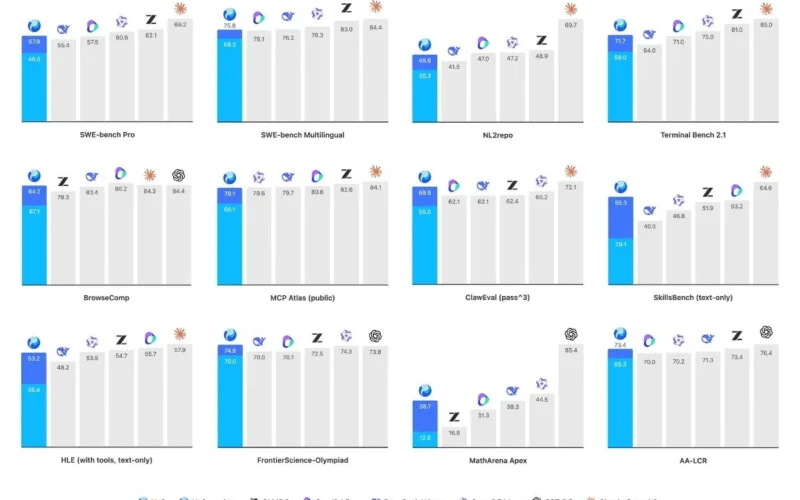
Running Tencent Hy3 on a single GPU is now possible for local AI enthusiasts. This massive 295B Mixture-of-Experts (MoE) model activates only 21 billion parameters per token. Consequently, new community GGUF quantizations enable efficient serving via llama.cpp on consumer hardware.
This release marks a significant milestone for 2026. It competes with trillion-parameter flagships under an Apache 2.0 license. Therefore, users can access frontier-level performance without enterprise infrastructure.
Understanding the Hy3 Sparse Architecture
Hy3 utilizes a sparse MoE architecture featuring 192 routed experts. Only eight experts activate per token, which keeps compute requirements manageable. Key specifications include:
- Total parameters: 295B
- Active parameters: 21B plus a 3.8B speculative layer
- Experts: 192 total with top-8 routing
- Context window: 256K tokens (expandable to 1M via GGUF)
- License: Apache 2.0 for commercial use
For comparison, DeepSeek V4 Flash has roughly 13B active parameters. Hy3 is slightly larger but remains highly competitive. For more context on this shifting landscape, read our analysis on how DeepSeek V4-Pro Just Permanently Repriced Enterprise AI — Here’s What That Actually Means.
GGUF Quantizations for Local Inference
The community quickly released accessible GGUF files for running Tencent Hy3 on a single GPU. These tiers effectively balance quality and hardware constraints:
- IQ1_M (1-bit): Fits high-memory GPUs but reduces reasoning depth
- Q2_K: Balances quality and size for single-node serving
- Q4_K_M (4-bit): The recommended sweet spot requiring multiple GPUs
The IQ1_M quantization represents the true breakthrough for local inference. It compresses the full model under 92 GB. However, you should keep context lengths modest and quantize the KV cache. Fortunately, all releases preserve the speculative decoding layer at high precision.
Running Tencent Hy3 on a Single GPU with llama.cpp
You must currently build llama.cpp from a specific PR branch to support this architecture. Once built, serving becomes straightforward for basic inference tasks.
Additionally, enabling Multi-Token Prediction yields up to 37% speed improvements on CUDA hardware. Please note these critical configuration tips for optimal performance:
- Use Jinja templates: Pass a fixed chat template file for tool calling
- Manage memory: Offload expert tensors to CPU if VRAM is insufficient
- Expect slow loads: Large files take several minutes to initialize
- Adjust sampling: Use temperature 0.9 and top-p 1.0
Benchmark Performance and Limitations
Internal benchmarks show strong results for STEM and agentic tasks. Hy3 scored 90.4 on GPQA Diamond and 72.0 on USAMO 2026. Furthermore, blind expert tests placed it ahead of GLM-5.1 in frontend development workflows.
However, community testing reveals some limitations. Coding benchmarks trail behind GPT-5.4 significantly. Yet, real-world users report better reliability in multi-step agentic workflows compared to many competitors. As the open-weight space evolves rapidly, upcoming models like GLM-5.5 Could Arrive in August: Z.ai’s 1 Trillion Parameter Beast Takes Aim at the West may soon challenge these standings.
Production Serving Options
Production deployments typically require high-memory GPUs like the H20. Tencent recommends eight cards for full-quality inference with vLLM. Alternatively, you can distribute inference across multiple machines using mesh networking.
Finally, Tencent offers a free API tier on OpenRouter for two weeks post-launch. This allows benchmarking against real workloads before investing in infrastructure. Weights are available on Hugging Face for immediate download.
Frequently Asked Questions About Tencent Hy3
Can I really run Tencent Hy3 on a single GPU?
Yes, the IQ1_M GGUF quantization compresses the model under 92 GB. This fits within high-memory consumer GPUs, though you must manage context length carefully.
How does Hy3 compare to other open-weight models?
Hy3 outperforms GLM-5.1 in frontend tasks and scores 90.4 on GPQA Diamond. However, it currently trails GPT-5.4 in pure coding benchmarks.
Is Tencent Hy3 free for commercial use?
Yes, the model is released under the Apache 2.0 license. This permits unrestricted commercial use and modification without licensing fees.
