354ms to First Audio: Gemma 4 31B on LiveKit Changes the Math for Voice AI
LiveKit now hosts Gemma 4 31B with 354ms time to first audio. This open-weight model beats GPT-4.1 on agentic benchmarks while maintaining real-time conversational speed.
Why 354ms to First Audio: Gemma 4 31B on LiveKit Changes the Math for Voice AI
In voice applications, latency defines the user experience. Therefore, achieving 354ms to first audio: Gemma 4 31B on LiveKit changes the math for voice AI significantly. Most users perceive delays over 400ms as unnatural.
Google’s Gemma 4 31B is now available on LiveKit Inference. It delivers 354ms time to first audio and 192ms time to first token. These metrics determine whether users stay engaged or disconnect. For developers building real-time agents, these numbers are critical.
Understanding LiveKit Inference Infrastructure
LiveKit provides open-source infrastructure for real-time audio and video. Its hosted inference runtime serves AI models with low jitter. Unlike general APIs, it optimizes specifically for voice pipelines.
Standard LLM endpoints often add too much overhead. Consequently, total response latency exceeds acceptable limits for live conversation. LiveKit Inference closes this gap by design.
Key Latency Metrics Explained
Two figures define performance for Gemma 4 31B on LiveKit. First, the time to first token is 192ms. This measures how quickly generation begins after a prompt.
Second, the time to first audio is 354ms. This represents end-to-end latency from input to spoken output. Users actually experience this metric. Sub-400ms performance feels genuinely responsive rather than delayed.
Benchmark Performance and Agentic Tool Use
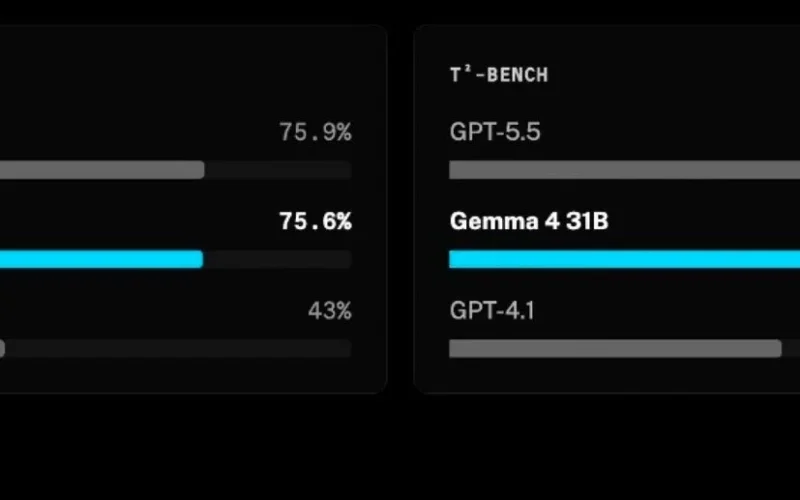
Speed alone does not guarantee utility. Smaller models often fail at complex agentic tasks like tool calls. However, Gemma 4 31B scores 76.9% on tau2bench.
This benchmark evaluates real-world reasoning for actions like booking appointments. Notably, this score beats GPT-4.1 on the same test. A 31B open model outperforming a proprietary leader suggests the frontier has moved rapidly.
Model Size and Operational Efficiency
Gemma 4 31B occupies a strategic operational band. It handles nuanced context without massive compute overhead. This mirrors broader industry trends toward efficient inference.
For example, techniques like Kimi K3 Just Dethroned Every Western Model on LMArena’s Code Arena show that optimization matters as much as raw scale. LiveKit applies similar principles to production voice workloads.
Solving the Agentic Reliability Challenge
Modern voice agents must take concrete actions. They update records, check inventory, and trigger workflows. Therefore, models need structured output parsing and error recovery capabilities.
Many fast models hallucinate syntax or fail under pressure. The tau2bench result suggests Gemma 4 31B handles these loads robustly. Reliability is vital because voice failures occur in real time before users.
Evaluation Criteria for Voice Builders
Teams should evaluate this release against specific needs. First, does your use case require agentic tool use? If so, the benchmark results are directly relevant.
Next, consider your latency tolerance. Sub-400ms audio provides margin for high-latency connections. Finally, assess cost and open-weight provenance. Open models avoid proprietary licensing fees at scale.
The Bottom Line
Gemma 4 31B on LiveKit delivers verified performance claims. It achieves 354ms time to first audio and beats GPT-4.1 on agentic benchmarks. This shifts the latency-capability frontier for open-weight voice AI.