After months of delays, missed targets, and a scrapped base model, Gemini 3.5 Pro finally looks close to launch. Leaks point to a July 17 release, a completely new pretraining run, and internal benchmarks that reportedly have Google's own testers excited for the first time in a while.
Here's what's circulating, what's confirmed, and what to treat with a healthy dose of skepticism.
What's Leaking About Gemini 3.5 Pro
According to multiple reports tracking Google's internal testing on Antigravity and LMArena, Gemini 3.5 Pro is outperforming rival models in internal evaluations. The most-cited details include:
- Launch window: July 17 is the leading target date, with July 24 floated as a fallback
- A fresh pretraining run: Google reportedly scrapped the original base model and restarted training from scratch
- 2 million token context window — double what Gemini 3 Pro currently offers
- A new "Deep Think" reasoning mode built for multi-step planning and tool orchestration
- Internal codename "Cappuccino"
- Stronger coding, planning, and agentic workflows, including longer-horizon autonomous tasks
- Major gains in web development, UI generation, and SVG output — an area Gemini has historically lagged competitors in
Separating Confirmed Facts From Rumor
It's worth being precise here, since a lot of coverage blurs the line. What Google has actually confirmed: Gemini 3.5 Pro is coming, and it will follow the already-released Gemini 3.5 Flash. Sundar Pichai previewed the model at Google I/O in May, originally targeting a June release before pushing the timeline into July while gathering feedback from early testers on Antigravity and LMArena.
Everything else — the exact July 17 date, the 2M context window, the Deep Think mode, the "Cappuccino" codename — comes from leaks, screenshots, and unnamed testers rather than an official Google model card or blog post. That doesn't mean the leaks are wrong; several outlets tracking the story independently converge on similar specs. But until Google publishes pricing, a model ID, and benchmark numbers, these details should be treated as directionally likely rather than locked in.
Why the Delay Happened
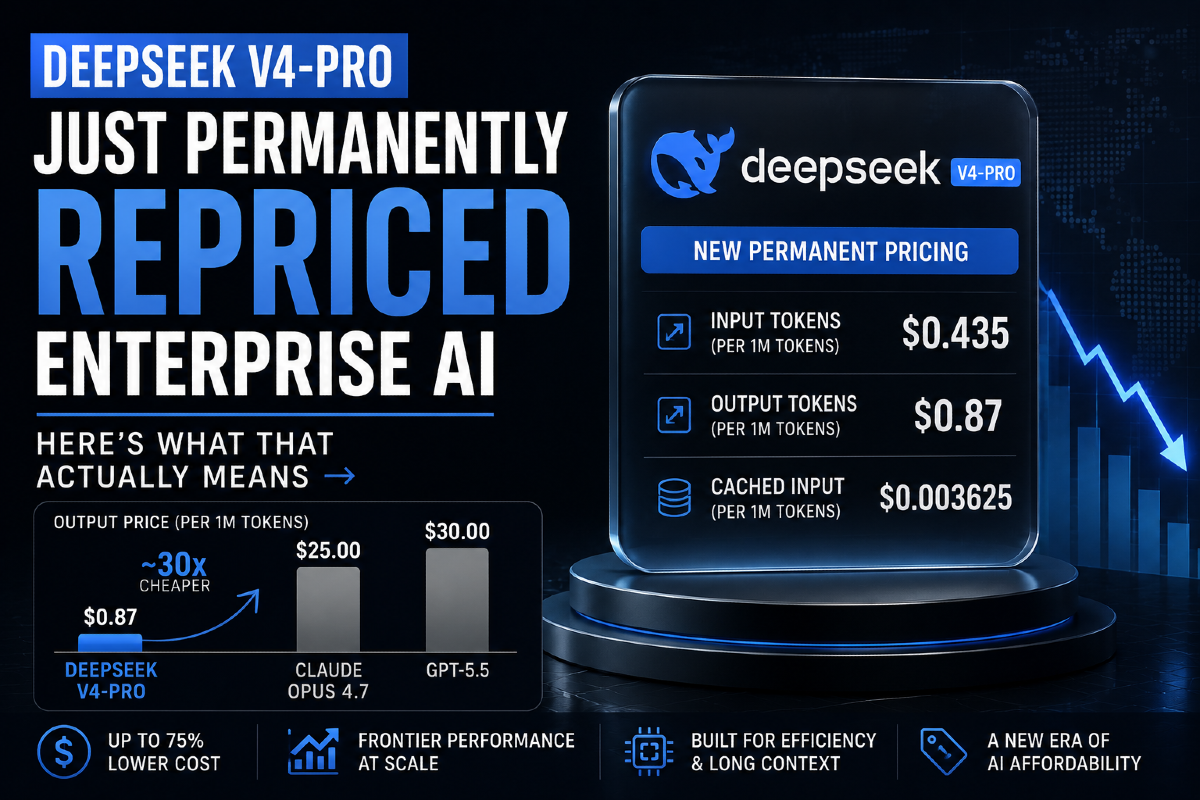
The slip from June to July reportedly stems from Google restarting pretraining after the original base model underperformed internally, particularly on long-context tasks and complex agentic workflows. Reports also describe rate-limit and token-consumption feedback from Antigravity testers shaping the final tuning pass — the same kind of enterprise cost pressure that's been reshaping how every major lab ships frontier models this year.
What This Means for Developers
If the leaked specs hold up, Gemini 3.5 Pro would put Google in direct competition with the current wave of frontier releases. Stronger SVG and interactive web generation would address a longstanding complaint that Gemini tends to produce incomplete or lazy frontend output compared to competitors. A 2M context window, if it performs well on needle-in-haystack retrieval rather than just accepting bigger prompts, would also be a meaningful edge for codebase-scale tasks.
This launch lands in an unusually crowded month. Anthropic's Claude Opus 5 is reportedly arriving within days, Moonshot AI's Kimi K3 is expected around July 15, and OpenAI just reported 8 million active users scaling on GPT-5.6 Sol. Z.ai's rumored trillion-parameter GLM-5.5 is also on the horizon for August. July 2026 is shaping up to be one of the most contested release windows of the year.
What to Watch For
The reliable way to confirm any of this is to watch Google's own channels rather than secondary leak coverage: a post on the official Gemini blog, a live model ID in the Gemini API or Vertex AI model list, and a published model card with benchmarks and pricing. Until one of those appears, treat July 17 as a likely — not certain — date.
For now, Gemini 3.5 Pro looks like Google's most serious attempt yet to close the gap in coding and agentic reasoning. Whether it delivers will depend on how the model performs once real developers get their hands on it, not on the leaked spec sheet.