Taiwan Semiconductor Manufacturing Company has just posted the best quarter in its 38-year history — and its response was to immediately spend more. A lot more.
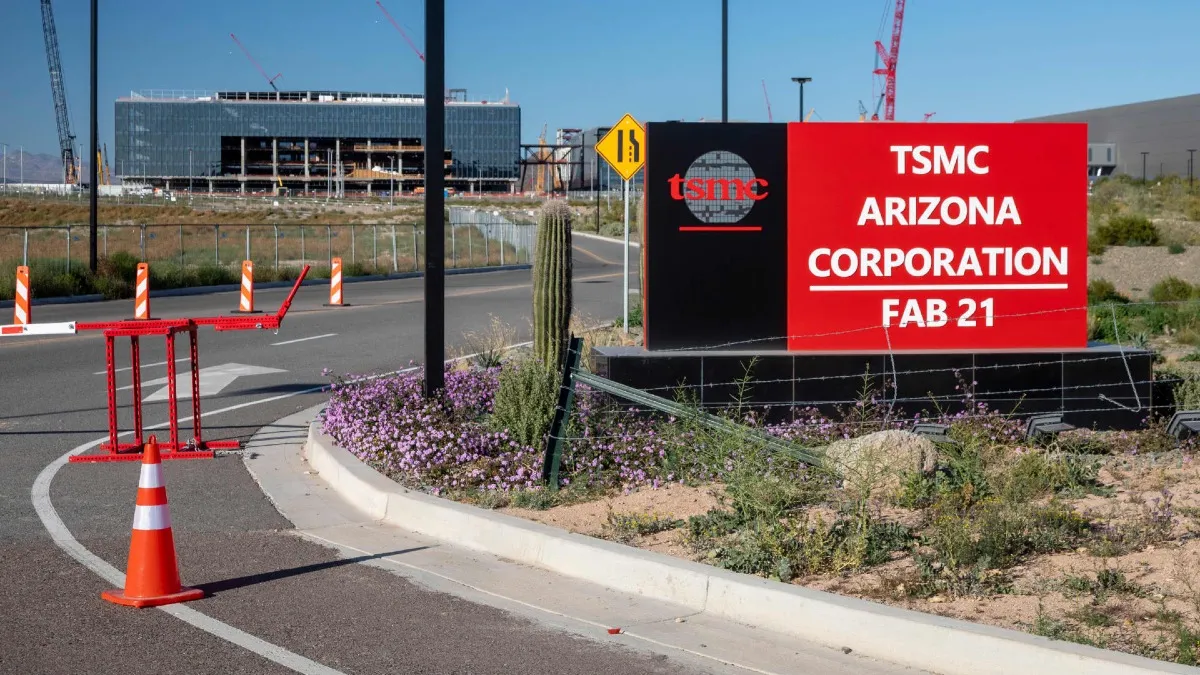
Following a record Q2 2026 in which TSMC reported $40.2 billion in revenue (up 36% year-over-year) and net income that jumped 77.4% to NT$706.56 billion, CEO C.C. Wei announced an additional $100 billion investment in Arizona, pushing the company's total committed spending in the state to $265 billion. CFO Wendell Huang then told CNBC the rationale in blunt terms: the company sees a "multi-year demand mega trend" and has no intention of letting anyone else capture it.
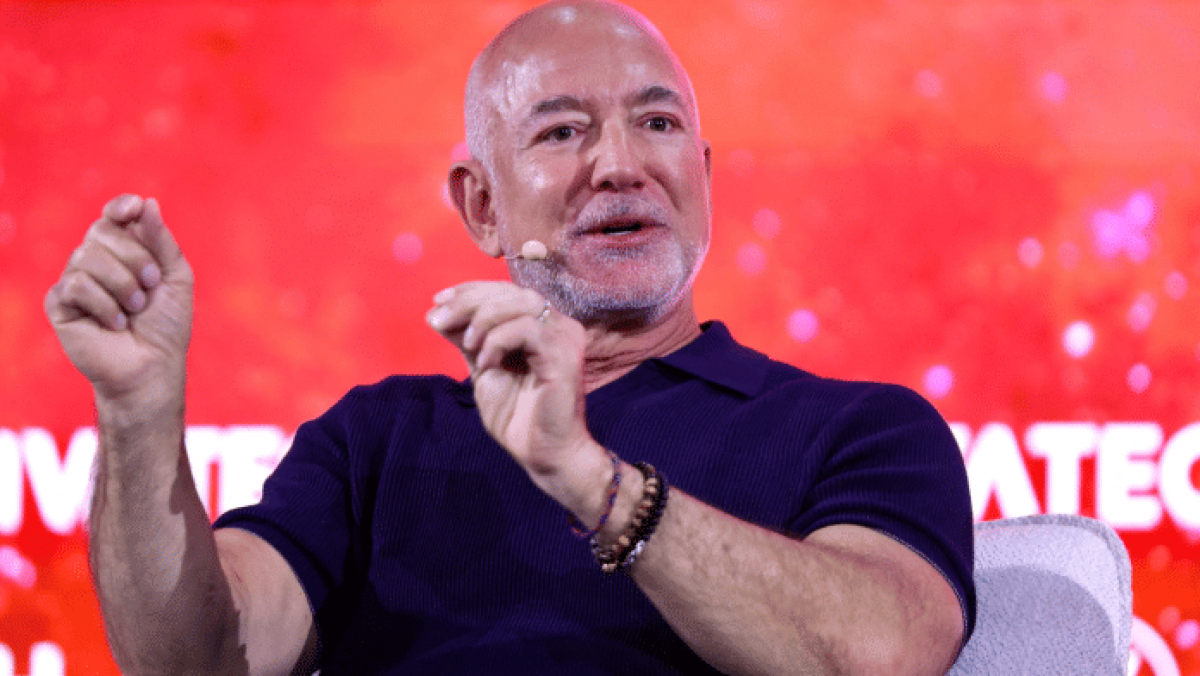
"We're seeing this strong-structure, multi-year demand, and we do not plan to leave any food on the table for anybody else," Huang said. "As long as the megatrend is right, then we're able to continue to deliver profitable growth to our shareholders."
A Quarter That Rewrites the Definition of a Chip Company
The scale of TSMC's Q2 results is difficult to contextualize without a reference point. The company's gross margin hit 67.7% — an all-time high. Its operating margin reached 60.3%, also a record. Advanced nodes at 7nm and below now represent 77% of all wafer revenue, illustrating just how completely the company's business has reoriented around AI and high-performance computing.
The node breakdown is telling. The 5nm process contributed 33% of wafer revenue, 3nm added 30%, and 2nm — still in early ramp — already accounts for 3%. The 2nm (N2) node represents a fundamental architectural shift: it uses gate-all-around nanosheet transistors rather than the FinFET design that has powered every prior TSMC node, delivering 15% better performance or 30% better energy efficiency at equivalent speeds compared to 3nm.
By platform, the story is equally stark: high-performance computing — the category that includes AI accelerators for customers like Nvidia, Apple, AMD, and Broadcom — now accounts for 66% of TSMC's total revenue. Smartphones come second at 22%. The company that once balanced its business across consumer electronics and enterprise compute has become, functionally, an AI infrastructure company that also makes phone chips.
What the Arizona Commitment Actually Means
The $100 billion Arizona addition brings TSMC's total committed U.S. spend to $265 billion — a figure that would have seemed implausible five years ago for a company whose manufacturing was almost entirely concentrated in Taiwan. The investment will fund additional 2nm semiconductor wafer fabrication facilities and advanced packaging capacity, with CEO Wei indicating that up to four more plants could eventually be built in Arizona beyond the eight already announced or underway.
Phase one of the Arizona buildout — using 4nm technology — is already in high-volume production and turned its first profit. Phase two, currently under construction, is targeting 2nm commercial production in the second half of 2027. On both nodes, TSMC is simultaneously making an aggressive conversion: 5nm capacity in Taiwan is being fast-tracked over to support 3nm demand, which is described as "very tight" with no relief expected soon.
To back the expansion, TSMC raised its full-year 2026 capital expenditure guidance to between $60 billion and $64 billion — up from the prior range of $52–56 billion. Management also indicated that aggregate capital spending across the next three years will exceed what it spent in the previous three. The company guided Q3 revenue of $44.6–45.8 billion and lifted its full-year revenue growth outlook to "slightly above 40%" in dollar terms.
The Tension Beneath the Numbers
TSMC's CFO was explicit that current demand is structural, not cyclical. But that distinction carries a question the earnings call didn't fully answer: if demand is structural and multi-year, why isn't TSMC keeping pace? The short answer is that advanced fabs take years to build, qualify, and ramp — meaning the $100 billion going into Arizona won't translate into additional wafer output until well into the decade.
There's also a margin dynamic worth watching. The 2nm ramp is expected to dilute gross margin by 3–4 percentage points in the second half of 2026. Overseas fab costs add another 2–3% dilution near-term, widening to 3–4% in later stages. At scale, TSMC believes AI pricing power and utilization rates will offset those headwinds — but the company is explicitly trading near-term margin compression for long-term capacity dominance.
This is the same structural bet playing out across the AI infrastructure ecosystem, and it raises uncomfortable questions. Goldman Sachs estimated that AI infrastructure consumed $700 billion in 2025 with near-zero GDP return — not because the technology isn't real, but because the economic returns from infrastructure at this scale take years to materialize. TSMC's aggressive capex posture is the supply-side version of the same wager.
A Global Race for Chip Sovereignty
TSMC's Arizona expansion doesn't happen in a vacuum. It's partly a response to U.S. policy pressure to onshore critical semiconductor manufacturing, and partly a recognition that customer concentration risk in Taiwan — earthquakes, geopolitical exposure — is real. The company's Taiwan operations incurred NT$3 billion in earthquake-related losses in Q2 2024 and NT$5.3 billion in Q1 2025 alone.
Nationally, the stakes are visible elsewhere too. Japan recently announced a sweeping national physical-AI initiative backed by Nvidia's most advanced Rubin GPUs, signaling that governments increasingly view semiconductor and AI infrastructure as strategic assets rather than commercial ones. Meanwhile, China is pursuing a parallel path: DeepSeek V4 has been adapted to run entirely on Huawei Ascend processors, removing Nvidia from the equation entirely for frontier AI workloads on the other side of the export control divide.
TSMC sits at the center of a world that needs more of everything it makes — and where the geopolitical cost of not having domestic supply has become impossible for governments to ignore. The $265 billion Arizona commitment isn't just a capex decision. It's a statement about who controls the physical layer of the AI economy for the next decade.
The demand, as Huang put it, isn't going anywhere. And neither is TSMC's appetite to supply it.
Related Reading
- Goldman Sachs: AI Consumed $700B in 2025 — the GDP Return Was "Basically Zero"
- Japan Is Building a National Physical-AI System — and 27,500 Rubin GPUs Are Just the Start
- Pennsylvania Farmers Are Selling Dirt for 35x Its Value — and the AI Industry Thinks That's Cheap
- DeepSeek V4 Runs on Zero Nvidia Silicon — and Huawei's Biggest Chip System Debuts Tomorrow