EU Court Adviser Says Gemini’s News Summaries Can Breach Publisher Rights, but Only When They Replace the Article
A top EU court adviser says Gemini's news answers can infringe press publisher rights when they copy an article's expression or bypass a paywall. The opinion is not binding, and the Court has not ruled.
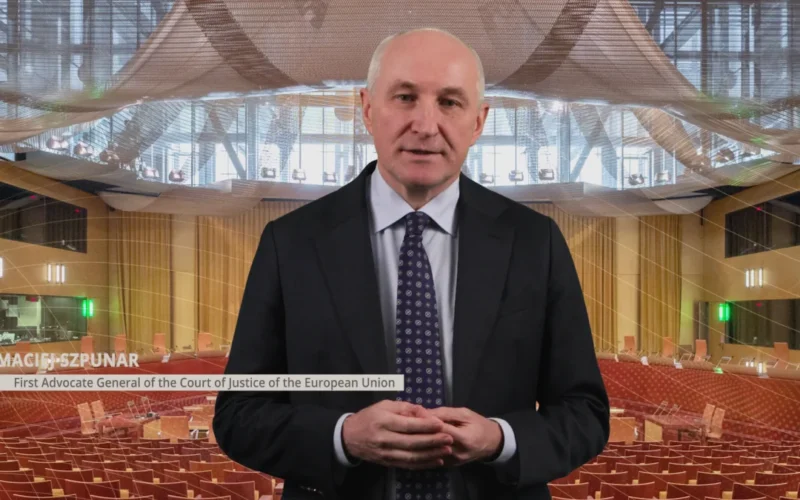
Europe’s top court received its first generative AI copyright opinion on 3 November 2026, and it gives both sides a partial win. Advocate General Maciej Szpunar said Google Gemini’s retrieval and real-time reuse of online press articles can infringe publishers’ rights, but only in specific circumstances.
The case is C-250/25, Like Company v Google Ireland, referred by the Budapest Regional Court. Like Company, a Hungarian operator of web portals, says Gemini reproduced and made its articles available to the public between 13 June 2023 and 31 May 2024. Google denies infringement. The opinion is advisory, and the Court of Justice will issue the binding judgment later.
Quick answer: AI news summaries are not automatically illegal. The Advocate General says a chatbot can infringe a publisher’s reproduction right when it accesses an article unlawfully, such as by getting around a paywall, or when its answer copies the article’s form of expression so recognisably that the reader no longer needs the original.
What the Advocate General decided
The reference asked four questions. Two concerned using press articles to train Gemini’s large language models. The other two concerned the answers Gemini gives users.
Szpunar advised the Court to declare the training questions inadmissible. There was no evidence that Like Company’s articles trained Gemini, he said, and training an LLM is not an “online use” of a press publication. For completeness, he added that training is, as a rule, freely permitted under the text and data mining exception in Article 4 of the Digital Single Market Directive.
On the output questions, he proposed a two-part test. First, did the chatbot access the publication unlawfully, in particular by circumventing effective technical measures such as a paywall or scraping block? Second, did the answer merely report facts, or did it reuse the article’s form of expression in a recognisable way, to the point that the reader is entirely dispensed from opening the original?
He stressed that the publisher’s right does not protect facts. It protects the specific form of expression and the investment behind it. A chatbot that reports a singer’s birthplace or a company’s revenue is not automatically copying protected expression. One that reproduces the structure, phrasing, and detail of the article closely enough to replace it is in a different position.
For the making available right, the threshold is a pattern. That right is infringed, as a rule, where the article’s form of expression is systematically recognisable in answers to related user queries. The opinion points to a distribution of outputs, not a one-off coincidence.
Liability depends on the provider. Szpunar says the provider is liable where the acts are inherent to its business model, or where it failed to put in place appropriate measures to counter them credibly and effectively. Product design, retrieval policy, and monitoring are now part of the legal analysis.
The two-part test in practice
The first limb is access. If a publisher puts an article behind a paywall and Gemini retrieves the full text anyway, the opinion makes that a key factor in favour of unlawful use. The same logic applies to technical blocks on scraping. A freely readable article is not automatically fair game for full reproduction, but the access question is weaker there.
The second limb is substitution. The issue is not whether the answer is short or long. It is whether the answer carries the article’s expression in a recognisable form and gives the reader everything they wanted from the original. A neutral list of facts is safer. A summary that follows the article’s narrative, quotes its distinctive phrases, and covers its detail is closer to the line. The opinion sets no word count or similarity score, so the test cannot be reduced to a character limit.
The case at a glance
| Item | Detail |
|---|---|
| Court | Court of Justice of the European Union |
| Case | C-250/25, Like Company v Google Ireland |
| Opinion date | 3 November 2026 |
| Advocate General | Maciej Szpunar, First Advocate General |
| Referring court | Budapest Regional Court, Hungary |
| Claimed damages period | 13 June 2023 to 31 May 2024 |
| Questions | Two on LLM training, two on chatbot answers |
| Binding effect | None. The Court’s judgment comes later. |
Why publishers will cite this opinion
The opinion gives publishers a vocabulary: unlawful access, recognisable expression, substitution, systematic output, and provider liability. Expect licensing talks and court filings to use those terms. It also lands in the middle of a wider fight over AI search economics. The blog has covered how AI answers are changing the logged-out web, including Reddit’s bet on login walls and licensing, and the UK probe into Meta’s AI content terms.
For news organisations, the practical question is whether the answer replaces the click. An answer that includes the article’s distinctive reporting and keeps the user inside the chatbot takes both the visit and the ad impression. The opinion treats that loss as relevant to copyright, not just to the business model.
What it means for Indian developers
India does not have a standalone press publisher right equivalent to Article 15 of the EU directive. Indian publishers rely on copyright in original literary works, contracts, and platform terms. Facts and ideas are not protected, but a substantial reproduction of the way an article is written can still be infringement.
If a product serves users in the EU, the EU right can apply to the online use of EU publishers’ articles. The Advocate General did not settle the applicable law question, so teams should not assume that hosting the model outside Europe removes the risk.
For an Indian AI news product, the safest choices are unglamorous. Respect paywalls and robots directives. Store the minimum text needed for retrieval. Prefer factual extraction over long verbatim passages. Show the source and link out. Keep retrieval logs so you can answer a complaint. Have a removal policy. If summaries are central to the product, consider a licence with the publishers you rely on most.
Indian language news is fragmented across many small publishers, and a licensing or revenue-share layer could become a differentiator. None of this is legal advice.
Confirmed vs Not Confirmed
| Status | Claim |
|---|---|
| Confirmed | The opinion was delivered on 3 November 2026 in Case C-250/25, Like Company v Google Ireland. |
| Confirmed | Szpunar said retrieval and real-time reuse of press publications by AI chatbots can infringe publisher rights in certain circumstances. |
| Confirmed | The test looks at unlawful access and at whether the answer recognisably reuses the article’s expression and replaces the original. |
| Confirmed | The training questions were declared inadmissible, and training is generally covered by the text and data mining exception. |
| Confirmed | The opinion is not binding. The Court of Justice has not delivered judgment. |
| Not confirmed | Whether Gemini actually infringed Like Company’s rights. The national court must decide. |
| Not confirmed | Whether Like Company qualifies as a press publisher under EU law. |
| Not confirmed | Whether the Court of Justice will follow the Advocate General. |
| Not confirmed | Any damages figure, injunction, or EU-wide ban. None has been ordered. |
| Not confirmed | How the test applies to AI Overviews, ChatGPT, Perplexity, or other news chatbots. |
| Not confirmed | Any numerical threshold for “recognisable” copying or being “entirely dispensed” from the original. |
FAQ
Is Gemini now illegal in the EU?
No. The opinion is advisory and imposes no ban. It sets out when a national court may find that a chatbot infringed a publisher’s rights. The Court of Justice has not ruled, and any remedy depends on the national proceeding.
Does the opinion cover AI training?
Only indirectly. The training questions were declared inadmissible because there was no evidence that Like Company’s articles trained Gemini. For completeness, the Advocate General said training is generally permitted under the text and data mining exception, subject to the rights holder’s opt-out. The operative part concerns chatbot answers.
What does “entirely dispensed from accessing the original” mean?
It means the answer gives the reader what they wanted from the article, so they have no reason to open it. A short factual answer is less likely to meet that test. A detailed summary that follows the article’s structure and distinctive language is more likely to meet it.
Are facts in a news article protected?
No. The opinion says the right protects the specific form of expression and the investment in the publication, not a monopoly over the news. A chatbot can report the same facts in its own words. It cannot copy the expression in a way that substitutes for the article.
What should an AI news product do now?
Respect paywalls and scraping blocks, limit verbatim reproduction, cite and link to the source, log retrievals, and have a takedown process. If news summaries are central, talk to publishers about a licence. The opinion creates no safe harbour, but it gives product teams a clear list of risk factors.
Sources
- Court of Justice of the European Union, Press release No 155/26, 3 November 2026
- Court of Justice of the European Union, Opinion of Advocate General Szpunar in Case C-250/25, 3 November 2026, ECLI:EU:C:2026:919
- Directive (EU) 2019/790 on copyright and related rights in the Digital Single Market, 17 April 2019, Articles 4 and 15
- Reuters, Google AI chatbot’s use of press items may infringe copyright rules, EU court adviser says, 3 November 2026
- Court of Justice of the European Union, event page for the Opinion in Case C-250/25, 3 November 2026