Apple Opens Siri AI to Every App, but Your Users Wait Until Spring
Apple opened Siri AI to every app on 3 November 2026, but the integrations stay in beta until spring. The EU is excluded, Hindi is not listed, and the developer terms are missing.
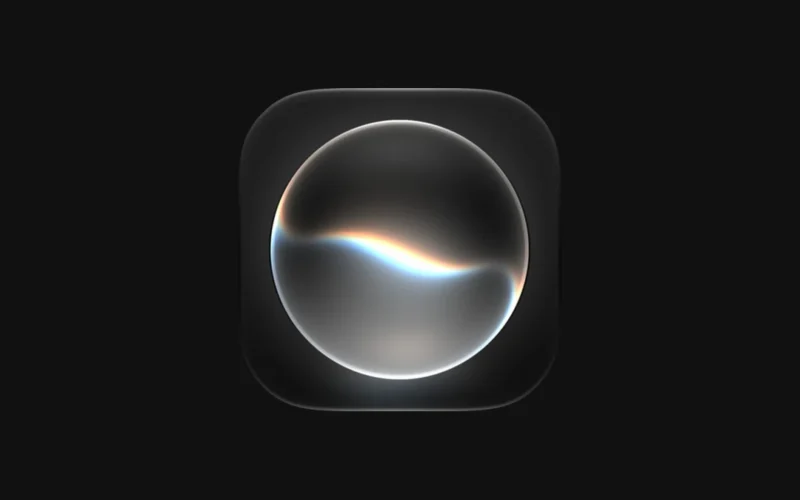
Apple opened Siri AI to every app developer on 3 November 2026, turning the assistant into a front door for third-party actions. The route is App Intents, the framework behind Siri, Spotlight and Shortcuts. The scope is wider: custom actions, custom entities and cross-app tasks.
It arrived with the iOS 27.3, iPadOS 27.3, macOS 27.3 and visionOS 27.3 betas. Any registered developer can use it, with no new entitlement or separate program, according to Apple’s announcement.
The catch is timing. Apple calls it early access before shipping “in a few months”, with App Store submissions opening in the spring. Developers can build now. Customers cannot use the integrations yet.
Quick answer: Yes, any app can integrate with Siri AI now, but only in a developer beta. Nothing reaches customers until App Store submissions open in the spring. The EU is excluded on iOS, iPadOS and watchOS, and the developer terms are unpublished.
What Apple actually opened
App Intents lets an app expose actions as tools and content as entities. Siri can call a tool, show the result in a card snippet, and pull an entity from one app into an action in another. Apple’s example: send a favourite pair of sneakers to a partner in a messaging app. Siri finds the sneakers, identifies the partner in Contacts, and hands both to the messaging app.
Apple also lets Siri surface any entity in the Spotlight semantic index, not just entities that match a system schema. Apps with unusual catalogues no longer have to fit predefined domains.
App skills handle complex requests. A skill is a Markdown file inside a bundle that Xcode compiles into the app. Its name runs 1 to 64 lowercase characters, its one-line description up to 1,024 characters, and its body up to 10,000 characters of instructions: which tool intent to use for which step, how to tell similar intents apart, and what to avoid.
Apple is explicit that skills are guidance, not code. They cannot enforce deterministic behaviour, and Siri does not execute the listed intents in sequence. A fixed script still belongs in the app.
The developer-friendly part
The lack of an entitlement is the most important detail. Apple is not running an allowlist or asking apps to join a new program. Existing App Intents code can be updated, so the work extends something many iOS teams already maintain. The blog has followed Apple’s earlier Siri AI rollout, including the HomeView smart display and the iOS 27 Messages overhaul.
Apple also added testing tools. The Siri Integration Advisor in Xcode reviews an app’s intents and suggests fixes. A scripting framework runs requests against Siri and compares responses as intents change. Apps should be tested on a real device, not the Simulator, and internal TestFlight builds are supported.
App skills have a narrow structure. An app target can hold one skills bundle, each skill lives in its own folder, and the bundle can contain only the Markdown file. That is easy to draft, but version control matters. A bad instruction can change how Siri behaves for every user.
Tim Sneath, Apple’s director for developer tools and frameworks, called it a preview that “enables apps to integrate with Siri AI” with new APIs. He gave no customer launch date.
Starting today with the 27.3 betas, the new Siri AI Developer Preview enables apps to integrate with Siri AI. New APIs that you can build with, documented here: https://t.co/EO4MkbhBK2
— Tim Sneath (@timsneath) November 3, 2026
The timetable is the real gate
Apple’s language is careful. The preview ships “in a few months” and submissions open “in the spring”. It has published no date, release version or list of launch apps.
It has also not published terms and usage policies. Until they exist, developers cannot answer basic commercial questions. Does an action count as a transaction? Who pays for server-side inference? What happens when two apps claim the same request?
The preview itself may change, and Apple warns that App Intents APIs can shift. Building now is useful research, not a stable distribution channel.
Distribution is the second gate
Siri AI runs on Apple Intelligence-capable devices and in six languages: English, French, Japanese, Korean, Portuguese and Spanish. Traditional Chinese, Norwegian, Turkish and Vietnamese are coming. The EU is excluded on iOS, iPadOS and watchOS while Apple works on a path forward. Users under 13 cannot use it.
Those filters shape the audience more than the API does. One integration can reach supported markets, but not every iPhone user or every language. Apple has published no country-level breakdown, so the early audience size is unknown.
Old Siri integration vs the Siri AI preview
| Area | Existing Siri app integration | Siri AI Developer Preview |
|---|---|---|
| Scope | Actions and entities that fit supported system schemas | Custom actions, custom entities, and any entity in the Spotlight semantic index |
| Complex requests | Single actions, or multi-step flows assembled in Shortcuts | App skills give Siri Markdown guidance for choosing and combining tool intents |
| Testing | Manual testing on device or through TestFlight | Siri Integration Advisor plus scripted conversation evaluations |
| Access | Existing App Intents work | No new entitlement or separate developer program |
| Skill limits | No app skills | 1 to 64 character name, 1,024 character description, 10,000 character body, one bundle per app target |
| Availability | Shipping Siri, where the feature and language are supported | Beta only. Six languages, Apple Intelligence devices, EU blocked on iOS, iPadOS and watchOS |
| Customer release | Live | “In a few months”; App Store submissions open in spring |
What it means for Indian developers
India is outside the EU block, so the legal restriction does not apply. The practical restrictions do. Apple’s language list does not name Hindi or an India-specific English locale, and there is no separate India launch date. English is supported, but an app built for Indian users cannot assume Siri AI will answer them like a user in the United States.
The sensible move is to build the App Intents layer now, because it also improves Shortcuts, Spotlight and Siri suggestions, and to keep the Siri AI skill behind a flag. Test it on a supported device with a supported language. Measure whether Siri picks the right tool for how users actually speak, not demo phrasing.
Skills are Markdown, so iteration can sit with product and support teams rather than only with iOS engineers. That suits small teams. It is also a risk: natural-language instructions are harder to unit test than code, and Apple’s documentation says Siri may not follow them in order. Apple’s privacy rules for agents are also getting tighter.
For apps that move money, book travel, send messages or delete data, keep a confirmation step. A voice request is not consent. The first beneficiaries: apps with structured catalogues and clear actions, such as travel, food and payments.
Confirmed vs Not Confirmed
| Status | Claim |
|---|---|
| Confirmed | Apple announced the Siri AI Developer Preview on 3 November 2026 for the iOS, iPadOS, macOS and visionOS 27.3 betas. |
| Confirmed | Any app can integrate through App Intents, with no new entitlement or separate developer program. |
| Confirmed | App skills are Markdown files compiled by Xcode, with a 10,000 character body and a 1,024 character description limit. |
| Confirmed | Apple says the preview comes before customer shipping “in a few months”, with App Store submissions opening “in the spring”. |
| Confirmed | Siri AI is unavailable in the EU on iOS, iPadOS and watchOS, and unavailable to users under 13. |
| Confirmed | Server-side Apple Intelligence features have daily usage limits, and expanded access will cost extra in the future. |
| Not confirmed | The exact customer launch date, or which third-party apps will support the integration at launch. |
| Not confirmed | The developer terms and usage policies, including any fees for developers. |
| Not confirmed | Whether Hindi or an India-specific English locale will be supported at launch, or whether the EU restriction will lift in 2027. |
| Not confirmed | Accuracy, latency or task-completion benchmarks. Apple published none with the preview. |
FAQ
Can any app integrate with Siri AI now?
Any registered developer can build against the 27.3 betas. Shipping is separate. Apple has not opened App Store submissions for these integrations, and the APIs may change during the preview.
When will customers get Siri AI app integrations?
Apple says the preview comes “before first shipping to customers in a few months”, with submissions opening “in the spring”. It has named no day, so any exact launch date is a guess.
Is Siri AI available in India?
India is outside the EU restriction, and English is supported. But Apple’s list does not name Hindi or an India-specific English locale, and the feature needs an Apple Intelligence-capable device. Apple has published no India-specific availability or device figures, so the Indian audience is unconfirmed.
Does Siri AI work in the EU?
Not on iOS, iPadOS or watchOS. Apple says Siri AI is unavailable there and that it is working with the EU on a path forward. It has given no date for EU availability.
Do developers pay Apple for Siri AI actions?
Apple has not published terms or a price for developer integrations. Its consumer terms allow usage limits, and the announcement says expanded server-side access will cost extra in the future. That is a user-side limit, not a developer price.
Sources
- Apple Developer, “Siri AI is now open to all developers”, 3 November 2026
- Apple Developer Documentation, “Siri AI Developer Preview”, accessed 4 November 2026
- Apple Developer Documentation, “Orchestrating complex actions with app skills”, accessed 4 November 2026
- Apple, “Apple Intelligence Usage Terms”, published 9 September 2026
- 9to5Mac, “Developers can now create advanced app skills for Siri AI”, 3 November 2026
- The Verge, “Apple starts giving Siri AI access to third-party apps”, 3 November 2026
- Tim Sneath, Director for Developer Tools and Frameworks at Apple, post on X, 3 November 2026
- Daring Fireball, “Apple Begins Opening Siri AI to Developers”, 3 November 2026