Sakana AI’s Fugu-Cyber Matches Frontier Models — But Says That’s Not Enough
Sakana AI’s Fugu-Cyber matches frontier models on benchmarks, yet argues scores alone cannot solve enterprise cybersecurity without proper integration.
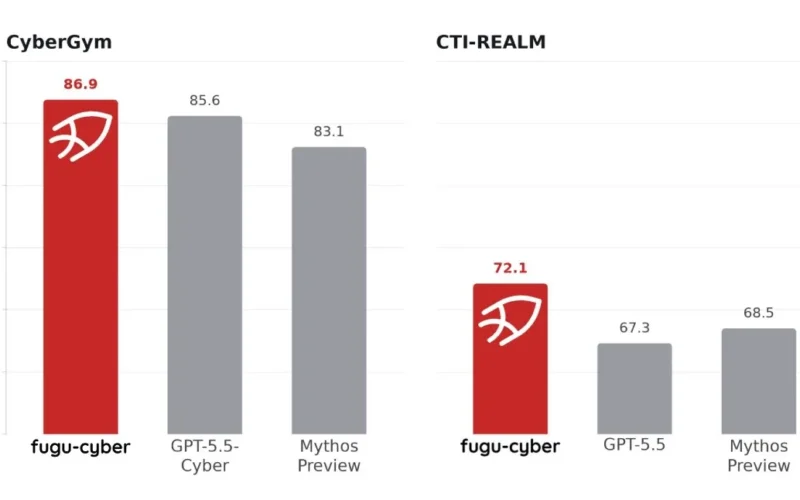
Sakana AI’s Fugu-Cyber matches frontier models on security benchmarks, but the company says performance is not enough. This specialized multi-agent orchestration model targets enterprise cybersecurity workflows directly.
What Is Sakana AI’s Fugu-Cyber?
Fugu-Cyber is not a single model. Instead, it routes requests across specialized sub-agents through one API endpoint. Therefore, this architecture eliminates single-vendor dependency for complex security tasks.
On CyberGym, the model achieves an 86.9% success rate analyzing codebases. Additionally, it scores 72.1% on CTI-REALM for translating threat intelligence. These results place it alongside GPT-5.5-Cyber and Anthropic’s Mythos Preview.
Why Benchmarks Are Not Enough
Sakana argues that powerful models do not automatically solve security problems. For example, a Nikkei report shows Japanese financial institutions struggle to operationalize frontier models effectively.
Without internal talent, even state-of-the-art models fail to patch live vulnerabilities reliably. Raw models often surface false positives because they lack production context. Consequently, verification layers are necessary for safe deployment.
Bridging the Enterprise Gap
Sakana’s Applied Enterprise team fills this critical gap. They build harnesses and human-in-the-loop workflows rather than just selling API access. This approach connects frontier capability with actual enterprise deployment needs.
The Value of Multi-Agent Architecture
This orchestration logic is vital for security contexts. When Fugu-Cyber flags a vulnerability, a second sub-agent must verify it first. This layered confirmation prevents remediation errors that single models might cause.
Furthermore, Sakana frames this as essential for AI sovereignty. Organizations can deploy capable infrastructure without depending entirely on American providers.
Access and Responsible Deployment
Due to dual-use risks, Fugu-Cyber requires manual review under an updated Acceptable Usage Policy. Organizations must submit detailed access requests before gaining API entry. The model is available via Sakana’s Token Plan.
This restricted rollout targets large enterprises rather than individual developers. Specifically, Japanese institutions benefit most from combining frontier reasoning with local expertise. Ultimately, the enterprise harness matters more than raw benchmark scores.