Elon Musk Loses $600 Billion: How the SpaceX IPO Surge and Tesla Miss Erased a Trillion-Dollar Fortune
Elon Musk briefly became the world's first trillionaire after SpaceX's June IPO — then lost more than $600 billion in five weeks as both SpaceX and Tesla shares cratered. Here's what happened.
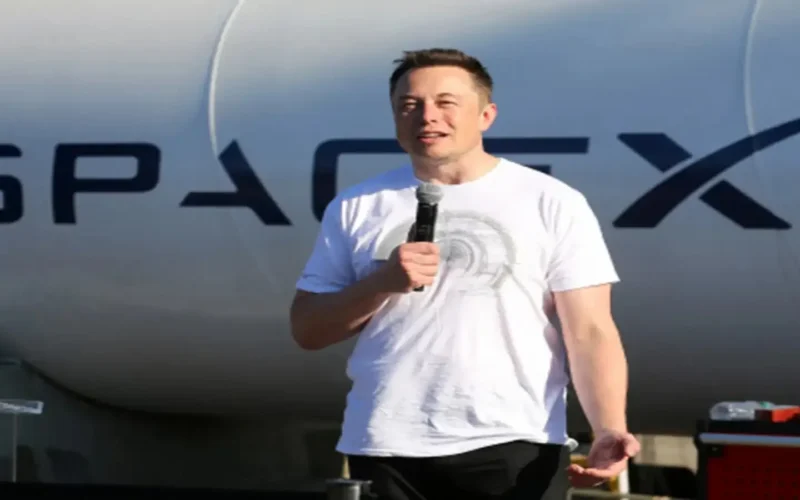
From Trillionaire to $700 Billion: The Fastest Wealth Collapse in History
In mid-June 2026, Elon Musk achieved what no human had done before: he became the world’s first trillionaire. The milestone arrived on the back of SpaceX’s record-breaking IPO, which sent the rocket company’s shares soaring and pushed Musk’s paper net worth to an estimated $1.45 trillion. Just five weeks later, more than $600 billion of that had vanished — making this the largest and fastest personal wealth destruction ever recorded.
The collapse wasn’t caused by fraud, scandal, or a single catastrophic event. It was driven by two simultaneous forces: a textbook post-IPO correction in SpaceX shares, and a disappointing earnings report from Tesla that rattled investor confidence in Musk’s other crown jewel.
The SpaceX IPO: Record Highs and a Rapid Reversal
SpaceX priced its IPO at $135 per share on June 12, 2026 — itself already a historically anticipated offering. Within days, shares surged past $225, briefly giving the company a market capitalization of around $2.64 trillion and making it one of the most valuable companies on the planet, briefly surpassing Amazon. Musk, who holds an estimated 4.8 billion shares and another 350 million options, saw his net worth spike to $1.45 trillion at that peak.
The euphoria, however, was short-lived. SpaceX shares declined in 11 of the first 17 trading sessions after the IPO. A delayed Starship launch in mid-July rattled sentiment further, and a broader market reassessment of AI-linked valuations added selling pressure. By late July, SpaceX shares had fallen below $120 — approaching and at times dipping under the original $135 IPO price. Short sellers reportedly booked $15.5 billion in profits during the stock’s slide. Analyst firm Morningstar argued that SpaceX’s fair value was well below $800 billion, pointing to a forward price-to-sales multiple of 38 as unsustainable.
Adding to the uncertainty: insider lockup expirations are expected in the coming weeks, which could bring additional selling pressure before SpaceX’s first post-IPO earnings report — a report that analysts expect to reveal heavy AI-related capital expenditure.
Tesla’s Earnings Miss Compounds the Damage
As if the SpaceX correction weren’t enough, Tesla delivered a second blow in late July. The company reported Q2 2026 revenue of $28.24 billion — actually beating estimates by over 7% — and set a record for deliveries at 480,126 vehicles. But beneath the headline numbers, the picture was grimmer. Gross margins narrowed, free cash flow turned negative, and Tesla guided for $25 billion in capital expenditure for the full year. Wall Street punished the stock accordingly.
Musk holds roughly 700 million Tesla shares, meaning even modest moves in the stock translate to tens of billions of dollars in paper gains or losses. The dual selloff in both SpaceX and Tesla combined to erase an estimated $650–700 billion from Musk’s peak net worth in roughly five weeks.
Still the World’s Richest — By a Wide Margin
Despite the staggering losses, Musk remains the wealthiest person on Earth — and it isn’t close. Forbes places his current net worth at approximately $702 billion, while Bloomberg’s Billionaires Index pegged it closer to $718–738 billion depending on the day. Either way, he leads the second-richest person by an extraordinary gap. Google co-founders Larry Page and Sergey Brin sit at roughly $270–290 billion each — less than half of Musk’s depleted fortune.
Musk himself acknowledged the reversal with characteristic dry humor, posting simply on X: “(Former) Trillionaire.”
Paper Wealth, Real Volatility
It’s worth being clear about what these numbers represent. Musk never had $1.3 trillion in a bank account. Like virtually every billionaire, the overwhelming majority of his wealth consists of equity stakes in companies — stakes whose values fluctuate every trading session. A drop of $600 billion is not a cash loss; it is a reduction in the theoretical value of shares he has not sold.
That said, the scale of the swing is genuinely unprecedented. No individual has ever seen paper wealth fluctuate by this magnitude in such a short period. It is a direct consequence of having an outsized concentration of wealth tied to two high-beta, high-valuation growth companies at the same time.
What Comes Next for SpaceX and Tesla?
Wall Street remains broadly bullish on SpaceX’s long-term story despite the near-term correction. Wedbush analyst Dan Ives called it “one of the most differentiated assets within the tech market” and argued the company is well-positioned to become a major hyperscaler across connectivity, rocket launches, and AI infrastructure. SpaceX also faces new competitive pressure: Rocket Lab recently announced a $266 million Pentagon deal and is acquiring Iridium, positioning itself as a more credible rival to Starlink.
Meanwhile, the upcoming Anthropic and OpenAI IPOs — which could be affected by how SpaceX’s post-IPO performance is perceived — are being watched closely by investors wondering whether the AI IPO wave has legs or has already peaked.
For Musk, the coming months will test whether SpaceX can stabilize around its IPO price, whether Tesla can recover its margins, and whether the world’s richest man can hold onto even a fraction of the paper trillionaire status he briefly achieved. History suggests high-profile IPOs take time to find their equilibrium. The question is just how low that equilibrium ends up being.
All net worth figures are based on Bloomberg Billionaires Index and Forbes Real-Time data as of late July 2026 and reflect paper valuations tied to equity stakes, not liquid assets.
