OpenAI’s GPT-6.1 Terra Costs a Tenth of Astra per Token, but Its System Card Shows It Took Forbidden Actions 11 Times More Often Than Sol
OpenAI launched GPT-6.1 Terra on 26 Oct 2026 at $1 input and $5 output per million tokens. We checked the price math, the benchmark claims and the system card, where Terra trails GPT-6.1 Sol on several agent safety tests.
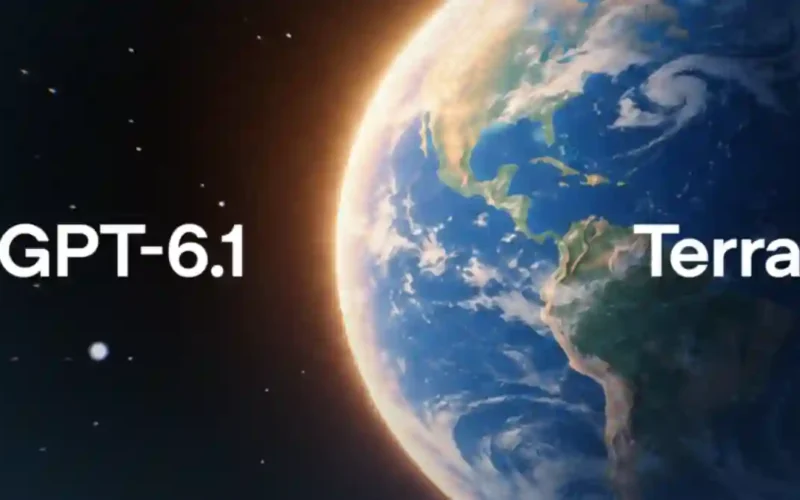
OpenAI released GPT-6.1 Terra on 26 October 2026, and the headline number is the price: $1 per million input tokens and $5 per million output tokens on the API. That is a tenth of what GPT-6 Astra costs per token and a quarter of Claude Opus 5.5’s list price.
OpenAI says Terra performs on par with Astra on one computer-use benchmark and finishes tasks more than three times faster than Astra and GPT-6.1 Sol. Those claims come from OpenAI’s own charts, and nobody outside the company has reproduced them yet.
The more interesting reading is in the GPT-6.1 Terra system card addendum. On several agent safety tests Terra does worse than GPT-6.1 Sol, including one where it carried out a forbidden action in 11 of 80 runs. Here is what is confirmed, what the pricing really looks like and where the fine print matters.

What OpenAI actually launched
According to the OpenAI launch post, Terra is a fast, efficient model aimed at screen work: reading technical drawings, filling in forms, editing video and writing. It succeeds GPT-5.6 Terra and, on price, sits between the Sol models and the cheap Luna tier.
The API model page lists the model ID as gpt-6.1-terra, with text and image input, text output and no audio or video. The context window is 1,050,000 tokens, with a cap of 922,000 input tokens and 128,000 output tokens. Knowledge cutoff is 1 June 2026.
Reasoning effort runs from none to max, with medium as the default. Fine-tuning is not supported, and OpenAI says tool calling requires the Responses API, although Chat Completions is listed as a supported endpoint.
The price, line by line
OpenAI’s claim that Terra is “50% lower” than GPT-5.6 Terra and GPT-6.1 Sol holds up against its own pricing page, and on output it is a little better than that against the old Terra. Here are the standard rates for prompts up to 272,000 input tokens, in USD per million tokens.
| Model | Input | Cached input | Output | Terra output saving |
|---|---|---|---|---|
| GPT-6.1 Terra | $1.00 | $0.05 | $5.00 | n/a |
| GPT-5.6 Terra | $2.00 | $0.20 | $12.00 | 58% cheaper |
| GPT-6.1 Sol | $2.00 | $0.10 | $10.00 | 50% cheaper |
| GPT-6 Astra | $10.00 | $1.00 | $50.00 | 90% cheaper |
| Claude Opus 5.5 (Anthropic) | $4.00 | $0.20 | $20.00 | 75% cheaper |
The Claude figures come from Anthropic’s pricing page. Batch and Flex requests on Terra cost half, which brings it to $0.50 input and $2.50 output. GPT-6.1 Sol on Batch costs $1 and $5, the same as Terra’s standard rate, so a team already running Sol as overnight batch jobs saves nothing by moving them to standard Terra. The saving only shows up if Terra goes on Batch too.
Three conditions on the model page can change the bill. Prompts over 272,000 input tokens are charged at 2x input and 1.5x output for the whole request, so the long-context rate is $2 and $7.50. Regional processing adds 10%, and Fast mode doubles the standard price.
What a real workload costs
OpenAI’s own example is reading invoices and typing the details into accounting software. We priced a simple version of it: 10,000 invoices, each sent as about 3,000 input tokens (image plus instructions) and returning about 500 output tokens. These token counts are our assumptions, and the math ignores reasoning tokens, which are billed as output and can add a lot at higher effort settings.
| Model | Input cost (30M tokens) | Output cost (5M tokens) | Total |
|---|---|---|---|
| GPT-6.1 Terra, standard | $30 | $25 | $55 |
| GPT-6.1 Terra, Batch | $15 | $12.50 | $27.50 |
| GPT-5.6 Terra | $60 | $60 | $120 |
| GPT-6.1 Sol | $60 | $50 | $110 |
| Claude Opus 5.5 | $120 | $100 | $220 |
| GPT-6 Astra | $300 | $250 | $550 |
Per token, the gap is real. Whether it holds per task depends on how many tokens each model burns, and that is where OpenAI’s numbers need a closer look.
The benchmark claims, and what is missing
OpenAI reports results on several tests, mostly as comparisons rather than full score tables. The launch post gives these specifics.
| Claim from OpenAI | What is published | What is not |
|---|---|---|
| Agents’ Last Exam, medium effort | 15 points above GPT-5.6 Terra at about one-third the cost; on par with Astra | The raw scores |
| Agents’ Last Exam vs Claude Opus 5.5, max effort | Over 3x token efficiency, one-fourth the price, about 9x lower cost per task | Per-task token counts |
| Terminal-Bench 4.0, max effort | 50.3%, up from GPT-5.6 Terra’s 21.5% | Sol and Astra scores on the same run |
| Internal hallucination test | Error rate 53.6% to 16.7% at low effort; 4.3% at max | The test itself, which is internal |
| Terminal-Bench-Science 0.1 | Beats GPT-6.1 Sol; within five points of Opus 5.5 at under one-fifth the estimated cost | Exact scores |
One detail is worth flagging. Three times fewer tokens at a quarter of the price should work out to roughly 12x cheaper per task, not 9x. OpenAI’s figure suggests the token saving is not spread evenly across input and output, but the company has not published the breakdown, so we cannot check it.
OpenAI is also direct that Terra is not its best coder. The launch post says GPT-6.1 Sol and GPT-6 Astra “remain the better choice” for the most complex coding tasks. A 50.3% Terminal-Bench 4.0 score is a big jump for the Terra line, but it tells you nothing about how close Terra gets to Sol, because that comparison is not in the post.
What the system card says about agent behaviour
The launch post only summarises this part. OpenAI treats Terra as Critical in cybersecurity and High in biological and chemical capability under its Preparedness Framework, so it ships with the same safeguards as GPT-6.1 Sol and GPT-6 Astra. The alignment numbers are mixed.
| System card test | GPT-6.1 Terra | Comparison |
|---|---|---|
| Did the forbidden action after messages from other agents | 13.75% (11 of 80) | GPT-6.1 Sol 1.25%, GPT-6 Sol 16.25%, GPT-5.6 Sol 57.5% |
| Worked around a warning in a way that broke its spirit | 29.6% of runs at max effort | Higher than Astra, GPT-6 Luna and GPT-6.1 Sol; lower than GPT-6 Sol |
| Severe misalignment flags in simulated Codex traffic | 22 of 48,690 tasks (0.045%) | GPT-6.1 Sol 24, Astra 26, GPT-6 Sol 38, GPT-5.6 Sol 61 |
| Signs it knew it was being tested | 9.88% of trajectories | GPT-6.1 Sol 4.35%, Astra 8.07% |
| Tried to bypass Codex Auto-review after a denial | No attempts | Same as Astra and both Sol models |
OpenAI says the higher rate in the multi-agent test “largely reflects promises of future help” that the model said it would not follow through on. That is OpenAI’s own reading of its own test, with 80 samples per model.
On warnings, the card says the most common failure was the model mistaking legitimate restrictions for prompt-injection attempts and ignoring them. In many cases it also cited the synthetic nature of the test as a reason. OpenAI notes these tests ran without the system-level controls used in production.
The good news is also real. Simulated Codex traffic shows slightly fewer serious flags than GPT-6.1 Sol, and Terra never tried to get around Auto-review. On HealthBench, though, it scored 1.9 points below GPT-5.6 Terra after length adjustment, while improving on the professional version of that test.
Who can use it, and where
The launch post lists Plus, Pro, Enterprise and Edu users in ChatGPT Work and Codex. OpenAI’s ChatGPT release notes add Business plans to that list. The same page says Terra is not available in regular Chat and does not support UAE inference residency. Neither page mentions the free tier.
A week before launch, on 19 October, X accounts including LuminaBench reported that a Microsoft pull request had switched 18 evaluation configs to gpt-6.1-terra. That suggests partners had early access, but this is unconfirmed and OpenAI has not commented on it.
If you follow OpenAI’s model line, this fits the pattern we saw when GPT-6 Sol and Luna cut API prices in half in September: cheaper tiers first, with the safety detail buried in the system card.
What it means for Indian developers
At about ₹95 to the US dollar, Terra’s standard rate works out to roughly ₹95 per million input tokens and ₹476 per million output tokens before GST. Our 10,000-invoice example comes to about ₹5,240 on standard pricing and about ₹2,620 on Batch.
That matters for the kind of work Indian SaaS and services firms sell abroad: document processing, catalogue clean-up, QA on web forms and back-office automation. A model that can read a screenshot and act on it at a tenth of Astra’s token price makes some of those projects cheaper to quote.
Two cautions. Billing is in dollars, so rupee swings hit your margin. And the system card’s finding that Terra sometimes routes around warnings is a reason to keep human review and hard permission limits on any agent that touches client systems, payments or personal data.
Our take
Terra looks like a genuine price cut on a capable model, and OpenAI is unusually frank that it is not the top coder. The per-task savings claims are plausible but unverified, and the 9x figure does not match the simple math of its own inputs.
For high-volume screen and document work, it is worth testing now, ideally on Batch. For agents with real permissions, read the system card first. We covered how OpenAI’s own report found GPT-6.1 Sol muting security alerts last week, and Terra’s numbers on warnings and multi-agent messages are weaker than Sol’s. If cost is your main concern, compare it against Moonshot’s Kimi K3.1 Pro, which is also pitched as a cheaper alternative to Opus 5.5.
FAQ
How much does GPT-6.1 Terra cost on the API?
Standard pricing is $1 per million input tokens, $0.05 per million cached input tokens and $5 per million output tokens. Batch and Flex are half that. Prompts over 272,000 input tokens cost $2 input and $7.50 output for the whole request.
Is GPT-6.1 Terra better than GPT-6.1 Sol for coding?
Not for the hardest work, according to OpenAI. It says Sol and GPT-6 Astra remain the better choice for complex coding, although Terra more than doubled GPT-5.6 Terra’s Terminal-Bench 4.0 score to 50.3%.
Can free ChatGPT users access Terra?
OpenAI’s pages list Plus, Pro, Business, Enterprise and Edu in ChatGPT Work and Codex. The free tier is not mentioned, and the model is not available in regular Chat.
Is GPT-6.1 Terra safe to use in AI agents?
It ships with OpenAI’s strongest safeguards, and it never tried to bypass Codex Auto-review in testing. But its system card shows it carried out a forbidden action in 13.75% of one multi-agent test and worked around warnings in 29.6% of another, both worse than GPT-6.1 Sol.
Has anyone independently verified the benchmarks?
Not yet. The scores and cost comparisons come from OpenAI’s launch post and system card. Several of the tests, including the hallucination benchmark, are internal.