A $1.6 Trillion Company With a Larger-Than-Earth Ambition
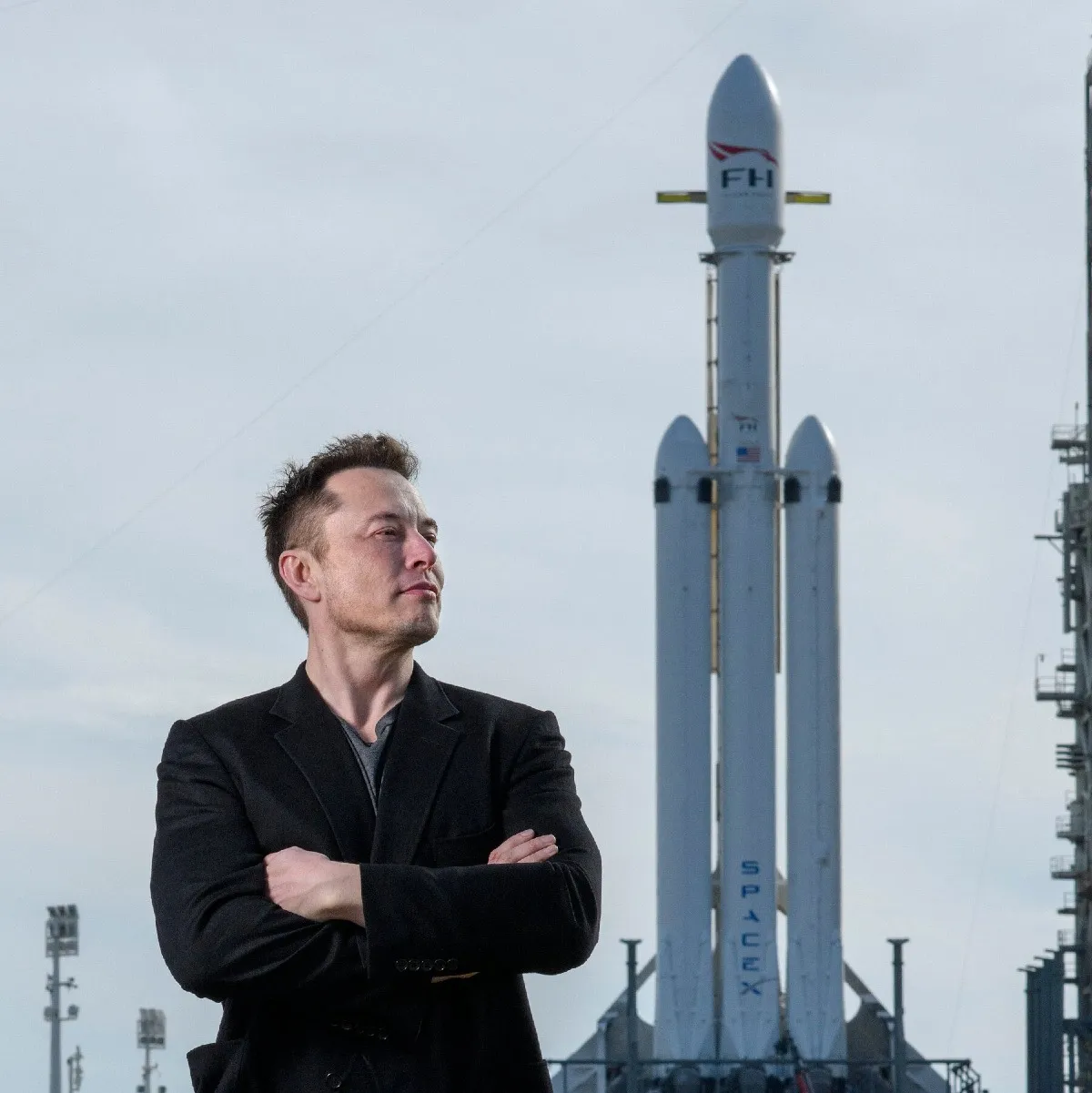
SpaceX had barely found its footing as a public company when Elon Musk decided to reframe the entire conversation. Trading as SPCX on Nasdaq since its June 12 debut at $135 per share, the company closed last Friday around $126 — still nursing post-IPO volatility, still finding its price discovery floor. Its market cap: approximately $1.6 trillion.
That's already a staggering number. It makes SpaceX one of the most valuable newly listed companies in history, rivaling the kind of landmark moments that have redefined what markets consider possible — including OpenAI's confidential S-1 targeting an $852 billion valuation that sent Silicon Valley into a tailspin earlier this year.
But Musk isn't measuring SpaceX against other tech IPOs. On Friday, he posted to X doubling down on a prediction that SpaceX's long-term value would surpass Earth's total material wealth — estimated at roughly $600 trillion. The mechanism, in his telling: asteroid metals, space-based solar power, and a solar system opened up for resource extraction at civilizational scale.
What Musk Is Actually Arguing
The prediction isn't new — Musk has floated versions of it for years — but the timing matters. SpaceX is now a public company with shareholders, a ticker, and a stock price that has real consequences for real investors. When a CEO posts that his newly listed company will eventually be worth more than every piece of material wealth on Earth combined, that's not just futurism. It's investor communication.
His argument rests on a few compounding assumptions:
- Asteroid mining at scale. Near-Earth asteroids contain metal concentrations — iron, nickel, platinum-group metals — that dwarf anything economically accessible on Earth. A single metallic asteroid can contain more iron than humanity has ever mined in recorded history.
- Space-based solar power. Orbital solar arrays could theoretically deliver continuous, uninterrupted energy to Earth — no night, no weather, no atmospheric filtering. The energy economics at civilizational scale make terrestrial reserves look like a rounding error.
- SpaceX as the infrastructure layer. Starship, if it achieves the cost-per-kilogram to orbit that SpaceX targets, turns all of this from theoretical to logistically plausible. Musk's implicit argument is that SpaceX doesn't just participate in the space economy — it enables the space economy to exist.
Supporters like entrepreneur and XPRIZE founder Peter Diamandis have amplified the bullish case, arguing that the resources available in the solar system are so vast that conventional Earth-based economic frameworks simply break down when you try to apply them.
Why Skeptics Aren't Impressed
The skeptical case has nothing to do with the physics and everything to do with the economics of getting there. Asteroid mining has been technically feasible on paper for decades. The problem isn't whether the metals exist — they clearly do. The problem is extraction cost, return timeline, and market impact.
Bring enough platinum back from an asteroid and you don't get rich — you crash the platinum market. The same dynamic applies to most minerals that derive value from terrestrial scarcity. A space economy that floods Earth's commodity markets would be self-defeating in ways that are difficult to price into any valuation model.
Then there's the timeline question. SpaceX has been testing Starship for years, with iterative successes but no orbital commercial payload yet. The gap between "Starship can reach orbit" and "Starship can profitably mine asteroids at the scale required to generate $600 trillion in value" is measured not in years but in decades — possibly generations.
Markets, as Goldman Sachs recently noted, have already shown they're willing to deploy massive capital against transformational technology narratives long before those narratives produce returns. Whether SpaceX at $1.6 trillion represents rational pricing of a long optionality bet — or an overhang of founder mythology — is the question every new SPCX shareholder is implicitly answering.
What the Near-Term Bull Case Actually Looks Like
Even setting aside asteroid economics entirely, SpaceX has a more grounded bull case that doesn't require predicting the future of civilization:
- Starlink is a real, growing business with recurring revenue, international expansion, and a subscriber base that makes it one of the largest broadband providers on Earth by covered geography.
- Government launch contracts — NASA Artemis, DoD payloads, classified missions — represent stable, high-margin revenue that competitors haven't been able to credibly threaten.
- Starship commercialization, if achieved, would dramatically lower the cost of putting payloads in orbit and could open secondary markets in on-orbit manufacturing, space tourism, and point-to-point Earth transport.
None of those require surpassing Earth's GDP. They just require execution — which is where SpaceX has, historically, shown the clearest advantage over every competitor in the sector.
SPCX in Context: The IPO Moment Everyone Saw Coming
SpaceX's listing is part of a broader pattern of landmark tech IPOs reshaping how capital markets price transformational bets. Switch's $80 billion data center IPO and Anthropic's bankers quietly scheduling investor meetings ahead of a potential October offering signal that 2026 has become a window for companies that once looked untouchable to test public market appetite.
SpaceX is different from most of those, though. It's not primarily an AI company, and it's not primarily a software company. Its moat is physical — rockets, satellites, launch infrastructure, and years of iterative hardware development that can't be replicated quickly by a well-funded challenger. That physical moat is either the most defensible kind or the most capital-intensive kind, depending on how you read the risk.
At $126 a share and $1.6 trillion in market cap, the market is already pricing in a lot. Whether it's pricing in enough — or far too much — depends on how seriously you take a CEO who thinks the relevant comparison for his company isn't its sector peers, but the total wealth of a planet.
Related Reading
- OpenAI's $852 Billion IPO: Inside the S-1 That Could Reshape Silicon Valley Forever
- Anthropic's Bankers Are Meeting Investors — and October Is on the Table
- Switch's $80 Billion IPO and the Data Center Gold Rush Financing the AI Era
- Goldman Sachs Says AI Spent $700B in 2025 — and Gave the US Almost Nothing Back