South Korea's Kospi index just went from the best-performing major stock market in the world to a full-blown bear market in a matter of weeks. The index crashed as much as 6% in a single session, extending a slide that has now taken it roughly 25% below its June 19 record high — dragging down two of the world's most important chipmakers, Samsung Electronics and SK Hynix, and sending a warning shot through the entire AI investment story.
Here's what actually happened, why it happened so fast, and what it tells us about the state of the global AI trade.
The Numbers Behind the Kospi Crash
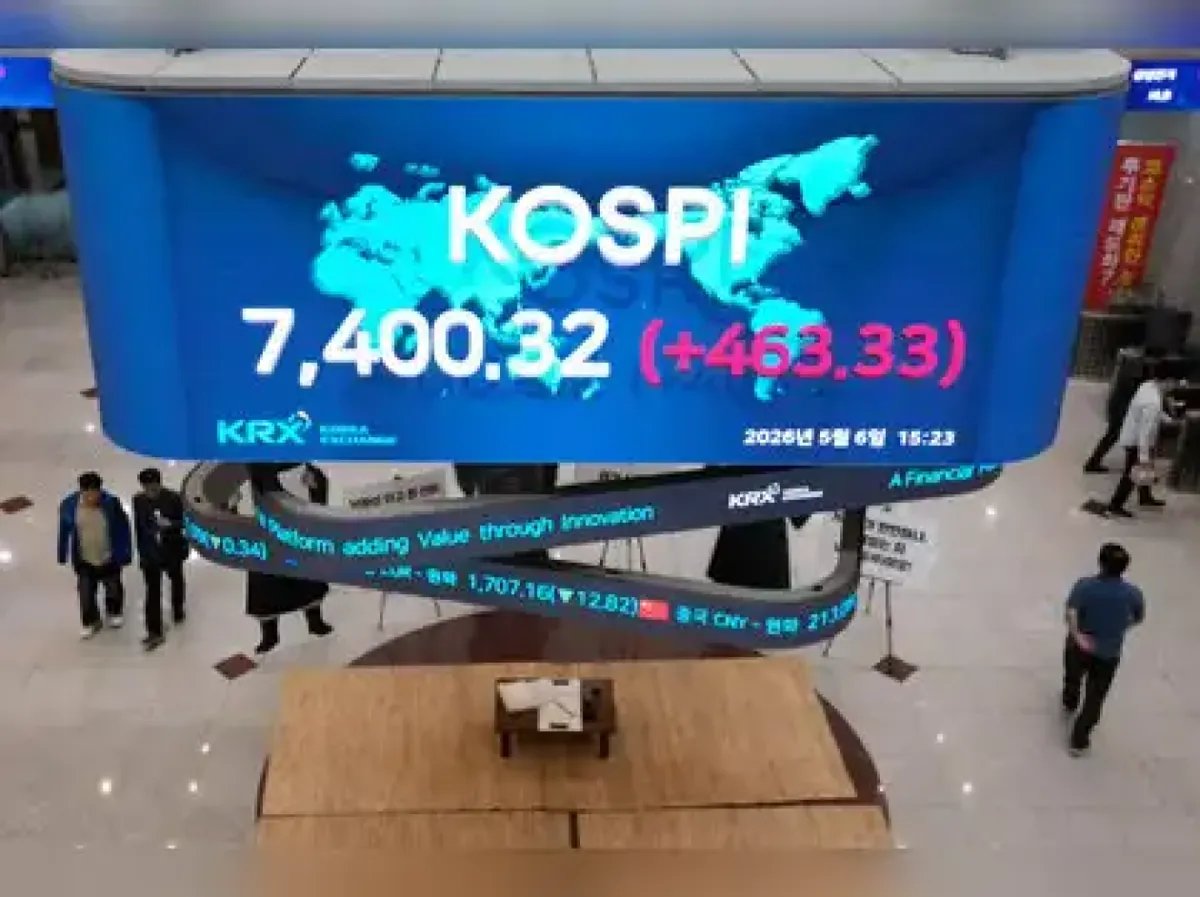
The Kospi closed more than 5% lower on a single Wednesday session in early July, a drop that took the index over 20% below its June 22 record close of 9,114.55 — the threshold commonly used to define a bear market. On one particularly volatile day, the index fell as much as 6.1%, triggering a "sidecar" trading curb that temporarily halted algorithmic trading. A circuit breaker had already been triggered earlier in the same week.
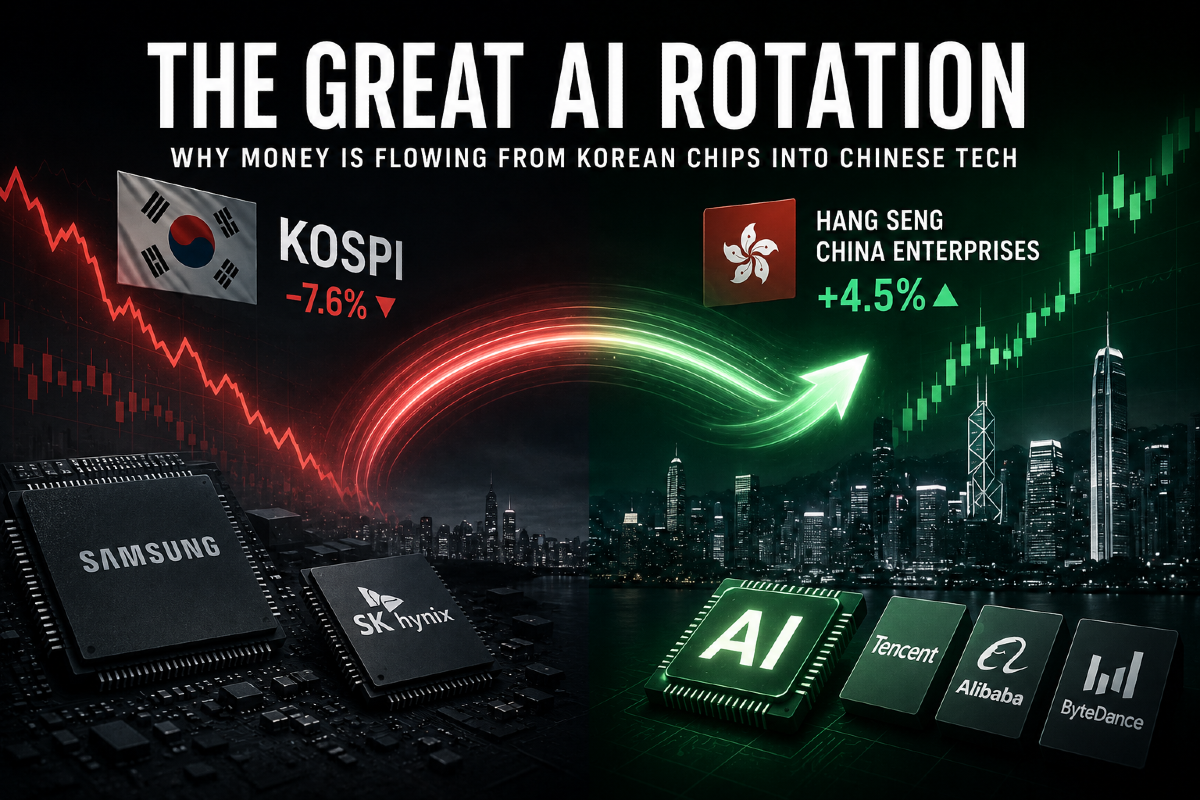
The damage was concentrated almost entirely in chip stocks. Samsung Electronics fell over 6% and SK Hynix dropped nearly 6% in a single session, tracking an overnight slide in U.S. semiconductor names as the Philadelphia Semiconductor Index fell close to 5%. By the following week, the losses had compounded: Samsung was down nearly 8% and SK Hynix over 10% in one week alone, even as Hong Kong's Hang Seng Tech index climbed almost 5% over the same stretch.
Why This Doesn't Look Like a Normal Sell-Off
What makes the Kospi crash unusual is that it wasn't triggered by bad earnings. Samsung actually guided for strong second-quarter numbers — roughly 171 trillion won in sales and 89.4 trillion won in operating profit — right before the rout accelerated. Analysts pointed to three forces instead:
- A valuation reset. Korean chip stocks had rallied so hard on AI optimism that positioning became extremely crowded, making the market vulnerable to any hint of caution on memory-chip pricing or AI capital spending.
- Extreme index concentration. Samsung and SK Hynix together account for roughly two-thirds of the MSCI Korea Index. When both stocks fall together, there is nowhere for the broader index to hide.
- Leveraged products amplifying the swings. South Korea's Financial Supervisory Service said it would monitor newly introduced single-stock leveraged ETFs tied to chipmakers, which regulators warned could intensify one-sided trading.
As Jung In Yun, founder of Fibonacci Asset Management Global, put it, the pullback looked like positioning-driven profit-taking rather than a deterioration in the underlying business — something he described as a healthy reset rather than a fundamental change in outlook. This mirrors the broader story we covered when AI compute demand showed no signs of slowing despite chip stock jitters — the infrastructure buildout hasn't stalled, but investor tolerance for paying any price for AI exposure clearly has.
A Bright Spot in the Wreckage
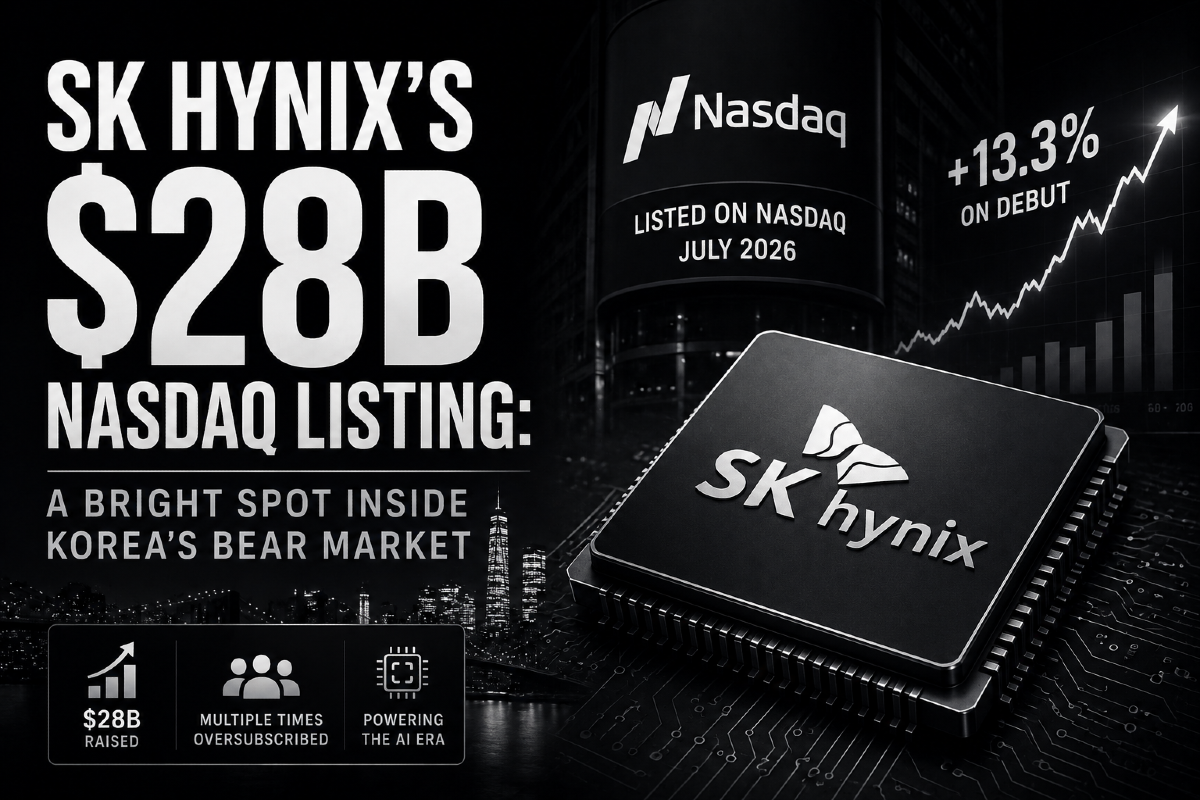
Even as the Kospi bled, SK Hynix pulled off a $28 billion Nasdaq ADR listing that was covered multiple times over by U.S. investors, with shares jumping over 13% on debut. The company's CEO has since warned of the worst memory chip shortage in years heading into 2027, arguing demand will outstrip supply for the remainder of the decade — a signal that the underlying AI memory business remains structurally strong, even as its stock price whipsaws.
What It Means for the Global AI Trade
The Kospi's collapse is really a story about capital rotation, not capital flight. Money isn't leaving the AI trade — it's relocating. As Korean chipmakers fell, Hong Kong's Hang Seng China Enterprises Index posted its biggest single-day advance since April 2025, as investors hunted for cheaper ways to play the same technology boom, including financials and mainland-listed semiconductor names.
For now, the bigger AI infrastructure story remains intact. What's changed is that markets are no longer rewarding every AI-linked stock automatically — they're asking harder questions about earnings visibility, pricing durability, and how much of the future has already been priced in.