SpaceX’s $40 Billion GPU Debt Is a Bet Only Musk Can Make, and He Says Most Neoclouds Will Not Survive
SpaceX has closed $40 billion in GPU debt, Musk says, with terms undisclosed. He warns 200-plus neoclouds face consolidation as AI credit tightens.
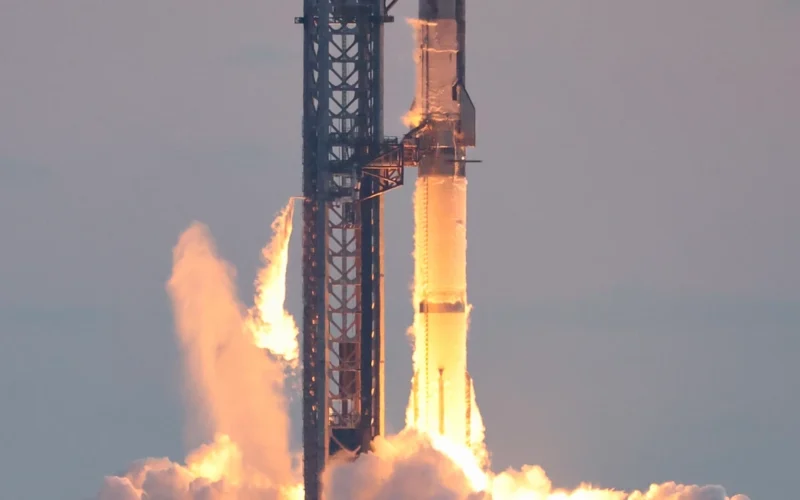
SpaceX has closed $40 billion of debt to buy GPUs, according to Elon Musk, and he used the announcement to deliver a warning about everyone else. In a reply on X on 25 October, Musk said debt markets have “almost entirely shut off access to money for any company that doesn’t have substantial revenue independent of AI data centers.” SpaceX got its money because, in his words, “we’re investment grade and have Starlink and launch revenue.” He added that the 200 plus neoclouds are going to see “guppy-level death and consolidation.”
The financing is the largest single GPU debt package disclosed by any company this year. The terms are also almost entirely missing. Musk did not name the lenders, the interest rate, the maturity or the closing date, and SpaceX has not published a separate announcement or filing about the deal.
That combination, a huge number with no paperwork, is why this story matters beyond one company. It is a live test of whether the AI buildout can still be financed at scale, and what happens to the smaller players who cannot borrow.
Quick answer: SpaceX says it closed $40 billion in debt to buy GPUs, mostly callable, with hardware arriving in the first and second quarters of 2027. Musk says SpaceX qualified because of its investment grade rating and Starlink and launch revenue. No lender, rate or structure has been confirmed publicly.
Pretty much.
As of the past few weeks, debt markets have almost entirely shut off access to money for any company that doesn’t have substantial revenue independent of AI data centers.
SpaceX closed $40B of debt for GPUs, but we’re investment grade and have Starlink & launch…
— Elon Musk (@elonmusk) October 25, 2026
What Musk actually said
The post came as a reply to venture investor Chamath Palihapitiya, who had argued that neoclouds are disorganised and poorly capitalised and that 2027 would bring a lot of stranded compute. Musk agreed, then added the financing detail.
A follow-up reply added the only structural colour available so far. “This is primarily callable debt for GPU purchases that will arrive in Q1 and Q2,” Musk wrote. “Not a major factor this quarter.” Callable debt can be repaid early, usually at a premium or on set dates, which gives the borrower flexibility if cash flow improves or if plans change.
He also said SpaceX is not buying any neoclouds, calling the idea pointless, which rules out the interpretation that the warning was a setup for acquisitions.
The deal at a glance
| Item | What has been reported | Status |
|---|---|---|
| Amount | $40 billion of debt | Stated by Musk, reported by Reuters, Bloomberg and CNBC |
| Use of funds | GPU purchases | Stated by Musk |
| Delivery window | GPUs arriving in Q1 and Q2 of 2027 | Stated by Musk |
| Debt type | Primarily callable | Stated by Musk |
| Lenders | Not named | Not disclosed |
| Interest rate | Not disclosed | Not disclosed |
| Earlier reported split | About $10 billion in bank loans and $30 billion in investment grade debt, with Apollo and Goldman Sachs leading | Reported by the Financial Times on 7 October, not confirmed by SpaceX |
| Earlier reported pricing | A lower rated tranche near 8.3 percent and a safer tranche near 7.75 percent | Reported by Semafor on 22 October, not confirmed |
The gap between the reporting and the announcement is the story here. Pre-deal coverage described a complex structure with a separate borrowing entity designed to keep the debt off SpaceX’s balance sheet and protect its credit rating. Musk’s post does not confirm that structure survived to closing.
Why SpaceX can borrow when a neocloud cannot
The argument Musk makes is straightforward. Lenders are now underwriting the business behind the GPUs, not the GPUs themselves. SpaceX has Starlink subscriptions and launch contracts that generate cash whether or not AI demand holds up. A pure neocloud has one product, rented compute, and often one or two large customers.
That distinction shows up in the warnings coming from the credit market. Insurance broker Marsh has reportedly started writing delay-in-delivery cover as data centre tenants demand penalties above $5 million a day for late capacity, up from around $1 million this spring. Those contracts only make sense because builders are worried about missing dates, and because lenders want protection when they do.
Gartner has predicted that 80 percent of neoclouds could stop operating as independent companies, mostly through mergers rather than sudden failures. Morgan Stanley has estimated that AI infrastructure will need about $1.5 trillion of external financing by 2028. Both numbers point the same way: the money is getting harder to raise for anyone without a second business.
What is confirmed, and what is not
| Claim | Status |
|---|---|
| SpaceX closed $40 billion of debt for GPUs | Stated by Musk on 25 October, reported by major outlets, no filing or press release yet |
| The debt is primarily callable | Stated by Musk |
| GPUs arrive in Q1 and Q2 of 2027 | Stated by Musk |
| SpaceX is investment grade | Musk’s claim, no rating agency statement in the public record reviewed for this article |
| Lenders, rates, maturity and structure | Not disclosed by SpaceX |
| Debt markets have shut off access for AI only companies | Musk’s assessment, consistent with broader reporting on tighter AI credit but not quantified |
| 200 plus neoclouds face death or consolidation | Musk’s prediction, not a measured outcome |
The self-interest in the warning
SpaceX is not a neutral commentator on compute prices. It sells AI capacity through its xAI business, which became a wholly owned subsidiary in February, and it competes with neoclouds for the same customers. A warning that weaker rivals will die is also a sales pitch to customers who want a supplier that will still exist in 2028.
None of that makes the warning wrong. The credit signals are real. The reported 8.3 percent coupon on the riskiest tranche is expensive money, and Bloomberg reported that turmoil in AI credit markets reopened pricing talks on the deal before it closed. When a borrower with Starlink revenue pays that much, a company with one data centre and one anchor tenant pays more or does not borrow at all.
This is primarily callable debt for GPU purchases that will arrive in Q1 and Q2. Not a major factor this quarter.
— Elon Musk (@elonmusk) October 25, 2026
What it means for Indian developers
Most Indian teams do not borrow to buy GPUs, but they rent the capacity that someone else financed. If the neocloud shakeout Musk predicts arrives, the practical risks are contract continuity and prepaid credits. A startup that pays a year upfront for discounted H100 or GB300 hours is exposed if the provider is acquired, restructured or stops paying its power bills.
The safer pattern is boring. Keep inference workloads portable across at least two providers, avoid long prepayments with thinly capitalised vendors, and price in a migration cost. The same reasoning applies to inference stacks that promise dramatic savings, which is why this site looked closely at the llm-d cost claims and at Nvidia’s containerised DSX POD.
For developers, the more useful signal is what SpaceX is buying. Its Q3 call pointed to fourth quarter capital spending of $35 billion to $40 billion and roughly 200,000 GB300 chips per month, with a shift to Vera Rubin next year. That is where the supply is going. If you are waiting for GPU prices to fall, the largest buyers are locking up the next two quarters of capacity in advance.
Frequently asked questions
Did SpaceX really raise $40 billion for GPUs?
Elon Musk said on 25 October that SpaceX closed $40 billion of debt for GPUs. Reuters, Bloomberg and CNBC reported the statement. SpaceX has not published a filing, press release or term sheet confirming the lenders, rates or structure.
What does callable debt mean?
Callable debt can be repaid by the borrower before its maturity date, usually under conditions set in the agreement. It suits a borrower that expects cash flow to improve and wants the option to cut interest costs early.
What is a neocloud?
A neocloud is a newer cloud provider that mostly rents GPU capacity to AI developers, rather than offering the full range of services a hyperscaler sells. Examples include CoreWeave, Nebius and Lambda. Many rely heavily on debt to buy chips.
Why can SpaceX borrow when neoclouds cannot?
Musk says SpaceX qualifies because it is investment grade and earns revenue from Starlink and launches, independent of AI data centres. Lenders can underwrite those cash flows even if AI demand slows.
Will GPU rental prices fall if neoclouds consolidate?
Not necessarily. Consolidation can remove discounting capacity and push prices up in the short term, while stranded or underused GPUs can push prices down. Which effect wins depends on how much capacity sits idle in 2027.
Sources
Elon Musk, post on X about the $40 billion GPU debt, 25 October 2026. Elon Musk, follow-up on delivery timing, 25 October 2026. Reuters, Musk says SpaceX raised $40 billion in debt for GPUs, 25 October 2026. Financial Times report on the planned financing split, 7 October 2026. Semafor report on expected pricing, 22 October 2026. SpaceX Q3 earnings call, 20 October 2026, as reported by CNBC. Image: Steve Jurvetson, CC BY 2.0, via Wikimedia Commons.