Dario Amodei Says Anthropic Never Called for an Open-Weights Ban — Here’s What He Actually Wants
Anthropic CEO Dario Amodei published a direct rebuttal to accusations that the company wants to ban open-weights models. He names three specific policy measures he actually supports — none of them a ban.
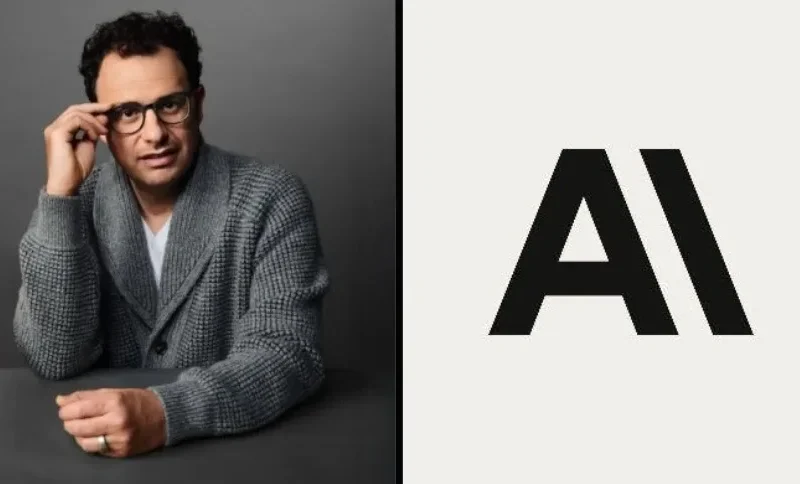
Anthropic CEO Dario Amodei published a direct statement on July 27, 2026, ending days of speculation about where the company stands on open-weights models. The short version: Anthropic has not, and is not, calling for a ban. But Amodei’s post goes much further than a denial — it names three concrete policy interventions he says the US should actually pursue.
“Anyone who has read my past writing should know that I don’t regard such bans as a useful measure,” Amodei wrote, “but let me state it clearly so that there is no doubt: Anthropic has never advocated for a ban on open-weights models.”
The statement arrived as the open-weights debate in Washington reached a peak. US officials had reportedly been weighing restrictions on Chinese open-weights models. In response, Jensen Huang circulated a pro-open-weights letter that gathered 50 signatories. OpenAI and Google signed it. Anthropic did not — and some observers interpreted that absence as evidence the company wanted restrictions it was unwilling to publicly defend.
Two Nightmare Scenarios
Amodei frames his national security concerns around two distinct threats, not the open-weights question itself.
The first is the scenario he calls primary: an authoritarian government — he names the Chinese Communist Party as the most capable current threat — builds AI more powerful than anything produced in the US and uses it to achieve permanent military superiority or carry out large-scale domestic repression. Crucially, he says whether those models carry open weights is irrelevant to this threat. The most dangerous version, by his account, would be a model trained in secret and handed exclusively to the People’s Liberation Army.
The second concern is misuse: sufficiently capable models enabling cyberattacks or biological weapons, compounded by alignment failures. Here Amodei does acknowledge that open-weights models pose a higher risk than closed ones — because guardrails are harder to apply, usage is harder to monitor, and once weights are released they cannot be recalled. But a ban on US businesses using those models does nothing to address that risk, he argues, because the actors most likely to misuse them are not legitimate US businesses.
What Anthropic Actually Supports
Amodei is specific about the three measures he says would actually address his concerns.
Chip export controls. No powerful chips or chipmaking equipment should be sold to China, and the rampant smuggling operations already documented by the US Department of Justice should face serious enforcement. His logic: China’s domestic production capacity is limited, and the scaling laws mean you cannot train more powerful models without more compute. Cut the compute, cut the threat.
Crackdown on industrial-scale distillation. Distillation lets a country build far better models than its chip count would normally allow. Amodei notes Anthropic already identifies and bans accounts running distillation operations against its models, but acknowledges that individual company action isn’t enough. He has called for formal policy intervention. His position is clear: the problem isn’t that distillation operations often release open-weights models — it’s that those operations are state-backed efforts by an authoritarian government to close the frontier gap.
Mandatory safety testing for all sufficiently capable models. Open or closed, Chinese or American — Amodei wants pre-release testing for cyber, biological, and alignment risks applied universally. He says this idea is close to industry consensus and points to recent proposals from Demis Hassabis at Google DeepMind that would require testing for the most capable frontier models regardless of origin, while exempting smaller models from startups and academia.
Where He Breaks With the Open Letter
Amodei’s statement is not a blanket endorsement of the Huang letter either. He agrees that open weights expand access to the AI economy and give customers more control. But he rejects two of the letter’s central claims.
The first is that open-weights models necessarily make it easier to develop safeguards. The second is that broad access to capabilities necessarily helps defenders more than attackers. Amodei believes the opposite may be true in biology specifically — that a sufficiently capable model could quickly enable weaponization of pandemic-level pathogens using widely available materials, while defense against such agents is a multi-year operational undertaking even in the best case. He points to Operation Warp Speed as a reference point for how long credible biological defense takes to mobilize.
The implied conclusion: these questions should be answered by empirical safety testing, not assumed away in either direction.
The Distillation Connection
Amodei’s emphasis on distillation deserves attention given the context. The open-weights controversy in Washington accelerated after US officials began scrutinizing Kimi K3’s open-weight release — a 2.8 trillion parameter model from Moonshot AI. Reports cited concerns that state-backed Chinese AI labs were using distillation from Western frontier models to close the capability gap faster than chip restrictions alone would allow.
Amodei’s position is that the open weights themselves are not the core problem. The state backing and the distillation pipeline are. Banning US companies from using Chinese open-weights models would not shut down that pipeline — it would only disadvantage US developers while leaving the underlying dynamic untouched.
Why This Moment Matters for AI Policy
The statement is notable partly for what it signals about how Anthropic wants to position itself in Washington. The company has been at the center of the distillation controversy — its Claude models are among the most targeted by large-scale distillation operations — yet it declined to join an industry letter that most major AI companies signed within 24 hours.
Amodei’s post reads less like a political realignment and more like a clarification of a consistent position he says he has held for years. His framing explicitly separates the open-weights debate from the national security debate, treating them as related but not identical questions that have been conflated in the current policy conversation.
He also expresses cautious optimism that even limited cooperation with China on biological weapons might be achievable — because avoiding a pandemic-level catastrophe is in China’s interest too. That is a notably measured note given the adversarial framing that dominates most AI security discourse right now.
The full statement is available on the Anthropic website. Amodei also links to his earlier essay The Adolescence of Technology, which laid out the same two-scenario framework six months before this week’s debate.
Frequently Asked Questions
Has Anthropic called for a ban on open-weights AI models?
No. Dario Amodei stated explicitly on July 27, 2026 that Anthropic has never advocated for a ban on open-weights models. He called open-weights models that lack dangerous capabilities “a public good.”
What policies does Dario Amodei actually support on AI and China?
Amodei supports three specific measures: enforcing chip export controls to prevent powerful semiconductors reaching China, cracking down on industrial-scale distillation operations that let state-backed labs build better models than their chip count would allow, and requiring mandatory safety testing for all sufficiently capable models regardless of origin.
Why didn’t Anthropic sign Jensen Huang’s open-weights letter?
Amodei says he agrees with parts of the letter but not its assertion that open-weights models necessarily help defenders more than attackers. He believes that question should be resolved by empirical safety testing, not assumed in advance — particularly given his concerns about biological risk.
What is distillation and why does Amodei consider it a national security issue?
Distillation is a process where a smaller model is trained on the outputs of a more powerful one, allowing it to reach much higher capability levels with far less compute. Amodei argues that state-backed Chinese AI labs are using distillation from Western frontier models — including Anthropic’s own Claude — to partially evade chip export controls and close the frontier gap faster.
