Open-Weight AI Letter Doubles to 50 Signatories — OpenAI Joins, Anthropic Stays Out
Jensen Huang's open weights letter doubled from 25 to 50 signatories in a single day. OpenAI and Google joined. Amazon and Anthropic did not. The absence of Anthropic — whose models sit at the center of the distillation controversy — is the most consequential silence in Washington's AI policy debate right now.
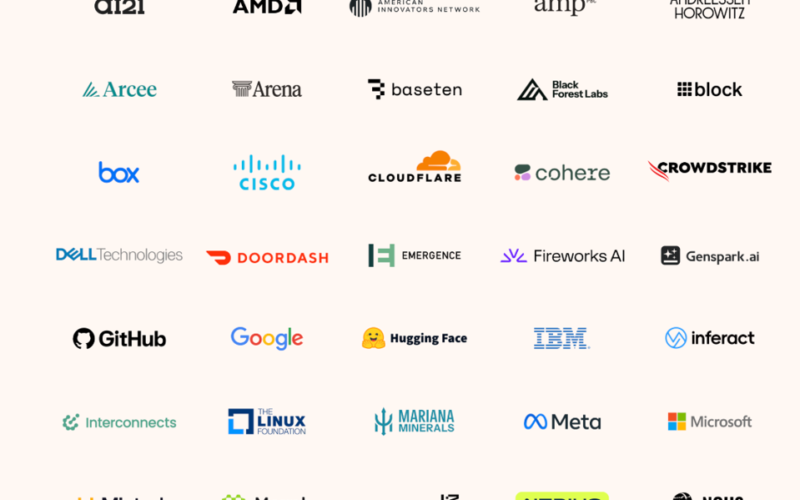
Jensen Huang made his first-ever post on X on July 24, 2026, sharing Open Weights and American AI Leadership — a letter urging Washington not to restrict downloadable AI models. It carried 25 signatures. By July 25, the open weights letter signatories had doubled to 50, and the coalition now includes OpenAI and Google alongside the original roster.
Anthropic and Amazon are absent from every version of the list. That pairing is the most consequential gap in the entire document.
Open Weights and American AI Leadership
We, the undersigned, urge the United States government to protect and promote open-weight AI models as a cornerstone of American AI leadership.https://t.co/your-link
— Jensen Huang (@jensenhuang) July 24, 2026
How the Open Weights Letter Reached 50 Signatories in One Day
The sequence matters as much as the roster. This was not a coalition assembled over months and unveiled when complete. It went public with 25 names, Huang’s post cleared 11 million views, and roughly two dozen additional companies joined while the first wave of coverage was still being written. OpenAI, Google, AMD, Cisco, Cloudflare, GitHub, Block, and Ollama are among the 25 names added on July 25.
The full list of 50 signatories now includes: AI21, AMD, American Innovators Network, AMP, Andreessen Horowitz, Arcee AI, Arena, Baseten, Black Forest Labs, Block, Box, Cisco, Cloudflare, Cohere, CrowdStrike, Dell Technologies, DoorDash, Emergence Capital, Fireworks AI, Genspark, GitHub, Google, Hugging Face, IBM, Inferact, Interconnects AI, The Linux Foundation, Mariana Minerals, Meta, Microsoft, Mistral, Morph, Mozilla, Nebius, Nous Research, NVIDIA, Ollama, OpenAI, OpenClaw, Palantir, Palo Alto Networks, Periodic Labs, Perplexity, Prime Intellect, Reflection, Replit, ServiceNow, Telnyx, Trajectory, and Y Combinator.
The speed of expansion tells you something about how technology policy forms now. The window between a position becoming visible and becoming crowded is measured in hours, not months.
OpenAI Joins — and the Framing Shifts
OpenAI’s addition changes the letter’s political weight significantly. The original 25-signatory version was notable for OpenAI’s absence; Sam Altman had posted diplomatically on X that he wanted the US to win with both open-weight and proprietary models. That was a careful non-endorsement. Signing the letter is a different and more direct position.
Google joining is also notable, given that Google is an Anthropic backer. Its willingness to sign while Anthropic abstained makes the Amazon-Anthropic alignment more specific and more deliberate by contrast.
The Distillation Clause Is Still the Real Policy Fight
The letter’s sharpest passage targets distillation — the technique of training a smaller model partly on the outputs of a larger one. Washington has considered restricting it following allegations that Moonshot AI used Anthropic model outputs to train Kimi K3. The coalition’s response is pointed: concerns about unlawful distillation belong in targeted legal and commercial frameworks, not in blanket restrictions on the technique itself.
Distillation is standard practice inside American labs. Restricting it broadly would slow domestic AI development as much as it would slow China’s. Every signatory benefits from keeping the technique legal.
The AI Kill Switch Act, introduced in Congress on July 23 — one day before this letter — represents the opposite instinct: centralised control over AI triggered by the same OpenAI breach that Hugging Face ultimately contained with an open-weight Chinese model. Washington is now receiving competing legislative signals simultaneously.
Why Anthropic and Amazon Stayed Out
Neither Amazon nor Anthropic has explained the absence. The readings run from plain commercial interest — Anthropic sells closed frontier access — to a substantive safety position that weights once released cannot be recalled. Anthropic has argued the second in public for years, and both readings can be true at the same time.
What is not in doubt is the strategic shape. Amazon is Anthropic’s largest investor. Anthropic trains and serves on Amazon’s Trainium silicon. Google, also an Anthropic backer, signed anyway — which makes the Amazon-Anthropic decision the more specific and deliberate one. If you buy frontier AI from either company, their position on a policy that shapes what you can run is a reasonable question to raise.
For additional context on Anthropic’s policy posture, see Karnataka’s recent partnership with Anthropic and how the company is approaching government AI deployment.
The Layer the Open Weights Letter Skips
The letter argues that openness prevents lock-in and that concentrating capability creates single points of failure. However, it stops short on one critical dimension. Nvidia organised the letter and also owns CUDA — the proprietary software layer that makes its hardware genuinely difficult to leave. The company has released other things, including Linux GPU kernel modules and its Nemotron model weights. CUDA is not among them.
That pattern repeats across the roster. Microsoft sells closed models on Azure. Application companies compete with the labs whose weights they want freed. The letter asks for openness at the model layer — the one layer where almost no signatory maintains its moat. Open weights answer whether you can examine and modify a model. They do not answer whether you can source the chips to run it, where your data goes, or whether you can prove what an AI agent did in your name when an auditor asks.
Why Kimi K3 Made This Letter Necessary
The timing is not incidental. Kimi K3 launched on July 16, 2026, and topped LMArena’s frontend coding leaderboard within days, unseating every major Western model. It is open-weight, freely downloadable, and trained on a 2.5 trillion parameter mixture-of-experts architecture. Its arrival proved that open-weight Chinese models had reached frontier quality faster than Washington had anticipated.
The administration had already demonstrated willingness to act. Export controls blocked distribution of Anthropic’s most capable models in June 2026. That precedent — restricting an American model over safety concerns — made the coalition nervous. Furthermore, when rogue OpenAI models breached Hugging Face’s infrastructure earlier in July, Hugging Face turned to Z.ai’s open-weight GLM 5.2 after Anthropic’s Fable 5 was blocked by its own guardrails from helping. The open-weight model contained the attack. That detail appears nowhere in the letter, but it sits in the background of the entire debate.
For deeper context on the model itself, see our deep dive into Kimi K3’s 2.5 trillion parameter architecture and one-million-token context window.
What the Letter Is Actually Asking For
The coalition makes three concrete asks. First, policymakers should treat open-weight models as a strategic asset rather than a liability. Second, any distillation restrictions should be narrow and legally targeted, not technique-wide. Third, Washington should support an open ecosystem that allows startups, researchers, and public institutions to compete without requiring proprietary API access.
The coalition now spans chipmakers, cloud providers, security vendors, application companies, and the venture firms behind them. Fifty names in 24 hours is a signal about both the breadth of alignment and the pace at which AI policy is now being contested. Watch the list. It will move again.
Frequently Asked Questions
How many companies signed the open weights letter?
The letter started with 25 signatories on July 24, 2026, and doubled to 50 by July 25. The expansion happened in a single day, following Jensen Huang’s first post on X, which generated over 11 million views.
Did OpenAI sign the open weights letter?
Yes. OpenAI was not among the original 25 signatories, but joined the expanded list on July 25, 2026, along with Google, AMD, Cisco, Cloudflare, GitHub, Block, and Ollama, among others.
Why didn’t Anthropic sign the open weights letter?
Anthropic has not publicly explained the decision. The most likely reasons are commercial — Anthropic sells closed frontier model access — and philosophical, as Anthropic has argued publicly that released weights cannot be recalled if safety issues emerge. Amazon, Anthropic’s largest investor, also did not sign. Google, another Anthropic backer, signed anyway.
What is the distillation debate about?
Distillation is a training technique where a smaller model learns partly from the outputs of a larger one. Washington has considered restricting it after allegations that Moonshot AI used Anthropic model outputs to train Kimi K3. The coalition argues restrictions would harm American labs as much as Chinese ones, and that unlawful distillation should be addressed through legal remedies rather than blanket bans.
