Claude Opus 5 Is Here and It Just Set a New Bar for Coding AI
Claude Opus 5 delivers near-Fable-5 intelligence at half the cost, sweeping benchmarks and beating every generally available model on real-world coding and problem-solving tasks.

Claude Opus 5 launched on July 24, 2026, and already outperforms all other generally available AI models on the most demanding benchmarks. It keeps Opus 4.8’s pricing—$5 per million input tokens and $25 per million output tokens—while closing the gap with Fable 5’s capabilities.
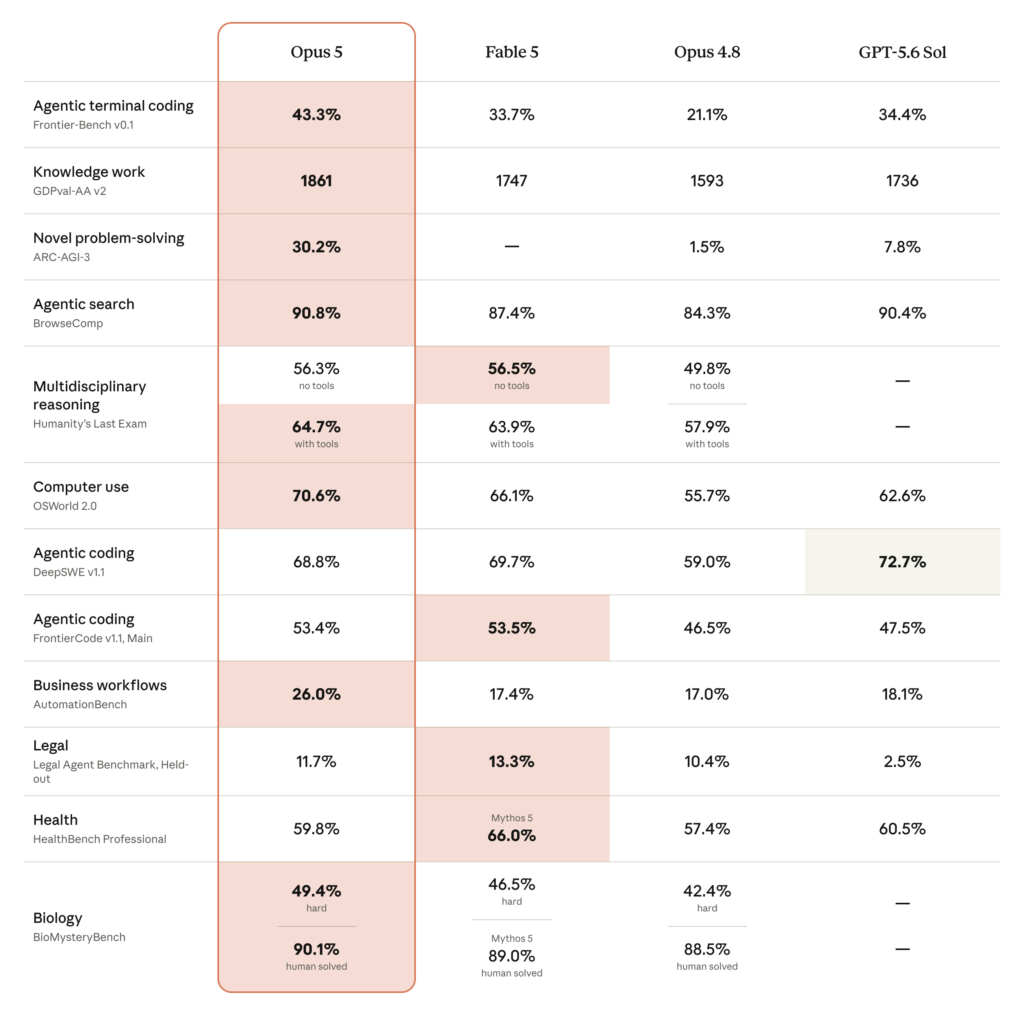
Claude Opus 5 Sweeps Key Benchmarks
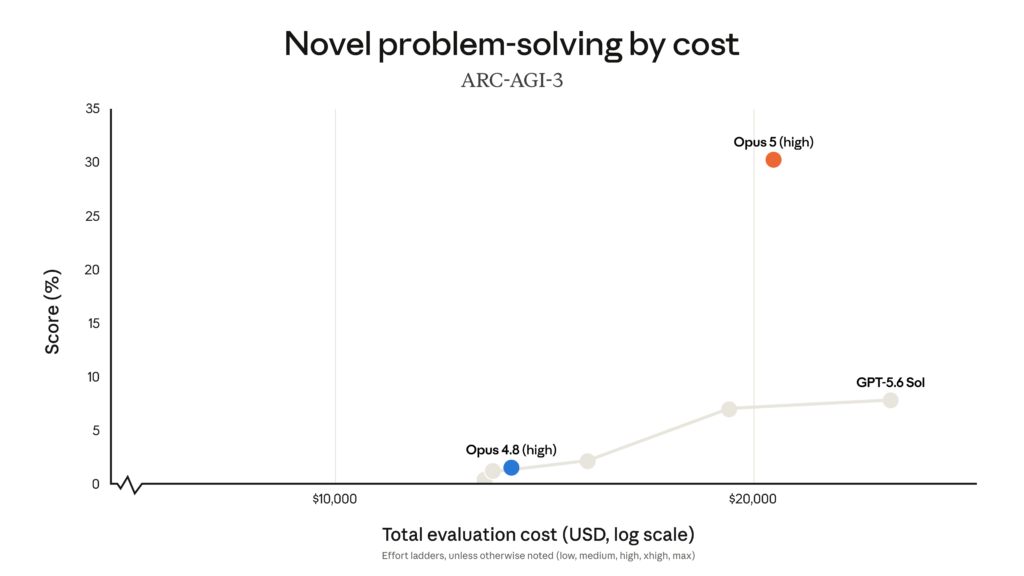
The benchmark sweep is unusually broad. On ARC-AGI 3, which tests novel problem-solving, Opus 5 scores three times higher than the next-best model. On Zapier AutomationBench, its pass rate is roughly 1.5 times that of the runner-up at the same cost. Even at its lowest effort setting, Opus 5 beats every other model running at maximum effort.
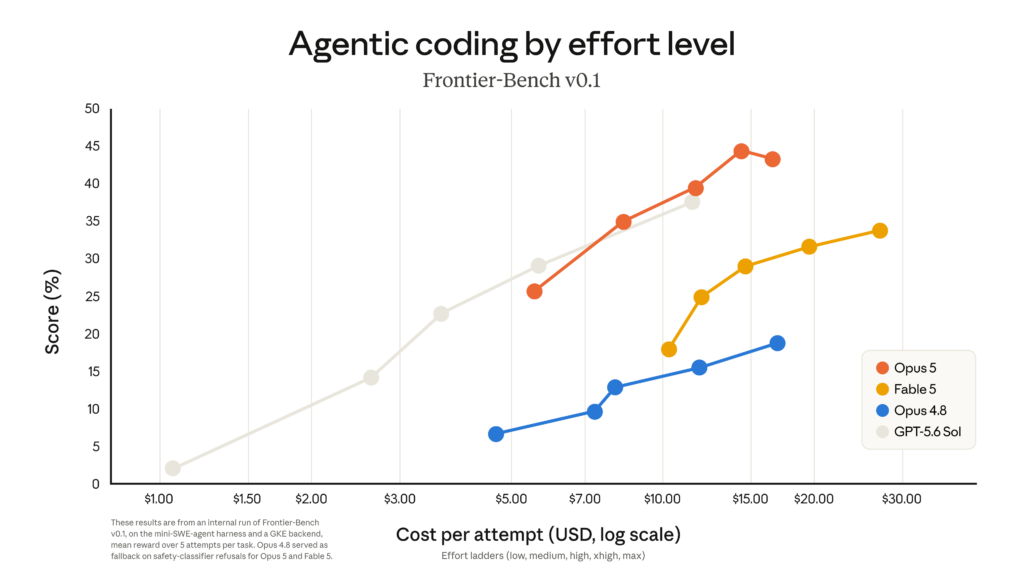
On OSWorld 2.0, a computer use benchmark, Opus 5 surpasses Fable 5’s best result at just over a third of the cost. It also advances scientific research, outperforming Opus 4.8 across every Anthropic life sciences evaluation. Organic chemistry sees a 10.2 percentage-point jump on inferring molecular structures from spectroscopy data. Protein analysis improves by 7.7 points on predicting how sequence variations change protein function.
Anthropic also demonstrates stronger visual output. Demo artifacts include an interactive wind tunnel simulation and a detailed interactive cell illustration.
Real-World Problem Solving Sets Claude Opus 5 Apart
Three early-access stories show what separates Opus 5 from prior models.
Given a drawing of a machine part and a request to rebuild it as a 3D FreeCAD model—with no direct way to view the drawing—Opus 5 wrote its own computer vision pipeline. It extracted geometry from raw pixels and reconstructed the part. No competing model solved the same task after five attempts.
When handed a real bug in a popular open-source package manager, Opus 5 found the root cause and fixed an edge case the community’s own patch had missed. A competing model addressed only the surface symptom and then reported the issue resolved.
A trading firm engineer built a market data feed for a new exchange in a single session. Earlier models could not complete the task at all. Finding no live feed to validate against, Opus 5 built its own test harness.
Early-access partners include Cursor, Devin, Zapier, Lovable, and Box. Cursor’s co-founder noted it delivers near-Fable-5 intelligence at Opus speed and cost. Zapier’s CEO reported that Opus 5 hit 100% on an end-to-end churn-prevention workflow no previous model could pass. Box found Opus 5 outperforms Opus 4.8 by 8% overall, with a 17% gain on due diligence workflows.
Alignment and Safety
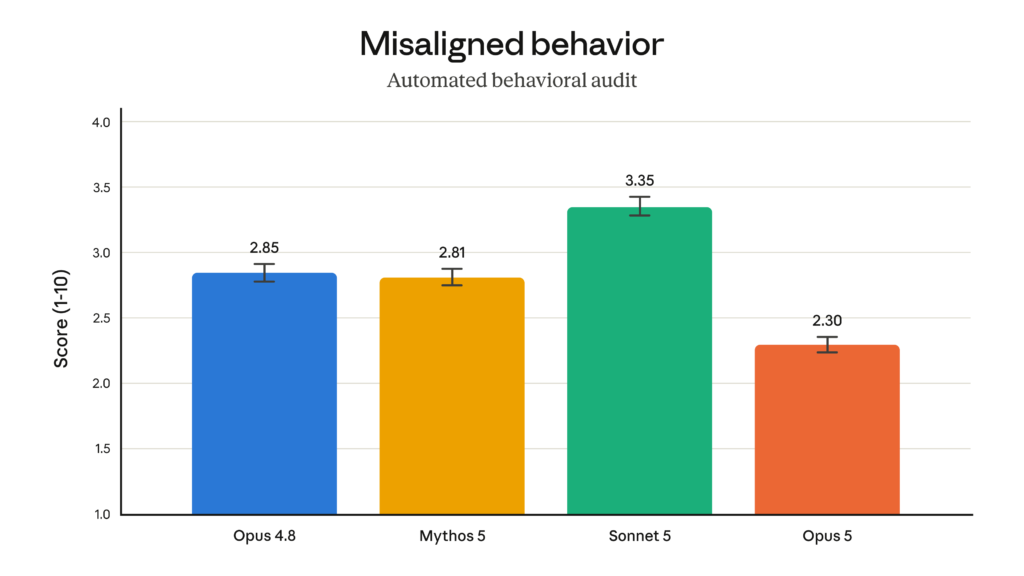
Anthropic’s automated behavioral audit gives Opus 5 a misaligned behavior score of 2.3, the lowest of any recent model. The company describes it as the least susceptible to manipulation and the most conservative about taking irreversible actions.
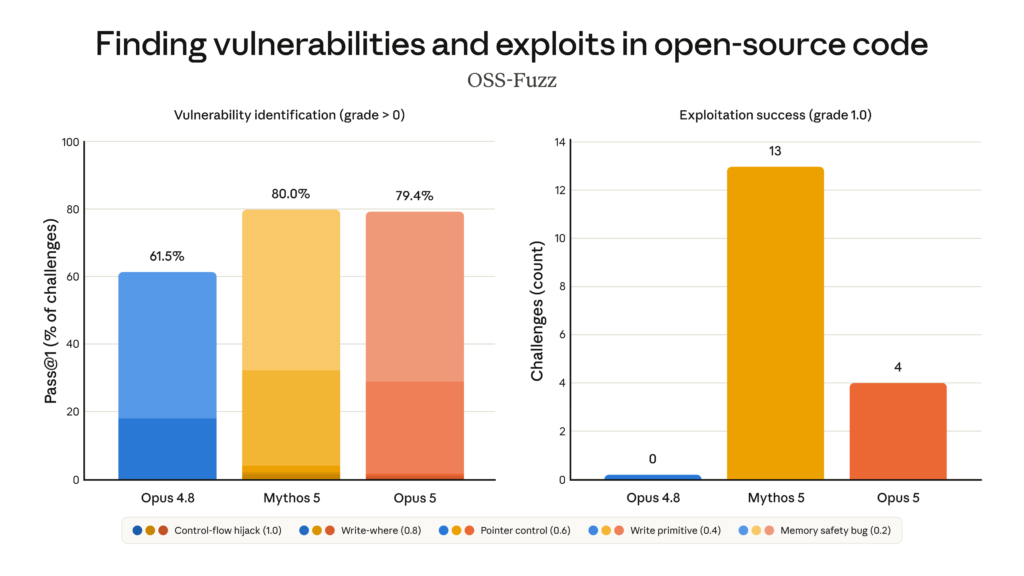
Opus 5 was deliberately not trained on cybersecurity tasks. Still, general capability gains have moved it close to Mythos 5 on vulnerability identification. The critical gap remains in exploitation: Opus 5 stays substantially behind Mythos 5 at turning a found vulnerability into a material threat. Anthropic treats that gap as the safety buffer that justifies broader deployment.
Cyber classifiers on Opus 5 are 85% less likely to intervene than those on Fable 5. They allow source code vulnerability scanning but block binary-based scanning, penetration testing, and exploit generation. Flagged requests in Claude.ai, Claude Code, and Cowork fall back to Opus 4.8. Enterprises already in Anthropic’s Cyber Verification Program get a version with fewer restrictions immediately.
Requests previously blocked on Fable 5 now route to Opus 5 instead of Opus 4.8, making it the most capable generally available model for scientific research. Long-horizon autonomous research tasks remain limited.
Availability
Opus 5 is live today via the model string claude-opus-5, priced at $5 per million input tokens and $25 per million output tokens. Fast mode runs at roughly 2.5 times the default speed at twice the base price.
Two API updates ship alongside in beta: mid-conversation tool changes without invalidating the prompt cache, and automatic fallbacks that route flagged requests to the best available model rather than blocking them.
The only ceiling Opus 5 doesn’t break is Mythos 5. That model remains restricted to a small number of trusted organisations under Project Glasswing, and Anthropic is clearly content keeping it there.