Jeff Bezos: AI Won’t Kill Jobs, It Will Create a Labour Shortage
At VivaTech 2026, Jeff Bezos argued AI won’t cause mass unemployment. Instead, he believes it will create a labour shortage by revealing new problems.
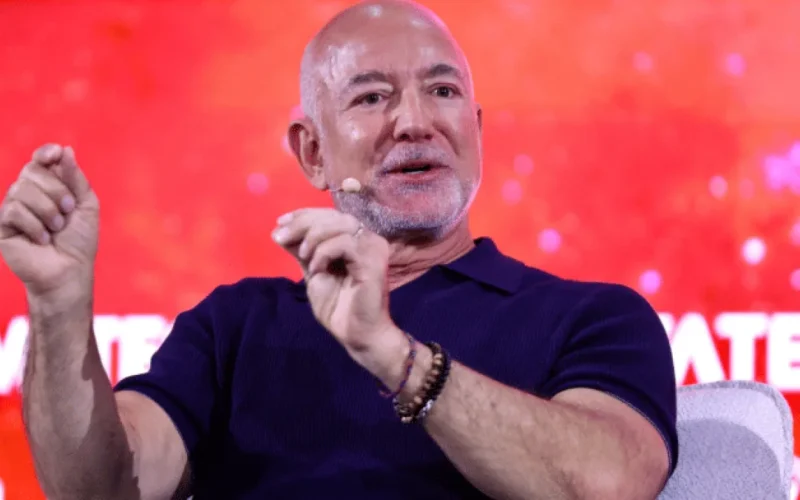
Jeff Bezos: AI Won’t Kill Jobs, It Will Create a Labour Shortage
At VivaTech 2026, Jeff Bezos addressed fears about automation. He stated clearly that Jeff Bezos: AI Won’t Kill Jobs, It Will Create a Labour Shortage. Instead of mass unemployment, he predicts increased demand for workers.
Bezos explained this shift during a panel in Paris. He argued that AI helps people discover new problems worth solving. Therefore, technology generates entirely new categories of work rather than eliminating old ones.
“AI is going to create a labour shortage because it’s going to make it possible for people to identify more problems.”
The Artificial General Engineer Concept
Bezos highlighted his new venture, Prometheus, as proof of this philosophy. This startup builds an “artificial general engineer” to accelerate innovation. First, these tools shorten the time between concept and execution.
Additionally, projects once deemed impossible now become viable. Each new capability opens doors to previously unsolvable problems. Consequently, we face limits only from imagination, not technical ability.
Lunar Colonies and Space Ambitions
Beyond AI, Bezos outlined long-term space exploration goals at VivaTech. He described the sector as supply constrained rather than demand constrained. Thus, establishing a permanent lunar presence is the logical first step.
Materials extracted from the Moon require significantly less launch energy. This makes our satellite a practical staging ground for deeper missions. Finally, moving heavy industry off-world could help restore Earth’s environment.
Economic Implications of AI Abundance
These comments arrive amid intense global debate about automation. Many experts warn of near-term disruption in white-collar roles. However, Bezos believes AI-driven abundance will outpace job losses.
He argues that new markets will emerge faster than displacement occurs. Whether this optimism holds remains a defining economic question. Ultimately, human ingenuity must keep pace with technological capability.
