Pennsylvania Farmers Are Selling Dirt for 35x Its Value — and the AI Industry Thinks That’s Cheap
Blackstone paid $586 million for Pennsylvania farmland at 35 times market value. However, the long-term math behind this AI data center deal is complicated.
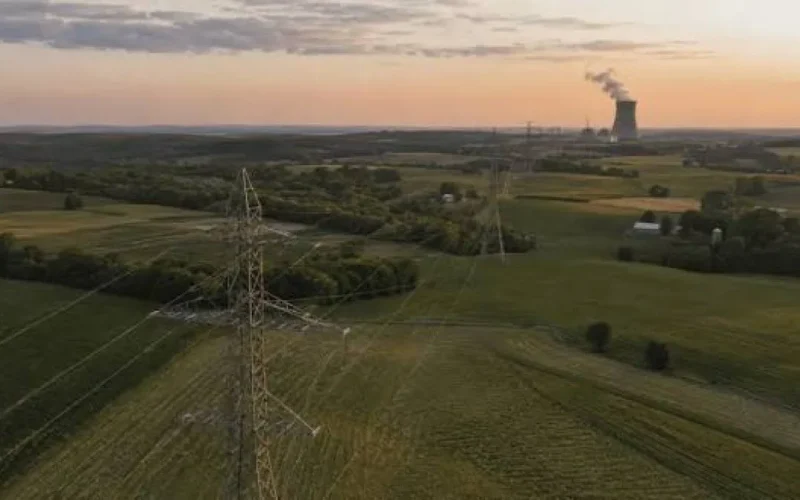
Pennsylvania farmers are selling dirt for 35x its value — and the AI industry thinks that’s cheap. In Salem Township, 96 farming families recently became multimillionaires. They sold land to QTS, a Blackstone-owned data center operator, for an average of $330,000 per acre. This price is 35 times higher than typical state farmland values. The total acquisition cost $586 million for roughly 1,700 acres. For the sellers, this was a massive windfall. However, the buyer views this premium as a strategic necessity for AI infrastructure.
Why Pennsylvania Farmers Are Selling Dirt for 35x Its Value — and the AI Industry Thinks That’s Cheap
The high price has nothing to do with soil quality. Instead, it relates to the nearby Susquehanna Steam Electric Station. This nuclear plant offers 2,500 megawatts of capacity. Data centers need reliable, low-carbon power above all else. Therefore, proximity to nuclear generation is extremely valuable. Amazon previously bought a neighboring campus for $650 million in 2024. That deal included a direct nuclear interconnect. By comparison, QTS paid nearly the same amount for raw farmland without infrastructure. This pricing reflects aggressive AI capital expenditure.
Additionally, these parcels fall inside a special overlay zone. Data center development is permitted by right in this area. Permitting uncertainty often adds years and millions in costs to projects. Consequently, this pre-cleared status removes a major risk variable. QTS was not just buying acres. They were buying regulatory certainty.
Financial Wins and Long-Term Tradeoffs
For families like the Kilitis, the sale was life-changing. They raised hogs on 89 acres for years before receiving a $22 million offer. They are now comfortably retired. Across all 96 families, the average payout was approximately $5.5 million. Jack Sordoni of 4-3 Consulting organized this complex consortium. Construction on 12 to 17 data centers begins in fall 2026.
However, headline numbers obscure a structural tradeoff. Families converted a perpetual income asset into a one-time lump sum. QTS will lease these facilities to hyperscale tenants on long-term contracts. These agreements provide predictable, inflation-linked cash flow backed by tech giants. Blackstone monetizes this recurring revenue at an institutional scale. The landowners received a fair price for dirt. Yet, they gave up future participation in the land’s value. None of the 96 families will see future revenue from this lucrative platform.
This differs significantly from the Marcellus Shale boom. Landowners then typically negotiated royalties while retaining title. The data center model requires a full deed transfer. Sellers are not wrong to accept these offers. Still, the asymmetry between seller and buyer outcomes is significant.
Political Tensions Over AI Infrastructure
Not everyone in Pennsylvania is celebrating. Similar dynamics are generating organized opposition across the state. Governor Josh Shapiro champions this buildout as central to the AI economy. Nevertheless, residents in many communities are pushing back. Montour County commissioners recently rejected a rezoning request for an Amazon-linked campus. Other townships have formed coalitions to resist industrialization. Maine even enacted a statewide moratorium on data center construction.
Grievances remain consistent across geographies. Residents cite noise, light pollution, and water supply pressure. Furthermore, retail electricity prices climbed 21.7% in 2025 alone. In response, Governor Shapiro announced the GRID framework for responsible development. State Senator Katie Muth proposed a three-year moratorium on hyperscale projects. Rural Republicans now face constituent opposition despite broader party support for investment.
The Systemic Math Behind the Premium
To understand why Pennsylvania farmers are selling dirt for 35x its value — and the AI industry thinks that’s cheap, consider system costs. Electrical infrastructure absorbs 40% to 45% of project budgets. Land costs are minor compared to total facility expenses. Hyperscalers plan massive capital expenditures this year. A 35x premium acts as cheap insurance against interconnection delays elsewhere.
QTS bid against the cost of failing to secure the site. Power access and permitting are the true limiting factors. Under these conditions, almost any price becomes rational. Sellers lacked a reference point for this specific buyer value. A follow-on deal involving 200 additional landowners is already forming. This suggests a structural land-use shift rather than a one-time event.
Balancing Preservation and Progress
Pennsylvania leads the nation in preserved farmland. Agriculture contributes $132.5 billion annually to the state economy. The administration frames both data centers and preservation as priorities. However, sustaining both is increasingly difficult as demand expands. New standards and zoning battles represent early attempts to define engagement rules.
Community opposition can prevail, as seen in Montour County. But success requires significant organization and resources. Most communities lack this capacity. For sellers, the outcome was transformative. For the industry, it was a foundational acquisition. The gap between generational wealth and quarterly capex defines current American land use negotiations.
Related Reading
- Switch’s $80 Billion IPO and the Data Center Gold Rush Financing the AI Era
- Goldman Sachs Says AI Spent $700B in 2025 — and Gave the US Almost Nothing Back
- Jim Cramer Thinks AI Will Make You Rich — and Also Wipe You Out
- OpenAI’s $852 Billion IPO: Inside the S-1 That Could Reshape Silicon Valley Forever
