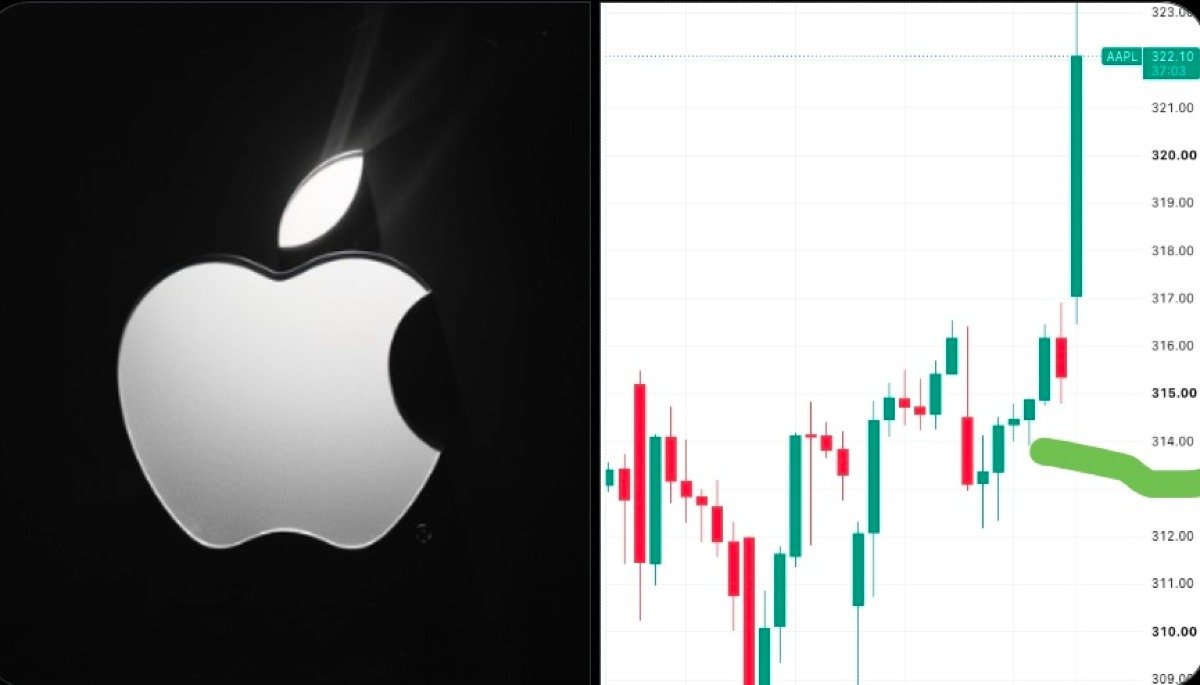
It is the trade nobody predicted at the start of 2026: Apple (AAPL) — the company that sat out the AI data-centre arms race and was repeatedly criticised for lagging behind in artificial intelligence — has become the best-performing stock among the so-called Magnificent Seven. As of July 13, 2026, AAPL has surged roughly 15% since its June 25 low, adding nearly $600 billion in market capitalisation and returning the stock to all-time-high territory.
The irony is hard to miss. The very strategy that had Wall Street worried — Apple's decision to license Google's Gemini models rather than build its own multi-billion-dollar AI infrastructure — is now being rewarded handsomely as investors question whether the industry's staggering AI capital expenditure will ever deliver proportional returns.
What Triggered the June Low — and the Subsequent Surge
Apple's worst single-day stock drop since April 2025 came on June 25, when the company raised prices on Macs, iPads, and Home devices, citing soaring memory chip costs. Shares closed at $275.15 that day. A week earlier, AAPL had already slipped roughly 4% in the session following its WWDC keynote, where it unveiled upcoming AI features in iOS 27 and macOS Golden Gate — a presentation that initially underwhelmed markets.
Since that June 25 floor, however, the stock has reversed sharply. AAPL is now up approximately 16–18% year-to-date, outperforming every other member of the Magnificent Seven. For context, Microsoft is down around 18% in 2026 — on track for its weakest annual performance since 2022 — while Alphabet and Amazon are both more than 10% below their May peaks.
The AI Rotation: Why Money Is Moving Into Apple
The core driver behind AAPL's resurgence is a broad investor rotation away from AI infrastructure plays. Throughout 2025 and the first half of 2026, markets poured capital into chipmakers, cloud providers, and software companies betting on AI data-centre buildouts. Now, with no clear timeline on when those investments will generate sufficient returns, sentiment is shifting.
As one strategist put it, there is a battle in the market right now, and Apple is benefiting precisely because it is not caught in the AI infrastructure storm. Investors are gravitating toward "steady-eddy" cash generators — companies with intact free cash flow, pricing power, and durable business models. Apple fits that bill almost perfectly.
Apple's arrangement with Google, under which it pays roughly $1 billion per year to license Gemini models and cloud technology for a rebuilt Siri and Apple Intelligence, looks increasingly prescient. Rather than racing to become the world's best LLM provider, Apple is positioning itself as the widest-reaching provider of AI-capable devices — and it already has billions of devices in consumers' hands to prove it.
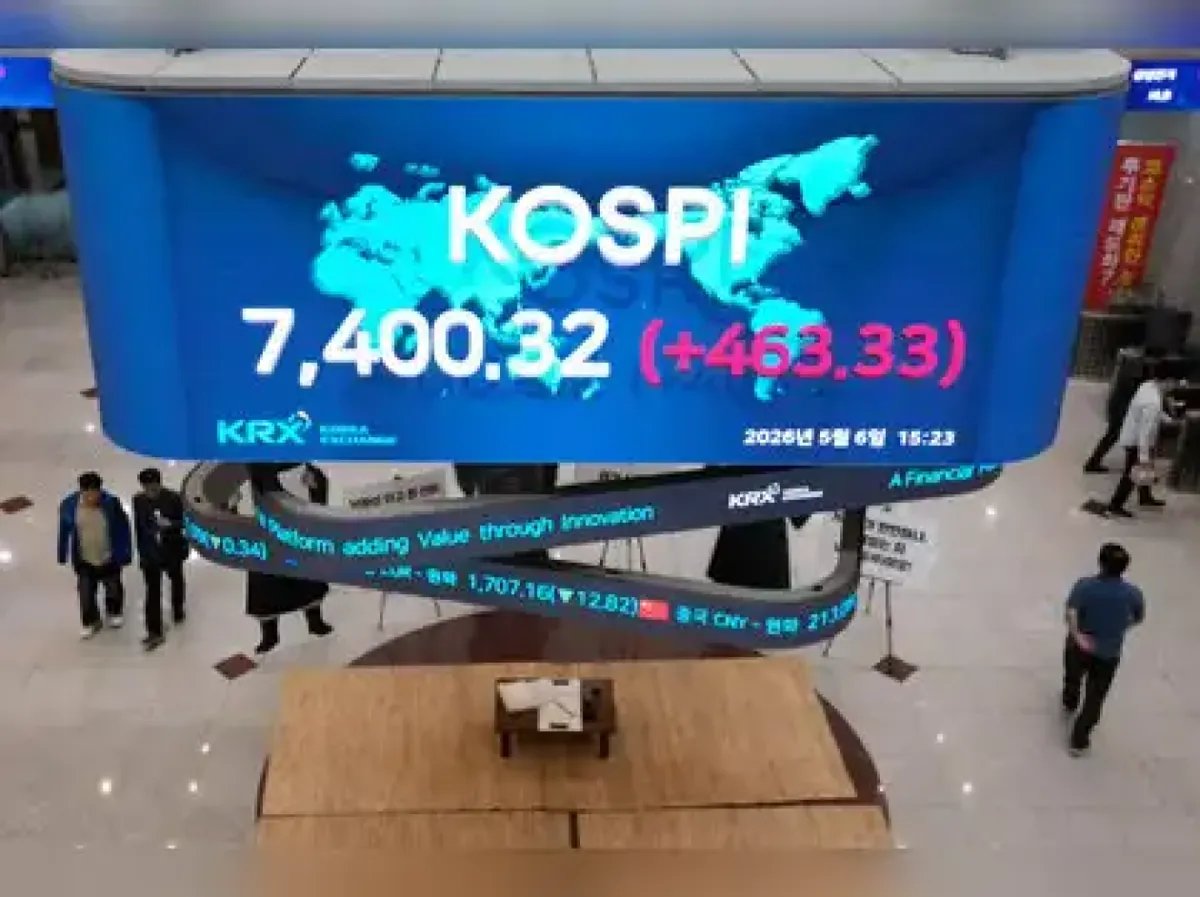
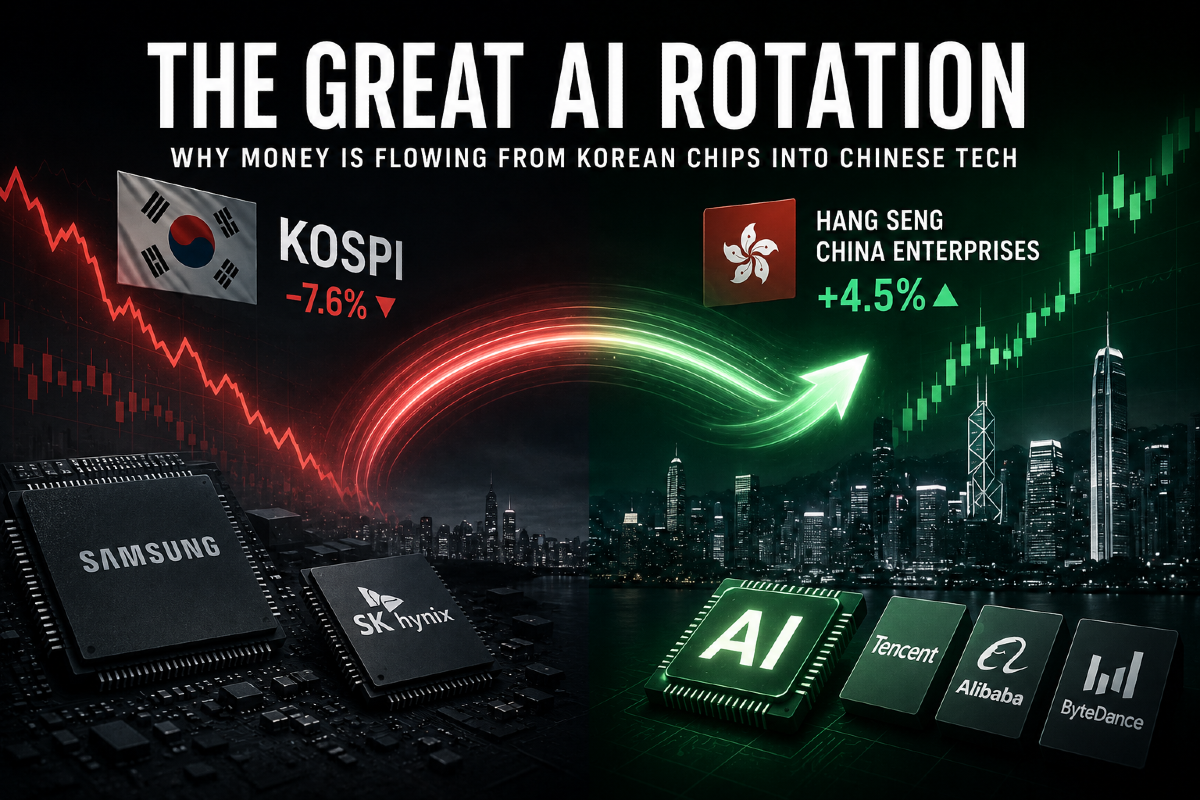
For further context on how AI spending is reshaping global markets, see our coverage of whether the AI trade is over, as told through Korea's bear market, and the great AI rotation from Korean chips into Chinese tech.
Apple's Financial Fundamentals Back Up the Rally
The move is not purely sentiment-driven. Apple's underlying numbers are strong. Analysts forecast revenue to rise nearly 15% in fiscal 2026 — the strongest annual growth since the pandemic electronics boom of 2021 — with net income projected to climb 17%. iPhone demand in fiscal Q1 2026 was described by CEO Tim Cook as "simply staggering," with sales rising 23% and hitting records in every geography, including a 38% surge in Greater China.
The company's GF Score stands at 95/100, indicating strong overall performance across profitability, growth, and financial strength metrics. The current P/E of around 38x is above the five-year median of 30x, reflecting elevated expectations — a risk worth watching.
The Foldable iPhone: The Next Catalyst
Beyond the AI rotation narrative, investors are eyeing a concrete product catalyst: Apple's foldable iPhone, widely expected to launch in September 2026. Nikkei reported that Apple instructed suppliers to prepare for around 10 million units in the initial production run, up from an earlier forecast of seven to eight million. Analysts see the foldable as a potential super-cycle driver, adding a new hardware premium segment to Apple's already dominant smartphone portfolio.
Citi has raised its AAPL price target to $365, citing the foldable iPhone cycle, improving memory cost dynamics from supplier diversification in China, and Apple's pricing power as core upside drivers.
For a deeper look at Apple's silicon ambitions that could further entrench its on-device AI advantage, read our article on the Apple M7 Ultra chip with up to 1.5TB of unified memory.
Risks to Watch
The AAPL rally is not without risks. Memory chip costs remain elevated, and while iPhone pricing was spared from the June round of increases, Apple has hinted further hikes could follow. A disappointing foldable iPhone launch — whether from weak demand or margin compression from higher component costs — could reverse sentiment quickly. At current valuations, which sit roughly 17–19% above GF Value estimates, the stock is priced for execution.
Insider activity also warrants attention: Apple insiders have net-sold approximately $87.6 million in shares over the past three months, which is not uncommon at record prices but is worth monitoring as earnings season approaches.
What This Means for the Broader Market
Apple's outperformance is a data point in a much larger story: the market is beginning to question the return profile of the AI infrastructure supercycle. When investors rotate from Nvidia, Microsoft, and Alphabet into Apple — a company that deliberately avoided the data-centre arms race — it signals a meaningful shift in how the market is pricing AI risk.
That does not mean the AI trade is dead. TSMC's 36% revenue surge, covered in our analysis of AI chip demand momentum, shows that infrastructure spending continues at scale. But it does suggest investors want to see the returns — and until they do, cash-generative, device-centric plays like Apple may continue to benefit.
Apple's story in 2026 is ultimately about the power of strategic restraint. While rivals raced to build the biggest AI models and the most expensive data centres, Apple focused on what it does best: selling premium hardware to billions of loyal users and weaving AI capabilities in through partnerships. Right now, the market is voting that was the right call.