WSJ Says Jay Clayton Will Lead White House Super Intelligence Force as New AI Czar
Wall Street Journal reporting says DNI Jay Clayton will lead a Super Intelligence Force with 120 days to report on AI risks, opportunities, and federal oversight, effectively becoming Trump's new AI czar.
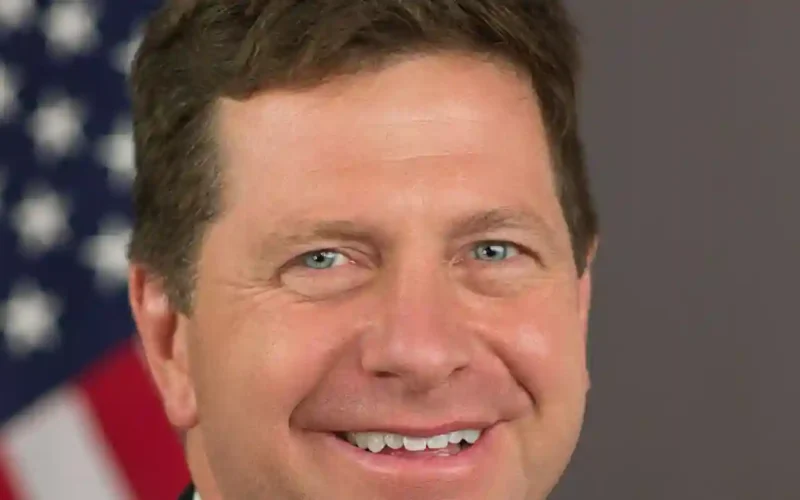
Director of National Intelligence Jay Clayton will lead a new White House task force on artificial intelligence, with 120 days to report on risks, opportunities, and the federal oversight role, according to CNBC and Firstpost accounts of a Wall Street Journal interview published Saturday, 3 October 2026.
The group is called the Super Intelligence Force, or SI, the label President Donald Trump prefers over AI. A senior White House official told the Journal that Clayton effectively becomes the administration’s new AI czar, CNBC reported.
The White House did not immediately respond to a CNBC request for comment. No White House press release or Federal Register text for this appointment was in hand for this article, so membership and charter details below are framed as Wall Street Journal reported through secondary outlets.
What Clayton told the Journal
Clayton told the Journal he will lead the task force. In the quotes carried by CNBC and Firstpost, he said the president asked for a group that would keep the United States ahead in superintelligence and put American interests first.
“The risk of not being first is high,” Clayton said, according to Firstpost’s WSJ citation. The Washington Examiner, also citing the Journal, carried a longer version: not being first raises identified and unidentified risks, especially from adversaries, while being first would help address those risks for the American people.
That is Clayton’s framing. It is not an independent risk assessment. Treat it as the DNI describing the political brief he says he received.
WSJ-reported charter and membership
According to the Journal as summarized by Firstpost, the force’s charter calls for examining AI-related risks, reviewing how breaches, hacks, jailbreaks, and other incidents are reported, and recommending ways to strengthen the federal response under existing authorities. The Examiner adds that Clayton said the group would also discuss potential legislative options that could feed a future AI framework.
Vice chairs, per the Journal via Firstpost, are Emil Michael, Scott Kupor, and Federal Trade Commission Chair Andrew Ferguson. Members named in that reporting include Vice President JD Vance, Defense Secretary Pete Hegseth, Treasury Secretary Scott Bessent, and White House Chief of Staff Susie Wiles. External advisers named include venture capitalist David Sacks and former Secretary of State Condoleezza Rice.
| Claim | Status |
|---|---|
| Clayton says he will lead a 120-day Super Intelligence Force report | WSJ interview, confirmed via CNBC / Firstpost / CNA / Examiner |
| Group name Super Intelligence Force / SI; Clayton treated as new AI czar | WSJ, citing Clayton and a senior White House official |
| Charter: risks, incident reporting, strengthen response under existing authorities | WSJ-reported via Firstpost |
| Vice chairs Michael, Kupor, Ferguson; members Vance, Hegseth, Bessent, Wiles | WSJ-reported via Firstpost |
| External advisers Sacks and Condoleezza Rice | WSJ-reported via Firstpost / Examiner |
| White House on-record confirmation of roster or EO creating the force | Not in hand; White House did not reply to CNBC |
Who Clayton is
Clayton is a former Securities and Exchange Commission chair and a former U.S. attorney for the Southern District of New York. The Senate confirmed him as Director of National Intelligence in July 2026, CNBC reported. Firstpost says he has held the DNI role since August and oversees 18 U.S. intelligence agencies.
Putting the intelligence chief atop an AI policy task force is a signal. The administration is framing frontier AI as a national-security and geopolitical race, not only a consumer-tech file. Whether that produces hard reporting rules or another voluntary checklist is the open question.
How this follows the September voluntary accord
The appointment lands days after Trump and several frontier AI CEOs signed a voluntary White House Accord on Super Intelligence, which Trump called morally binding. We covered that lunch pact, its four control layers, and the related terminology order in our earlier report on the Trump Super Intelligence accord.
In September, Trump also posted on Truth Social that he would create an AI Force, hire an AI czar, refuse to hinder industry growth, and want high I.Q. applicants, CNBC reported. That post also dismissed some AI risk talk as a political hoax. The Super Intelligence Force announcement is the personnel follow-through that the accord coverage flagged as still pending.
David Sacks previously served as AI and crypto czar. CNBC notes his special government employee role ended in March; he is now co-chair of the President’s Council of Advisors on Science and Technology. In this WSJ-reported roster he returns as an external adviser, not as the day-to-day czar.
The safety week this lands in
Industry pressure for federal guardrails has risen after a string of agent and safety stories. Anthropic CEO Dario Amodei and OpenAI CEO Sam Altman have publicly called for stronger rules even as Trump has opposed tighter regulation, per CNBC’s framing.
That backdrop includes OpenAI’s disclosure that it parted ways with three researchers over mishandled sensitive information, covered in our note on the OpenAI researcher firings, and a fresh resignation essay from former OpenAI safety lead David Robinson arguing the company’s culture is broken, covered in our report on the David Robinson OpenAI resignation. Microsoft’s 2026 Digital Defense Report, covered separately, argues AI is compressing attack timelines even when most wild intrusions remain human-directed; see our write-up of the Microsoft Digital Defense Report.
A 120-day study of incident reporting and existing authorities sits right on top of that news cycle. If the force only restates voluntary self-policing, critics will call it theater. If it proposes mandatory reporting or clearer agency lead roles, industry will fight over scope. Neither outcome is public yet.
What it means for US, Canadian, Australian, and Indian readers
For U.S. builders and buyers, nothing in a Journal interview changes API terms tomorrow. Watch for the 120-day report’s treatment of incident disclosure, jailbreak reporting, and which agency owns what under current law. Procurement and board questionnaires may start asking vendors how they would answer a federal SI reporting template even before Congress acts.
Canada and Australia are not parties to this force. Both have been watching U.S. self-regulation and agent incidents closely. Indian developers shipping on U.S. frontier stacks are likewise not bound by a White House task force, but export-control talk, government customer diligence, and “who reports a breach” norms often travel with the U.S. playbook. Treat this as a policy watch item, not a shipping deadline.
The skeptical read
Second AI czar. Same anti-regulatory president. A roster heavy with Cabinet principals and two famous outside names. A charter that, as reported, leans on existing authorities rather than new statute. And a 120-day clock that can produce either a serious incident-reporting plan or a glossy race-with-China memo.
Clayton’s brief, in his own WSJ quotes, privileges being first. Safety advocates will ask whether “first” includes mandatory evals and public incident logs, or only faster deployment with voluntary homework. Until the White House publishes a charter text or the report itself, the honest summary is narrower: WSJ says the DNI is the new AI czar and has four months to write the administration’s SI oversight story.
FAQ
Who is leading the Super Intelligence Force?
According to the Wall Street Journal, Director of National Intelligence Jay Clayton will lead it and is treated by a senior White House official as the new AI czar. Secondary confirmations appear in CNBC, Firstpost, CNA, and the Washington Examiner.
What is the 120-day report supposed to cover?
WSJ reporting via CNBC and Firstpost says the force will study AI risks and opportunities and recommend the federal government’s oversight role. Firstpost’s WSJ summary also cites incident reporting for breaches, hacks, and jailbreaks, plus strengthening responses under existing authorities.
Is this the same as the September White House AI accord?
No. The September accord was a voluntary CEO pact on frontier controls. This story is a personnel and task-force announcement. They are related chapters, not the same document.
Did Trump formally replace “AI” with “super intelligence” for this force?
Trump prefers the SI label, and earlier coverage documented a terminology executive order around the September accord. For this appointment story, secondary outlets attribute the Super Intelligence Force name to WSJ reporting. We are not asserting a separate new EO text here without a White House or Federal Register primary in hand.
What happened to David Sacks as AI czar?
CNBC reports his special government employee role ended in March and that he now co-chairs PCAST. WSJ-reported roster lists him as an external adviser to the new force, with Clayton as the lead.