India’s First Homegrown Satellite Network Just Got Cleared — and Starlink Is Already Being Held Back
IN-SPACe has cleared Reliance Jio's 1,600-satellite LEO constellation as technically sound, unlocking international orbital filings. The decision puts India's first homegrown satellite internet provider on a fast track while Starlink remains stuck over security concerns.
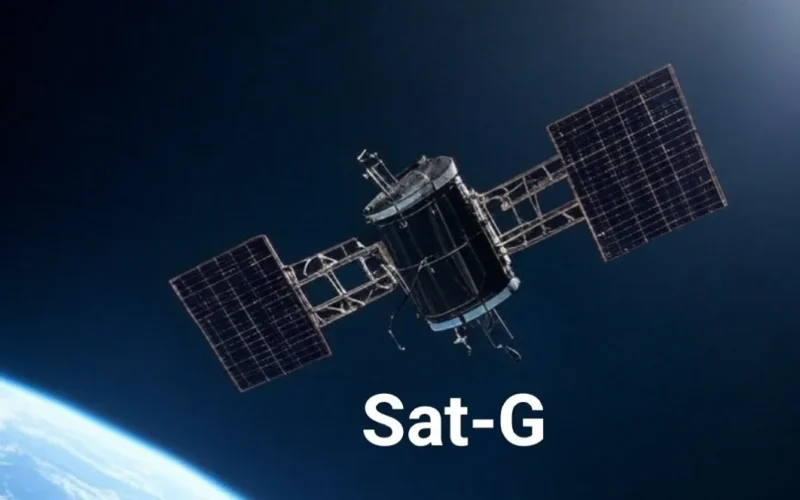
Reliance Jio’s plan for a 1,600-satellite low-Earth orbit constellation has been declared “technically sound” by India’s space regulator, IN-SPACe. That means India’s first homegrown satellite network just got cleared — and Starlink is already being held back by security reviews that continue to freeze Elon Musk’s company out of the market.
India’s First Homegrown Satellite Network Just Got Cleared — and Starlink Is Already Being Held Back
The timing underscores a strategic shift. Jio can now move ahead with International Telecommunication Union (ITU) orbital filings as a recognised Indian national entity. This secures precious spectrum and orbital slots before foreign constellations claim them. Starlink, despite holding a space-segment authorisation and a unified telecom licence, remains blocked by the Ministry of Home Affairs. Security agencies worry about signal spillage from foreign-controlled satellites near sensitive border zones.
What Jio’s Constellation Brings
The proposed network will operate roughly 650 kilometres above Earth, placing it firmly in the low-latency LEO band suited for consumer broadband. Jio outlines significant technical muscle:
- ~1,600–1,650 satellites in low-Earth orbit
- 4.5–5 terabits per second of total network capacity
- 20–22 ground stations spread across India
- Deployment timeline: two to three years from approval
- Estimated cost: $10–15 billion
The network targets both fixed satellite services—broadband and cellular backhaul—and mobile satellite services. The mobile piece includes direct-to-device (D2D) connectivity that lets standard smartphones talk to satellites without special hardware. That capability alone could transform access for remote farming communities, island territories, and military outposts on India’s borders.
Jio is already leasing capacity from Luxembourg-based SES to run its JioSpaceFiber service. The homegrown LEO constellation is the long-term sovereign play: infrastructure Jio owns outright, not rented from foreign operators.
Why the ITU Filing Matters
IN-SPACe’s clearance is more than a technical stamp. It lets the government sponsor Jio’s ITU filings as a national entity. Orbital slots, like radio spectrum, are awarded on a first-come, first-served basis. Late filers risk paying premium access fees or missing the orbital positions needed for competitive performance.
The race is already crowded. In late 2025, Chinese satellite companies submitted applications covering more than 200,000 planned satellites. Starlink operates over 10,000 satellites today, holds FCC authorisation for up to 12,000, and has longer-term plans that could reach 42,000. Until Jio’s proposal, India had no active LEO constellation filings as a national entity. The regulator’s move to back the ITU application is a pointed act of sovereign infrastructure strategy.
Akash Ambani, announcing the project at Reliance Industries’ 49th AGM in June 2026, framed it directly: “Jio connected India on the ground — now, we must connect India from the skies.”
A Sovereign Network in a Competitive Field
Starlink commands the largest LEO constellation by far. Amazon’s Project Kuiper is building toward more than 3,200 satellites, and Eutelsat OneWeb—backed by India’s Bharti Group—runs roughly 650. All are foreign-operated networks seeking Indian market access.
Jio’s constellation stands apart on sovereignty. An Indian-owned, Indian-filed, domestically operated network keeps data routing, security architecture, and access decisions under national control. Those are precisely the concerns stalling Starlink’s final approvals. That geopolitical alignment may prove to be Jio’s most durable competitive moat.
Significant hurdles remain, however. Jio must complete ITU filings, manufacture or procure satellite hardware, conduct launches, build out its ground station network, and win final operational licences from the Department of Telecommunications. A two-to-three-year deployment target is optimistic for a programme of this scale. Cost overruns in large LEO programmes are the norm.
Bridging India’s Broadband Gap
India’s terrestrial networks—Jio’s own fibre and 5G included—leave big connectivity gaps in rural areas, island communities, and high-altitude regions. A domestic constellation with 4.5–5 Tbps of capacity changes that equation. That figure exceeds the capacity currently approved for several competing satellite projects in India. Integrated with Jio’s existing telecom infrastructure, the constellation could deliver seamless connectivity: urban 5G handing off to suburban fibre handing off to rural satellite, all inside a single operator’s network.
Whether Jio executes that vision remains the open question. IN-SPACe’s clearance, however, has moved the project from aspiration into an active regulatory pipeline. India’s satellite broadband market, long shaped by foreign ambitions, may finally have a domestic contender with the resources to follow through.