Best AI Phones in October 2026: 6 Picks for Every Budget
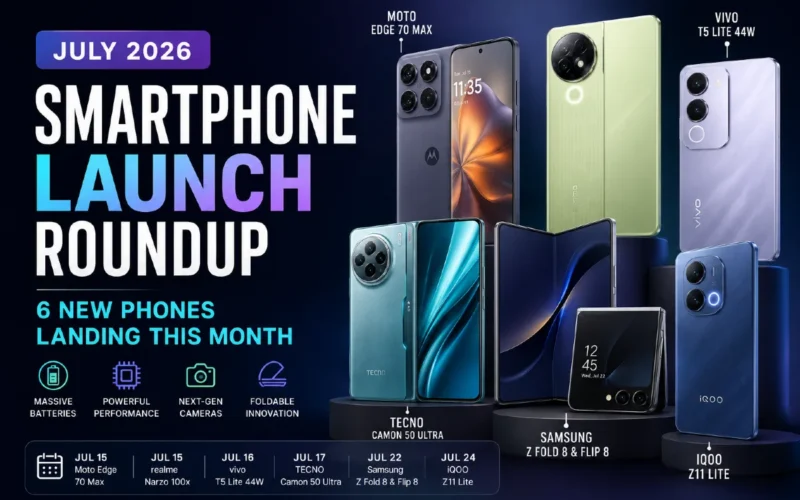
Our July 2026 smartphone launch roundup covers six new devices arriving between July 15 and 24. Discover specs for Motorola, Samsung, and more.
Updated October 21, 2026. Every flagship now ships with an AI label. The label covers three different things: an assistant that can see your screen and act in apps, on-device models that keep working without a signal, and cloud tools for photos, calls, and writing. The best phone for you depends on which of those you will actually use.
We compared published reviews, manufacturer specs, update commitments, and the privacy terms for each assistant. We did not run lab benchmarks. Prices are US list prices as of October 21, 2026 and will vary by retailer.
Quick picks
| Phone | Best for | Standout AI feature | Price |
|---|---|---|---|
| Google Pixel 11 Pro | Best overall | Gemini built into the OS | $1,099 |
| Samsung Galaxy S26 Ultra | Best all-rounder | Galaxy AI with a privacy switch | $1,299.99 |
| Apple iPhone 18 Pro | Best privacy | Siri AI with Private Cloud Compute | $1,199 |
| Google Pixel 10a | Best budget | Gemini and seven years of updates | $499 |
| OnePlus 15 | Best battery | Gemini tools with a 7,300mAh battery | $899.99 |
| Nothing Phone (4a) Pro | Best design value | Simple AI tools without clutter | $499 |
1. Google Pixel 11 Pro: best AI phone overall
The Pixel 11 Pro wins because Google controls the chip, the operating system, and the Gemini model. That vertical stack shows up in small ways: the assistant can answer from inside the phone, common tasks keep working offline, and Gemini feels like part of the system rather than an app bolted on top.
- Chip: Google Tensor G6 with on-device Gemini Nano
- Display: Super Actua panel up to 3,600 nits
- Assistant: Gemini built in as the default assistant
- Updates: Seven years of OS and security updates
- Price: $1,099
Google bundles six months of Google AI Pro with Pro models. After that, heavier Gemini use costs money unless you drop back to the free tier. That subscription is the main catch. The Pixel also ships fewer novelty AI tools than Samsung, so feature counters will not be impressed.
2. Samsung Galaxy S26 Ultra: best all-rounder
The Galaxy S26 Ultra is the phone to pick if you want the widest set of AI tools and do not mind paying for it. Galaxy AI covers photography, calls, notes, translation, browsing, and productivity. The Privacy Display and the option to force certain processing on-device make it the better choice for people who answer to a compliance team.
- Chip: Snapdragon 8 Elite Gen 5 for Galaxy
- Display: 6.9-inch panel with Privacy Display
- Camera: 200MP main sensor
- Battery: 5,000mAh
- Updates: Seven years
- Price: $1,299.99
The S Pen still sets it apart from every other Android flagship. The downside is price and clutter. Samsung ships so many AI features that the settings menu can feel like a second job. Most buyers will use five of them and ignore the rest.
3. Apple iPhone 18 Pro: best for privacy
The iPhone 18 Pro is the pick if your priority is keeping AI requests out of third-party clouds. Siri AI arrived properly in iOS 27, and Apple routes sensitive requests through Private Cloud Compute, which it says keeps data out of storage and away from advertisers. The result is a more private assistant, even if it is less flexible than Gemini.
- Chip: Apple A20 Pro
- Memory: 12GB across the Pro line
- Assistant: Siri AI with on-device processing and Private Cloud Compute
- Updates: Long support, tied to Apple’s iOS schedule
- Price: $1,199
The catch is the ecosystem. The best features assume you use a Mac, an iPad, and iCloud. If you live in Google Workspace, the Pixel is the easier fit. If you already own Apple hardware, the continuity is hard to match.
4. Google Pixel 10a: best budget AI phone
The Pixel 10a is the value pick. It gets Gemini, Circle to Search, Live Translate, and call tools, plus the same seven-year update promise as Google’s flagships. At $499, that combination is unmatched for buyers who want AI features without a four-figure phone bill.
- Assistant: Gemini with the core Pixel AI tools
- Updates: Seven years
- Price: $499
You give up flagship camera hardware, a high-refresh premium display, and the fastest chip. The AI experience is still solid for summaries, translation, and photo editing. If your budget is fixed at $500, start here.
5. OnePlus 15: best battery, with a caveat
The OnePlus 15 is a battery monster. The 7,300mAh cell and Snapdragon 8 Elite Gen 5 put it among the longest-lasting Android flagships of 2026. OnePlus AI leans on Gemini for most of its heavy lifting, so the assistant is capable even though the software layer is thinner than Samsung’s.
- Chip: Snapdragon 8 Elite Gen 5
- Display: 6.78-inch
- Battery: 7,300mAh
- Camera: 50MP triple setup
- Price: $899.99
The caveat is support. OnePlus has left the US and Europe and is moving eligible phones to Oppo’s ColorOS. Existing warranties are honored, but long-term software and resale value are less certain. Read our OnePlus exit guide before buying remaining stock.
6. Nothing Phone (4a) Pro: best design value
The Nothing Phone (4a) Pro is for buyers who want a distinctive phone and a few useful AI tools without a subscription maze. Nothing’s software is cleaner than most Android skins, and the AI features focus on essentials like summarization, photo cleanup, and call handling.
- AI tools: Summaries, photo cleanup, call tools
- Updates: About five and a half years
- Price: $499
It is not the phone for someone who wants the deepest assistant integration. The camera and chip are mid-range, and the update window is shorter than Google’s or Samsung’s. Buy it for design and clean software, not for AI horsepower.
What to ignore when buying an AI phone
“AI” on the box
The label says almost nothing. Ask which assistant ships, whether it works offline, and what happens after the free trial. A phone with one excellent assistant beats a phone with twenty features you never open.
Benchmark scores
AI benchmarks rarely match real use. A fast chip helps, but the assistant’s integration and the company’s update record matter more. A mid-range phone with seven years of updates can be the better long-term buy.
Free trials that become subscriptions
Google bundles Google AI Pro for six months on Pro models. Samsung and Apple have their own trial structures. Check the renewal price before you count a feature as part of the phone.
Cloud versus on-device
Many AI features send data to a server. If privacy matters, look for a phone that runs common tasks on-device and explains when it does not. Apple and Google are the clearest on this, but neither is fully local.
Frequently asked questions
What is the best AI phone overall?
The Google Pixel 11 Pro. It has the deepest Gemini integration, strong on-device processing, and seven years of updates. The Samsung Galaxy S26 Ultra is the better pick if you want the widest feature set and a stylus.
What is the best budget AI phone?
The Google Pixel 10a at $499. It keeps the core Gemini tools and the seven-year update promise while cutting back on camera and display hardware.
Do AI features work without a signal?
Some do. On-device models handle summarization, translation, and photo cleanup on recent Pixel and iPhone models. Heavier requests still go to the cloud. Check the specific feature before you rely on offline use.
Is the iPhone or Pixel better for privacy?
The iPhone 18 Pro has the clearer privacy story because of Private Cloud Compute. The Pixel 11 Pro keeps more common tasks on-device. Both mix local and cloud processing, so neither is a pure offline assistant.
Should I buy a OnePlus phone now?
Only at a steep discount and only if you accept weaker long-term support. OnePlus has left the US and Europe. Warranties are honored, but software updates and resale value are less certain than with Google, Samsung, or Apple.
The bottom line
Buy the Pixel 11 Pro if you want the best overall AI experience. Buy the Galaxy S26 Ultra if you want the most features and a stylus. Buy the iPhone 18 Pro if privacy and Apple continuity matter most. On a budget, the Pixel 10a is the easy recommendation. The OnePlus 15 is a battery champion with a support asterisk, and the Nothing Phone (4a) Pro is the design-first alternative.
