OpenAI Codex and ChatGPT Work Limits: Every Cap Change and Reset
OpenAI lifts the 5-hour usage cap for ChatGPT and Codex users on paid plans. Learn what this temporary change means for your workflow and quotas.
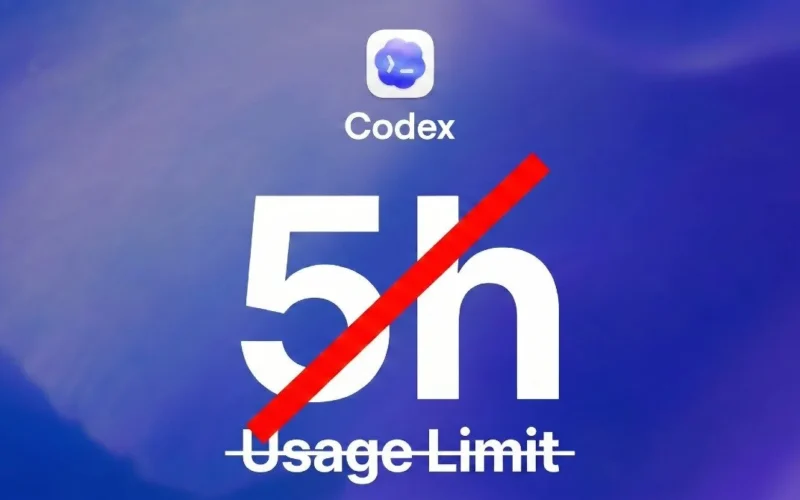
Update, October 21, 2026: OpenAI’s 5-hour cap removal was temporary. The company has not published a permanent limit schedule for Codex or ChatGPT Work. Check the usage panel in the app for your current quota.
OpenAI changed Codex and ChatGPT Work usage limits at least four times during the GPT-5.6 Sol launch window. It lifted the 5-hour cap, reset paid quotas at 6 million, 7 million, and 8 million users, and wiped counters again after a near-global outage. This page tracks each change in order and explains what the resets did and did not do.
Timeline of OpenAI Codex and ChatGPT Work limit changes
July 13: the 5-hour cap is lifted
OpenAI removed the rolling five-hour usage restriction for paid ChatGPT and Codex users. The change applied to Plus, Business, and Pro plans. Free-tier users were not included in this specific update.
Two other changes came with it. OpenAI deployed efficiency improvements to GPT-5.6 Sol so similar tasks would consume less of a user’s allowance. It also issued a one-time quota reset to every eligible account.
At the time, OpenAI said active users across Codex and ChatGPT Work had crossed six million. The company framed the relaxed limits as a response to demand after the GPT-5.6 Sol launch, not as a permanent plan change.
July 14: 7 million users and a free banked reset
The next milestone arrived within a day. OpenAI said Codex and ChatGPT Work had reached seven million active users and gave every user a free banked reset. The reset topped up the weekly allocation immediately and could be applied on demand from the desktop app or the ChatGPT web interface.
No promo code was required. OpenAI described the reset as a thank-you for the milestone. The company did not announce an expiration date, but said users should claim it sooner rather than later.
July 14: 8 million users and visible strain
Later that day, OpenAI crossed eight million users across the two products. Tibo, the OpenAI engineering lead who posted the milestones, announced the number publicly. Sam Altman described GPT-5.6 Sol growth as “insane” and warned that the inference team was working through difficult scaling work.
OpenAI again removed the 5-hour rate limit for GPT-5.6 Sol to support adoption. The company also warned that service hiccups were possible while capacity expanded. The combination of rapid growth and relaxed limits turned the launch into a live stress test of OpenAI’s inference stack.
July 25: a near-global outage
OpenAI’s infrastructure went down across APIs, ChatGPT, and Codex between roughly 2am and 4am UTC on July 25, 2026. The disruption was described internally as almost global. When service returned, OpenAI wiped usage limits for affected paid users as compensation.
That reset was reactive. It followed a failure, not a product milestone, and it affected users who had lost service during the window.
Late July: a second reset for all paid users
A second reset followed within days. Tibo announced that usage limits had been reset for all paid users of Codex and ChatGPT Work, not only those affected by the outage. The post celebrated the fast adoption of ChatGPT Work and told users to hold on to their ultra and fast execution modes.
Back at the laptop. The usage limits have been reset for all paid users of Codex and ChatGPT Work. Weeeeeeee. It’s a good day!
The reset was automatic. Paid users did not need to enter a code or contact support. OpenAI did not say whether the resets would become a regular benefit or whether they were tied to specific milestones.
What the changes actually meant
Long agentic sessions got more room
Codex and ChatGPT Work are built for long-running tasks: multi-file edits, test runs, browser work, document analysis, and batch processing. A five-hour cap can interrupt those tasks mid-run. Removing it, even temporarily, let teams finish work without watching a clock.
The efficiency improvements mattered as much as the cap removal. If a task consumes less quota, a normal allowance stretches further after the temporary changes end. OpenAI did not publish per-task efficiency figures, so the practical gain varied by workload.
Resets became a growth lever
The pattern is unusual. OpenAI used quota resets to celebrate user milestones, compensate for an outage, and keep momentum during a launch window. Each reset cost capacity, but it also gave users a reason to try heavier workloads without waiting for the weekly refresh.
That approach works while infrastructure can absorb the load. It becomes harder to repeat when demand outruns capacity, which is why the 8 million user post came with a warning about service stability.
The limits were never a permanent promise
OpenAI described the 5-hour cap removal as temporary from the start. The resets were one-time top-ups, not a change to the underlying plan terms. Users should treat any relaxed limit as a window, not a guaranteed baseline.
How to check your Codex or ChatGPT Work quota
Open the ChatGPT desktop app or chatgpt.com and look for the usage panel in settings or the account menu. Codex shows remaining usage in its own interface. Banked resets appear as an available action when OpenAI grants them.
There is no public promo code for these resets. They are applied by OpenAI to eligible accounts. If a page asks for a code, a password, or payment to unlock a usage reset, it is not an official OpenAI process.
Frequently asked questions
Did OpenAI remove the 5-hour limit permanently?
No. OpenAI described the change as temporary when it lifted the cap in July 2026. The company has not published a permanent replacement schedule.
Who qualified for the limit changes?
The cap removal applied to Plus, Business, and Pro plans. The later resets applied to paid users of Codex and ChatGPT Work. Free-tier users were not part of the initial 5-hour cap change.
Did the resets replace the weekly quota?
No. A banked reset topped up the remaining weekly allowance. It did not change the schedule for the next normal refresh.
Was there a promo code for the free reset?
No. OpenAI applied the resets automatically. No promo code was required, and users did not need to contact support.
Why did OpenAI reset usage limits so often?
OpenAI tied the resets to user milestones and, in one case, to compensation for the July 25 outage. The company did not commit to a regular reset schedule.
What happened after the 8 million user milestone?
OpenAI continued to relax limits and reset quotas during the launch window, but warned that inference capacity was under strain. The company has not published a final user count or a permanent limit policy.
Related reading
