Intel (NASDAQ: INTC) is one of the most searched tickers in the U.S. today — and for good reason. After an extraordinary run that took the stock from around $38 at the start of 2026 all the way to an all-time high of $142.35 on June 22, the shares have given back more than 21% and are trading near $105–$107 this Monday morning. The question on every investor's mind: is this a buying opportunity, or the beginning of a deeper unwind?
What Sparked the INTC Stock Selloff?
The decline didn't happen in a single day — it was a cascade of three separate blows, each compounding the last.
1. Bank of America's AI Bubble Warning (July 1)
The first crack appeared on July 1, when Bank of America strategist Michael Hartnett published a report warning that AI semiconductor valuations had become dangerously stretched. BofA's Bubble Risk Indicator had climbed to 0.91 — a level not seen since June 2000, the month before the dot-com bubble burst. Intel fell 8.3% that day alongside AMD (−8.3%), TSMC (−6%), and Nvidia (−1.8%). The AI enthusiasm that had powered INTC well above the analyst consensus target of roughly $101 suddenly felt precarious.
2. Samsung's Weak Earnings Triggered a Semiconductor Dump (July 7)
Six days later, Samsung's disappointing preliminary earnings ignited a fresh wave of semiconductor selling. Intel fell another 9.2–10%, becoming one of the S&P 500's worst performers on the day, as traders repriced PC and server chip demand across the board. The Philadelphia Semiconductor Index dropped 10.8% over ten sessions, and the VanEck Semiconductor Index shed 13%. Reuters estimated that roughly $1.3 trillion in semiconductor market cap was erased across the sector.
3. SK Hynix's Nasdaq Debut Turns Sour — and JPMorgan Piles On (July 13)
Today's decline is the third act. SK Hynix, which raised $28 billion in the second-biggest share sale ever and surged 14% on its Nasdaq debut, reversed sharply after a domestic South Korean brokerage forecast its Q2 operating profit would miss consensus by roughly 8%, citing softer-than-expected high-bandwidth memory chip pricing. SK Hynix shares collapsed more than 15% in Seoul — their steepest single-session decline ever — and the contagion spread immediately into U.S. premarket trading. Intel slid 4.3–4.6% in Monday morning trading.
Separately, JPMorgan named INTC a top short idea, arguing that Intel's more-than-doubling in share price this year has already priced in a foundry and AI recovery that has yet to show up in actual financial results.
The Company-Specific Problem: Intel 18A Yields
Beyond the sector-wide noise, Intel carries real execution risk that investors cannot ignore. The central pillar of CEO Pat Gelsinger's "IDM 2.0" strategy is the Intel 18A process node — a next-generation manufacturing technology that the company is betting will allow it to recapture customers like Apple, Google, Tesla, and SpaceX as an external foundry. The problem: technical reports indicate that 18A is facing lower-than-anticipated manufacturing yields, and profitable production may not arrive until late 2026 or even 2027.
In Q1 2026, Intel Foundry generated only $174 million in external customer revenue while posting a $2.4 billion operating loss. The business is still in its very early stages. Meanwhile, AMD's data center segment surpassed Intel's in revenue for the first time ever in Q1 2026, as enterprise customers continue rotating toward ARM-based custom silicon and AMD's EPYC processors — forcing Intel to cut Xeon prices aggressively, which is further pressuring gross margins.
Intel's full-year revenue has run around $52.85 billion, but revenue growth has been negative over three- and five-year timeframes. Net margins remain in the red, with a recent quarterly net loss of approximately $3.73 billion.
What Analysts Are Saying
Wall Street is deeply divided. The dispersion in 12-month price targets — ranging from $25 to $200 — is one of the widest in the semiconductor sector, which itself reflects how binary the Intel thesis has become.
- HSBC (Buy, $200 target): Analyst Frank Lee called Intel "too good to ignore," citing the long-term potential of Intel Foundry, the 18A process, and advanced packaging. HSBC views Intel as well-positioned to capture hyperscaler AI infrastructure demand and government support for domestic semiconductor manufacturing.
- Goldman Sachs (Neutral, $150): Initiated coverage in late June with a neutral stance, acknowledging the upside case but flagging execution risk.
- Cantor Fitzgerald (Neutral, $150): Lifted its target in late June, staying on the sidelines.
- Stifel (Hold, $120): Raised its target to $120 from $75 on July 10, one of the more recent upgrades.
- JPMorgan (Short): Named INTC a top short, arguing the stock has priced in a turnaround that hasn't materialized yet.
- UBS (Neutral, $121) and TD Cowen (Hold, $115): Both raised targets while staying cautious.
The consensus across 49 analysts sits at Hold, with an average 12-month price target of approximately $98–$102 — well below where INTC was trading even after the recent pullback. That gap between market price and Street consensus was one of the warning signs of the correction.
Technical Picture: Where Does INTC Find Support?
From a technical standpoint, Intel is chopping around $105–$107 on tight intraday candles — a signal that the panic phase has cooled, but that demand remains tentative. Every push toward $107 is being met with selling pressure, a pattern traders often describe as a "dead-cat bounce" risk after a heavy flush. The 200-day EMA sits around $108.60–$108.66, which is now acting as resistance rather than support.
The RSI had fallen to around 37–43 during the worst of the selling — approaching, but not yet in, oversold territory. A close above $125.70 would be needed to reassert the bullish trend and open a path toward the $141 area. Below $108, the next meaningful support is closer to the $98–$100 range where the analyst consensus was anchored before the rally.
The Macro Context: This Isn't Just an Intel Problem
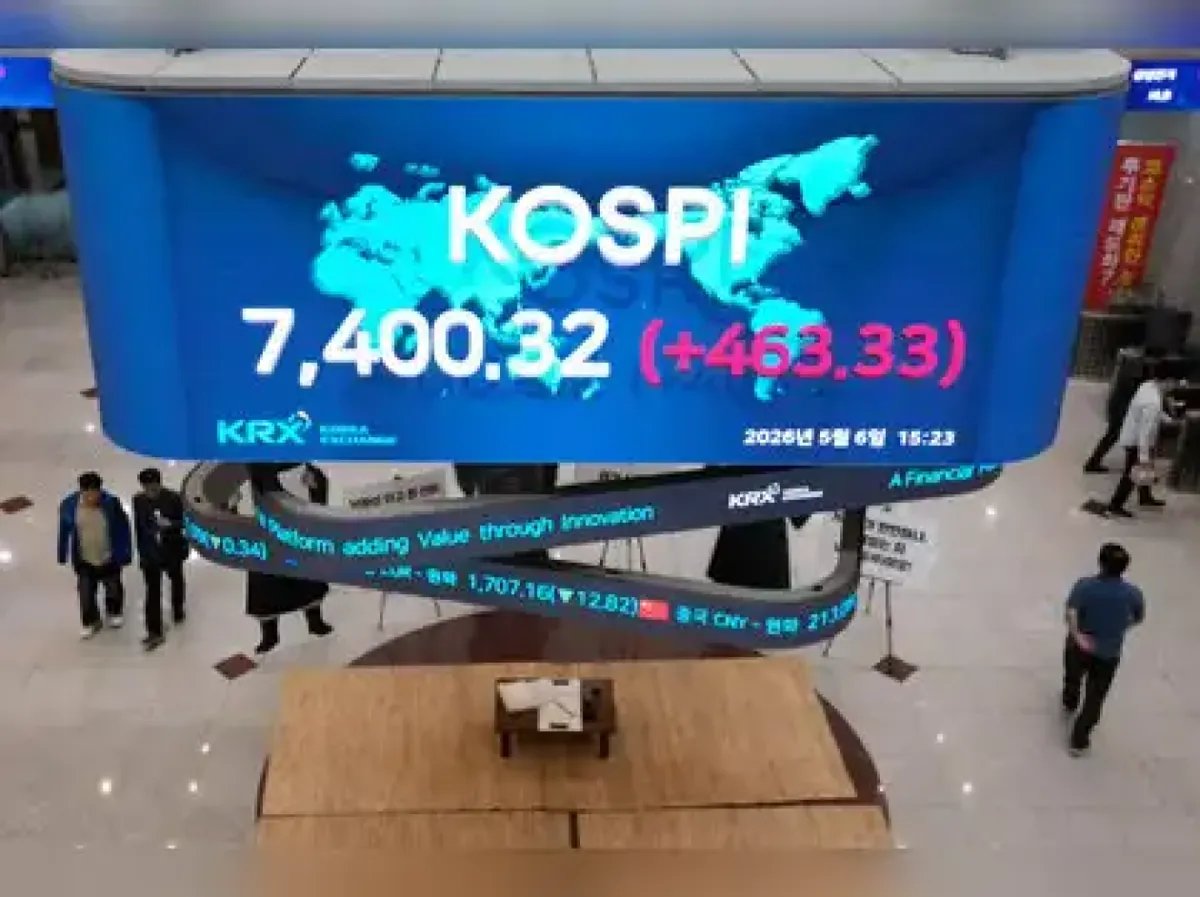
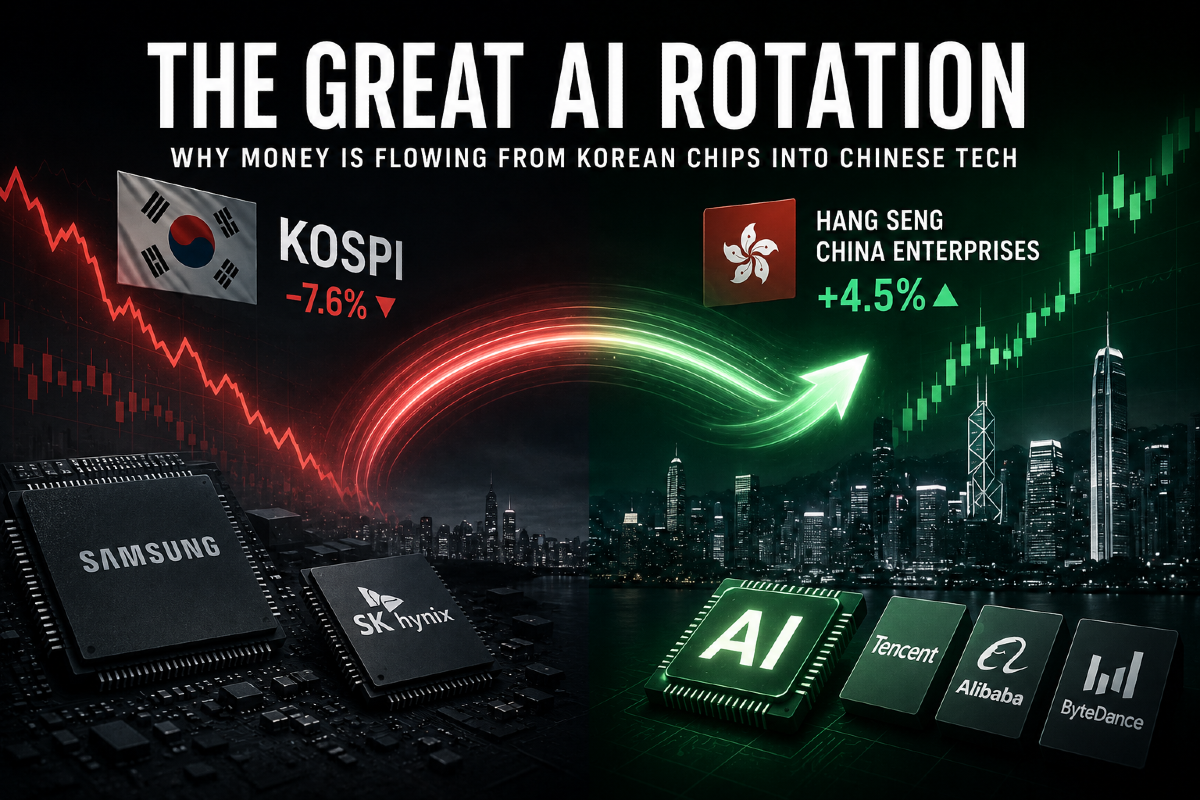
It's worth emphasizing that Intel's decline is part of a broader semiconductor story. As we've covered in depth, the AI trade has come under serious scrutiny in July 2026, with Korea's Kospi crashing 25% from its peak and dragging global chip names lower. The semiconductor selloff has wiped out over a trillion dollars in market value across the sector in a matter of weeks.
At the same time, foundry peers are not immune. TSMC's quarterly revenue surged 36% to $39.6 billion, demonstrating that AI chip demand hasn't evaporated — but the market is now demanding proof of earnings, not just growth narratives.
What to Watch: July 23 Q2 Earnings
The next major catalyst for INTC is its Q2 earnings report on July 23. Investors will be scrutinizing three things above all else:
- Intel Foundry external revenue — Any meaningful acceleration from the $174M Q1 figure would be a positive signal.
- 18A yield and production timeline update — Management needs to provide clarity on whether profitable yields are on track for H2 2026 or slipping to 2027.
- Gross margin trajectory — With AMD taking share and Intel cutting Xeon prices, margin pressure is a key concern for the profitability timeline.
Wells Fargo and other banks have flagged that investors will be looking for signs that the momentum built in the first half of 2026 can actually carry through to hard financial results. A beat-and-raise on July 23 could be the catalyst that resets the narrative. A miss or a cautious guide risks pushing INTC back toward the $90–$100 analyst consensus zone.
The Bottom Line on INTC Stock
Intel's stock has gone from being one of 2026's most spectacular turnaround stories — up nearly 4x from its lows — to a high-stakes, high-volatility battleground in a matter of weeks. The bull case (foundry renaissance, AI infrastructure tailwinds, government backing) remains intact in theory. The bear case (delayed 18A yields, AMD taking data center share, stretched valuation even after the pullback) is equally real. With the stock at roughly $105–$107 and Q2 earnings just ten days away, investors face a genuinely binary outcome. Position sizing and patience will matter more than conviction right now.
This article is for informational purposes only and does not constitute financial or investment advice. Always conduct your own research before making investment decisions.