TSMC Just Committed $265B to Arizona — and Its CFO Says Demand Still Isn’t Close to Being Met
TSMC posted record Q2 2026 results and pledged more U.S. investment. However, its CFO warns that structural AI demand still outpaces supply.
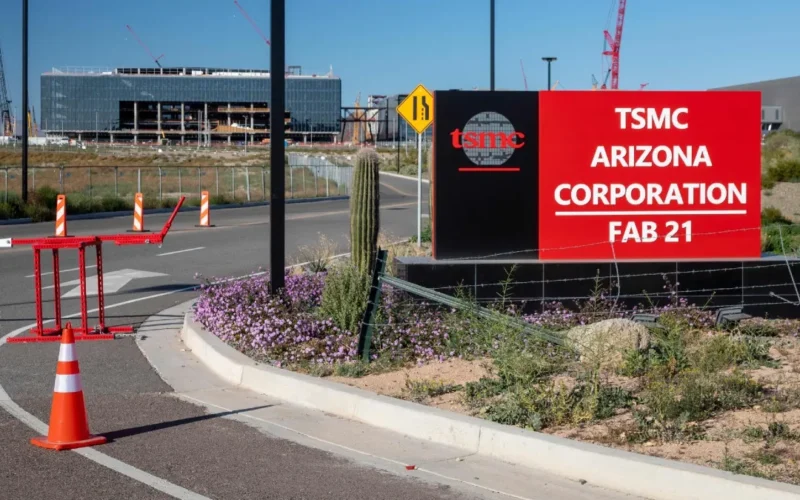
TSMC just committed $265B to Arizona — and its CFO says demand still isn’t close to being met. The company reported a record $40.2 billion in Q2 2026 revenue. Net profit also jumped 77% year-over-year. Despite this success, leadership immediately pledged an additional $100 billion to U.S. manufacturing.
CFO Wendell Huang described the AI megatrend as structural and multi-year. Therefore, TSMC has no plans to leave capacity unclaimed. He stated clearly that the company intends to capture this profitable growth for shareholders.
Record Financials Drive Expansion
The scale of these Q2 results is historic. Gross margins hit an all-time high of 67.7%. Operating margins also reached a record 60.3%. Furthermore, advanced nodes now represent 77% of all wafer revenue.
This shift highlights a complete reorientation toward AI and high-performance computing. The 5nm process contributed 33% of wafer revenue. Meanwhile, 3nm added another 30%. Even the early 2nm ramp already accounts for 3%.
High-performance computing now drives 66% of total revenue. Smartphones follow at just 22%. Consequently, TSMC has functionally become an AI infrastructure company.
Why TSMC Just Committed $265B to Arizona — and Its CFO Says Demand Still Isn’t Close to Being Met
This massive investment brings total U.S. spending to $265 billion. Five years ago, this figure would have seemed implausible. The funds will support new 2nm fabrication facilities and advanced packaging capacity.
CEO C.C. Wei indicated that up to four more plants could eventually be built. Phase one using 4nm technology is already profitable. Phase two targets commercial 2nm production in late 2027.
Additionally, TSMC raised its 2026 capital expenditure guidance significantly. Management expects aggregate spending over the next three years to exceed previous levels. Full-year revenue growth outlook also rose above 40%.
Navigating Margin Dilution and Structural Demand
Huang emphasized that current demand is structural rather than cyclical. However, advanced fabs take years to build and qualify. Thus, new Arizona capacity will not yield immediate output.
Margins face near-term pressure from this expansion. The 2nm ramp may dilute gross margins by 3–4 percentage points. Overseas fab costs add further dilution initially. Yet, TSMC believes future pricing power will offset these headwinds.
This strategy mirrors broader industry trends. Goldman Sachs estimated that AI infrastructure consumed $700 billion in 2025 with near-zero GDP return. Returns on such massive investments simply take time to materialize.
Geopolitics and Chip Sovereignty
TSMC’s expansion responds to U.S. policy pressure and risk mitigation. Concentration in Taiwan carries real geopolitical exposure. For instance, earthquakes caused billions in losses during 2024 and 2025.
Other nations are also securing domestic supply chains. Japan recently announced a sweeping national physical-AI initiative backed by Nvidia’s most advanced Rubin GPUs. Governments increasingly view semiconductor infrastructure as strategic assets.
Meanwhile, China pursues parallel technological independence. DeepSeek V4 has been adapted to run entirely on Huawei Ascend processors. This removes reliance on Western silicon for specific workloads.
Ultimately, TSMC sits at the center of global AI demand. The Arizona commitment defines who controls the physical layer of the AI economy. As Huang noted, neither the demand nor the appetite to supply it is fading.
Related Reading
- Goldman Sachs: AI Consumed $700B in 2025 — the GDP Return Was “Basically Zero”
- Japan Is Building a National Physical-AI System — and 27,500 Rubin GPUs Are Just the Start
- Pennsylvania Farmers Are Selling Dirt for 35x Its Value — and the AI Industry Thinks That’s Cheap
- DeepSeek V4 Runs on Zero Nvidia Silicon — and Huawei’s Biggest Chip System Debuts Tomorrow