Why the Kospi Crashed 25% From Its Peak — And What It Means for the Global AI Trade
Discover why the Kospi crashed 25% from its peak and what it means for the global AI trade. Crowded positioning, not weak earnings, drove the bear market.
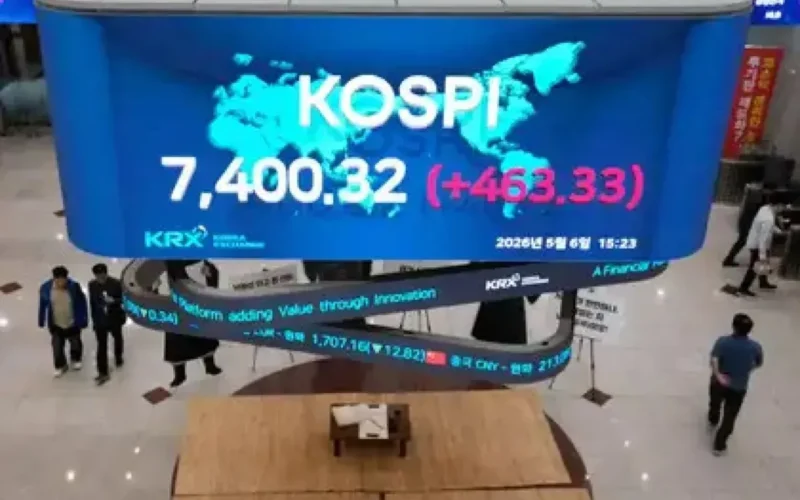
South Korea’s Kospi recently entered a bear market. Understanding why the Kospi crashed 25% from its peak — and what it means for the global AI trade is essential for investors. The index fell rapidly due to crowded positioning rather than poor earnings. Consequently, major chipmakers like Samsung Electronics and SK Hynix saw significant declines.
The Numbers Behind the Decline
The Kospi dropped over 5% in one early July session. This fall pushed the index past the 20% bear market threshold. On one volatile day, losses reached 6.1%. Therefore, regulators triggered a sidecar trading curb to halt algorithmic activity. A circuit breaker had already activated earlier that week.
Damage concentrated heavily in semiconductor stocks. Samsung Electronics and SK Hynix both fell nearly 6% in a single session. They tracked an overnight slide in U.S. semiconductor names. Losses compounded quickly over the following week. However, Hong Kong’s Hang Seng Tech index climbed almost 5% during the same period.
Why the Kospi Crashed 25% From Its Peak
This crash was unusual because earnings remained strong. Samsung actually guided for robust second-quarter results before the rout. Instead, analysts identified three specific drivers for the sell-off.
First, Korean chip stocks faced a valuation reset. Positioning became extremely crowded after a massive rally on AI optimism. Second, extreme index concentration amplified the pain. Samsung and SK Hynix comprise roughly two-thirds of the MSCI Korea Index. Finally, leveraged ETFs intensified one-sided trading swings. Regulators warned these products could worsen volatility.
Experts describe this as positioning-driven profit-taking. It represents a healthy reset rather than fundamental deterioration. As noted in our coverage on AI compute demand showing no signs of slowing despite chip stock jitters, infrastructure buildouts continue. However, investor tolerance for high valuations has clearly decreased.
A Bright Spot Amid Volatility
SK Hynix successfully completed a $28 billion Nasdaq ADR listing. U.S. investors covered the offering multiple times. Shares jumped over 13% on debut. Furthermore, the CEO warned of severe memory chip shortages heading into 2027. Demand will likely outstrip supply for the rest of the decade. Thus, the underlying business remains structurally strong despite price whipsaws.
Implications for the Global AI Trade
This event signals capital rotation rather than capital flight. Money is relocating within the sector, not leaving it. Investors hunted for cheaper ways to play the technology boom. For example, Hong Kong markets posted their biggest single-day advance since April 2025.
The broader AI infrastructure story remains intact. Nevertheless, markets now demand better earnings visibility. They are asking harder questions about pricing durability. Ultimately, investors want to know how much future growth is already priced in.
