Karnataka Is Building Working Groups With Anthropic to Rewire How Government Actually Works
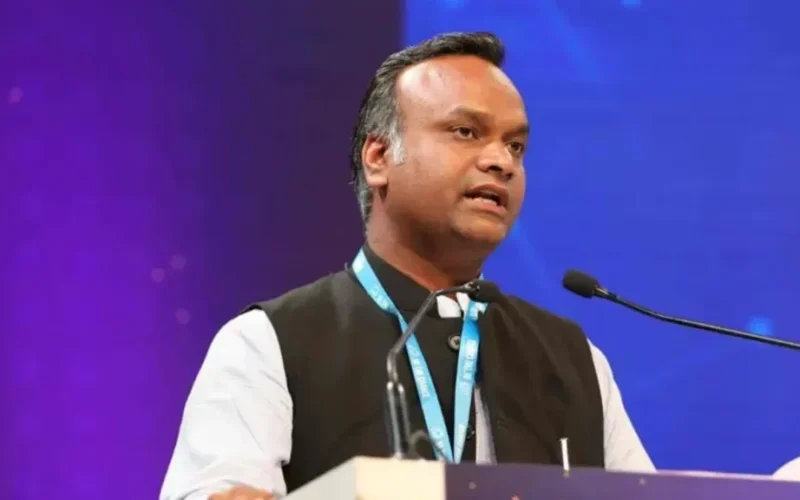
Karnataka’s ambitions for Karnataka Anthropic AI governance just moved from vision statement to structural reality. On July 25, IT and Home Minister Priyank Kharge visited Anthropic’s Bengaluru office and returned with a concrete plan: two dedicated working groups, one inside the Centre for e-Governance and one inside the Home Department, tasked with mapping where AI can actually change how the state serves its residents.
This is not a memorandum of understanding with no follow-through date. Kharge announced the working groups as an immediate next step, which places a formal organizational structure behind what started as exploratory conversations on July 11 — when Kharge first met Anthropic India Managing Director Irina Ghose and KITS MD Avinash Menon Rajendran.
From e-Governance to i-Governance
The framing Karnataka is using internally is a shift from “e-governance” to “i-governance” — intelligence-driven public administration. The distinction matters. E-governance digitized existing processes; i-governance would redesign those processes around AI-assisted decision-making, predictive service delivery, and conversational citizen interfaces.
Anthropic’s team in Bengaluru demonstrated several applications focused on AI-enabled citizen services, multilingual experiences, and responsible deployment of AI tools. Multilingual capability is a genuine differentiator here. Karnataka’s population spans Kannada, Urdu, Tamil, and Telugu speakers, and many government services remain inaccessible in practice because of language barriers. An AI layer that handles natural language queries across those languages would represent a material improvement in access, not just a cosmetic upgrade.
The discussions also explored how existing government datasets could be leveraged to improve public service delivery — essentially, whether the state’s accumulated data could be structured and queried to surface better outcomes for citizens who currently navigate fragmented systems.
What the Working Groups Will Actually Do
The two working groups serve distinct functions. The Centre for e-Governance group will focus on identifying priority AI use cases across government operations broadly. The Home Department group will examine AI applications within law enforcement, public safety, and the administrative machinery of one of the most complex departments in state government.
Beyond operational governance, the collaboration covers three additional pillars. First, skilling: preparing Karnataka’s workforce for an AI-driven economy is a core concern, and discussions touched on co-designed programmes between Anthropic and state institutions. Second, research: the meeting covered Anthropic’s AI for Science programme, suggesting potential engagement with Karnataka’s university and research ecosystem. Third, startups: opportunities for Karnataka’s developer community and deep-tech startups to leverage Anthropic’s tools received dedicated attention, including the role of Global Capability Centres in mentorship and co-creation.
Kharge described the opportunity directly: “Our engagement with Anthropic is an opportunity to explore meaningful collaboration across skilling, research, startups and AI-led governance, while building sustainable and scalable models that can create long-term public value.”
Why Anthropic’s India Expansion Makes This Plausible
Anthropic opened its Bengaluru office in early 2026, making Karnataka the company’s physical base in India. That proximity is more than symbolic. It means Anthropic engineers and policy staff can engage directly with state officials, iterate on use cases, and run the local evaluations needed to make AI work in Indian-language contexts. Anthropic has specifically emphasized enhancing multilingual capabilities as a priority for its India operations — which maps directly onto Karnataka’s needs.
The partnership also fits within a broader pattern of Indian states competing to position themselves as AI-ready governance models. Karnataka’s advantage is structural: Bengaluru’s existing concentration of AI talent, GCCs, and research institutions gives any collaboration with a frontier AI company an ecosystem to draw from rather than build from scratch.
Furthermore, Karnataka’s Department of Electronics, IT, Biotechnology, and Science and Technology already had the institutional architecture to move quickly on this kind of engagement. Kharge’s dual role across Home and IT departments means the two working groups will likely have direct political backing rather than being delegated to a layer of officials who may lack authority to commit resources.
What Remains Undefined
No formal agreements have been signed. The scope, funding, and timelines for the working groups remain to be established. This distinction matters when evaluating the announcement: it is a commitment to structure, not a commitment to outcomes yet.
However, the specificity of the working group formation — two named departments, two named functions — signals this is progressing beyond the kind of broad partnership language that often goes nowhere. The questions the groups will need to answer are hard ones: which datasets can legally be used, which citizen service workflows are actually amenable to AI intervention, and how do you maintain accountability in AI-assisted administrative decisions.
Those are exactly the right questions for a government to be asking before deploying AI at scale, and the fact that Karnataka is asking them through a structured process rather than rushing to announce pilots suggests a more disciplined approach than most.

For Anthropic, the Karnataka engagement also represents something more than a business development win. India’s government AI procurement market is enormous, and a state-level partnership that demonstrably improves citizen services in a linguistically complex, large-population context would be a strong proof point for the Claude platform in public sector deployments globally.
Karnataka isn’t the first Indian state to explore AI in governance, but it may be the first to build a formal organizational structure — with a frontier AI company holding a local office — designed specifically to answer the question of where AI actually earns its place in public administration. That structural commitment, more than any announcement, is what makes this worth watching.
Frequently Asked Questions
What did Karnataka announce with Anthropic?
Karnataka IT and Home Minister Priyank Kharge announced two dedicated working groups — one in the Centre for e-Governance and one in the Home Department — to identify AI use cases and explore collaboration with Anthropic across governance, education, skilling, and startups.
Has Karnataka signed a formal agreement with Anthropic?
No formal agreements were signed as of July 25, 2026. The working groups represent a structural commitment to identifying priority use cases before formal partnerships or deployments are established.
Why did Anthropic set up an office in Bengaluru?
Anthropic opened its Bengaluru office in early 2026 to expand its India operations, with a focus on multilingual AI capabilities and regional evaluations. Karnataka’s tech ecosystem and large developer community made Bengaluru the natural base for this expansion.
What is i-governance as Karnataka describes it?
Karnataka describes i-governance as intelligence-driven public administration — a shift from digitizing existing bureaucratic processes (e-governance) to redesigning those processes around AI-assisted decision-making, multilingual citizen services, and data-driven public service delivery.
Related reading: Claude for Education is already live for K-12 teachers — here’s what it covers | Anthropic’s IPO preparations and what they mean for the company’s global strategy | Why Anthropic’s CEO is positioned to break out from Google’s shadow
