Nokia’s New Dumbphones Have an AI Button — and That’s the Problem
HMD added an AI assistant to its latest feature phones. However, Nokia’s new dumbphones have an AI button — and that’s the problem for detox seekers.
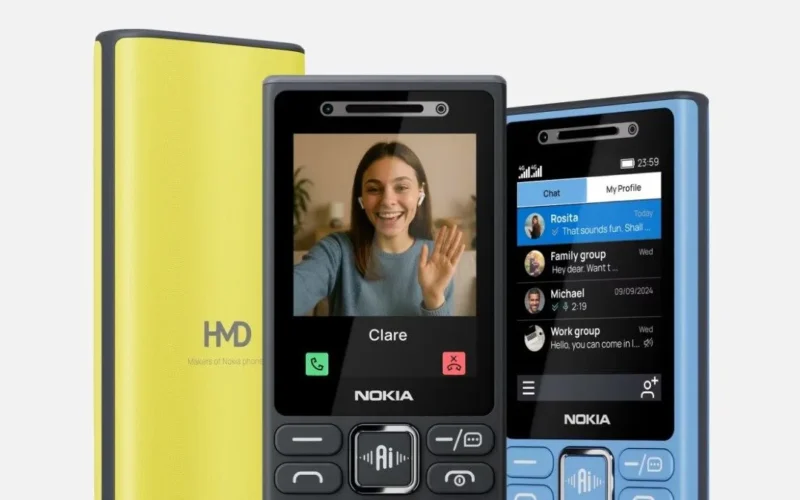
The dumbphone was supposed to be an antidote to the attention economy. However, Nokia’s new dumbphones have an AI button — and that’s the problem for many fans. HMD released four handsets this week with a dedicated assistant key. Consequently, the internet is already debating whether this defeats the purpose.
What HMD Actually Launched
The new lineup includes four specific models. These are the Nokia 200 4G, Nokia 210 4G, Nokia 215 4G 2nd Edition, and Nokia 235 4G 2nd Edition. All four are 4G feature phones without traditional smartphone apps.
On paper, the specs resemble a love letter to 2005. Each device ships with a T9 keyboard and a 3.5mm headphone jack. Additionally, they offer microSD expansion and FM radio on most models. Finally, a front-facing camera supports video calls via Xpress Chat.
Xpress Chat enables group chats, voice messages, and photos. Therefore, users get modern communication tools without a full Android install.
Nokia’s New Dumbphones Have an AI Button — and That’s the Problem
A central button summons a chatbot powered by Sikey AI. HMD pitches this as voice control for everyday tasks. Users can speak instructions instead of navigating multiple key presses.
The assistant also answers simple factual questions. Think of it as a capable voice shortcut layer rather than a complex LLM. However, the functionality is free for only 180 days.
Afterward, it costs roughly £3 annually in the EU. Crucially, activation requires a separate smartphone. This creates friction for buyers who do not own one.
Who Is This Actually For?
HMD targets two primary demographics with these devices. First, elderly users may want essential services without complexity. Second, people in regions with limited connectivity need affordable upgrades.
For those audiences, the AI button makes sense. Voice control reduces barriers for users uncomfortable with keypads. Natural language queries are genuinely useful when browser search is difficult.
However, this framing clashes with digital detox seekers. These buyers intentionally want to shed smartphone-like interactions.
The Backlash From Purists
Critics argue the chatbot invites dopamine-loop behaviors. You might lack Instagram, but you still have instant AI access. Therefore, some feel this defeats the purpose of owning a dumbphone.
This sentiment reflects broader fatigue with AI-washing. Adding AI features regardless of use case has drawn fire elsewhere. The dumbphone community seems particularly allergic to this trend.
Fairness depends entirely on the buyer. A pensioner needing recipe help benefits from the feature. Conversely, a tech professional forcing themselves offline sees an intrusion.
Nokia’s Longer Arc
HMD has rebuilt the Nokia line for several years. Previous releases found audiences among older users and minimalists. The new 4G lineup continues this strategy with modern connectivity.
AI does not fundamentally change the phone’s character. There is still no app store or social media. Nevertheless, it alters the philosophical purity of the proposition.
The Bigger Question
AI assistants are becoming default inclusions in consumer tech. Even major OS updates now prioritize AI integration. Thus, we must ask if some devices should remain AI-free.
A detox phone probably should not have an always-ready chatbot. However, a digital inclusion device likely should. HMD appears to build for the latter while marketing to the former.
Commercial success remains uncertain until pricing is confirmed. Yet, the debate over where AI belongs is certainly not going away.